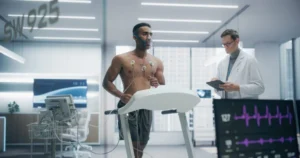






For years, the modern healthcare experience has been defined by a silent, frustrating paradox: patients are arriving at their primary care appointments armed with more biological data than ever before, yet they feel increasingly unheard. From wearable heart-rate monitors and continuous glucose monitors to dense genomic panels and microbiome sequencing, the average patient is now a walking repository of physiological insight. However, when this data is presented in the clinical setting, it often hits a wall of institutional inertia.
The standard diagnostic framework—a system built on population averages and 15-minute consultations—is struggling to synthesize this influx of information. As Elena Ikonomovska, CEO of Diadia Health, points out, the current medical infrastructure is not designed for the complex, cross-system reasoning required to interpret a patient’s unique biological map. We are living through a sequencing revolution, but we remain in the dark ages of diagnostic integration.
The Anatomy of a Diagnostic Failure: A Personal Chronology
The frustration shared by many patients is best illustrated by the "normalcy trap." For many, the medical journey begins with a cascade of inexplicable symptoms: chronic fatigue, heart palpitations, and stubborn weight gain that defies traditional caloric restriction.
The Standard Pathway
The typical patient experience follows a predictable, often circular, path:
- The Presentation: The patient reports debilitating symptoms to a primary care provider (PCP).
- The Standard Protocol: The physician orders a standard battery of tests, such as a Thyroid Stimulating Hormone (TSH) panel, complete blood counts, and metabolic panels.
- The "Normal" Result: The laboratory returns values within the "normal" reference range.
- The Diagnostic Dead End: Because the labs are within range, the physician concludes there is no clinical pathology. The patient is often told their stress levels are the culprit, or worse, that the problem is psychosomatic.
The Hidden Complexity
In many cases, as was the experience of Ikonomovska, the reality is far more nuanced. It is rarely a single, isolated marker that indicates a health crisis; rather, it is the interaction between multiple systems. A thyroid may struggle to convert hormones not because of a disease that shows up on a standard TSH test, but because of a subtle genetic variant compounded by a period of acute stress. When these factors are layered with sub-clinical iron deficiencies or early-stage insulin resistance, the patient is effectively "falling through the cracks" of a binary medical system.
The Myth of the Reference Range
At the heart of the current diagnostic crisis lies the heavy, often uncritical reliance on standard laboratory reference ranges. These ranges, which act as the gatekeepers for clinical action, suffer from two fundamental flaws: representativeness and intent.
Population Averages vs. Individual Optimization
Most reference ranges are calibrated against broad, often outdated population cohorts. They do not account for the radical variability of the human experience—differences in genetic background, hormonal profiles, or specific life stages. A TSH level that is considered "normal" for a 60-year-old male is not necessarily "optimal" for a 30-year-old female.
Furthermore, these ranges are drawn from populations that have seen a steady, two-decade decline in metabolic health. Using a sick population as the baseline for "normal" means that the floor for preventative care is consistently set too low. We are measuring the patient against the average health of a population that is increasingly suffering from chronic, lifestyle-driven disease.
The Systematic Blind Spot
Research increasingly suggests that our reliance on these ranges creates "systematic blind spots." For instance, a significant percentage of patients with "normal" TSH levels still present with symptoms of hypothyroidism, often linked to inadequate T4-to-T3 conversion. This is not an edge case; it is a failure of the current diagnostic toolkit to recognize complex, sub-clinical patterns.
The AI Intersection: Fluency vs. Reasoning
As the medical field grapples with this data overload, the conversation has inevitably turned to Artificial Intelligence. The promise of Large Language Models (LLMs) is seductive: they are fast, articulate, and capable of processing vast medical datasets in seconds. However, there is a dangerous distinction between fluency and reasoning.

The Danger of "Faithful Hallucinations"
Current LLMs are trained to predict the next plausible word in a sentence, not to adhere to the rigid laws of biological causality. This leads to what clinicians call "faithful hallucinations"—statements that are grammatically correct, medically authoritative in tone, and entirely detached from reality.
A recent study highlights the severity of this issue:
- 91.8% of clinicians reported encountering AI-generated hallucinations in their practice.
- 84.7% of clinicians expressed concern that these errors could lead to direct patient harm.
When an AI confidently explains a non-existent biological pathway—such as misidentifying the precursors to cortisol—it erodes the foundational trust between the clinician and the technology. If a doctor cannot verify the logic behind an AI’s suggestion, the tool becomes a liability rather than an asset.
Implications: Building a Causal Future
To move beyond the current impasse, the medical industry must pivot toward "causal AI." Unlike standard LLMs, causal AI systems are designed to ground every recommendation in validated biological mechanisms.
Bridging the Primary Care Gap
The goal is not to replace the physician but to augment their capabilities. A primary care physician in a rural setting, often constrained by a 15-minute appointment window, cannot be expected to perform the same deep-dive, cross-system analysis as a specialist in a major medical hub.
Transparent, causal AI changes this calculus by:
- Pattern Recognition: Automatically flagging connections between biomarkers, genetics, and patient history that standard protocols miss.
- Source Transparency: Providing the biological pathway and cited evidence for every suggestion, allowing the physician to interrogate the logic before applying it.
- Democratizing Expertise: Making high-level diagnostic reasoning accessible at the point of care, regardless of the clinician’s sub-specialty or the patient’s geographic location.
Rebuilding Clinical Trust
The future of clinical AI will not be determined by the slickness of a user interface, but by the reliability of the underlying logic. When a physician can see the "why" behind an AI’s suggestion, the technology shifts from a "black box" to a reliable colleague. This allows for a more collaborative, personalized approach to medicine where the patient’s data is finally utilized to its full potential.
Conclusion: The Path Toward Optimized Health
We are currently witnessing a shift in the patient-provider relationship. Patients are no longer passive recipients of medical care; they are active participants, armed with data and demanding answers that go beyond "your labs look normal."
The current framework of medicine—which treats the human body as a collection of isolated parts measured against a flawed population average—is a relic of a less data-rich era. To close the gap between current practice and what is possible, we must demand an infrastructure that respects the complexity of human biology. By embracing transparent, causal AI, we can move from a reactive, population-based model of medicine to a truly proactive, personalized standard of care. The data exists. The need is urgent. It is time for the tools to catch up.