





In the high-stakes world of Silicon Valley longevity culture, billionaire Bryan Johnson has become the face of a modern obsession: the quest to "reverse" the human aging process. Through his widely publicized "Don’t Die" project, Johnson subjects his body to a rigorous, multi-million-dollar regimen of experimental treatments, from hyperbaric oxygen therapy to controversial plasma infusions. At the heart of his mission lies a metric that has captivated the wellness industry: "biological age."
As the popularity of "bio age" testing surges, driven by influencers and high-profile podcasts, a critical question arises for the average person: Is this the future of preventative medicine, or is it merely expensive, data-driven theater?
The Core Concept: Chronological vs. Biological Age
To understand the current fervor, one must distinguish between the two ways we measure time. Chronological age is the simple count of birthdays—a fixed, linear progression of years. Biological age (bio age), however, is a measurement of how your cells, tissues, and organ systems are actually functioning.
Think of it in terms of two 50-year-old individuals. One may lead a sedentary life, smoke, and live in a high-pollution environment; another may prioritize strength training, eat a nutrient-dense diet, and maintain low stress levels. Despite sharing the same birth year, their cellular "wear and tear" will differ drastically. Bio age testing aims to quantify that difference by measuring specific biomarkers—indicators that reflect the underlying health of our biological machinery.
A Chronology of the Anti-Aging Movement
The transition of bio age testing from niche scientific research to mainstream consumer product has been rapid:
- Early 2000s: Researchers identify telomeres—the protective caps at the ends of chromosomes—as potential markers for aging. The "telomere length" test enters scientific discourse.
- 2013: Geneticist Steve Horvath introduces the "Horvath Clock," a method for estimating biological age using DNA methylation. This creates a standardized way to measure the aging of human tissues.
- 2020–2022: The rise of longevity-focused media—including podcasts by Peter Attia, Andrew Huberman, and Joe Rogan—brings bio age testing to the public consciousness.
- 2023–2024: Bryan Johnson’s "Don’t Die" campaign goes viral. Commercial testing kits for blood, urine, and DNA methylation proliferate, moving from laboratory settings to direct-to-consumer online markets.
Supporting Data: What Are We Actually Measuring?
Commercial tests often rely on sophisticated, yet sometimes misunderstood, biological measurements.
DNA Methylation
This process involves chemical tags that attach to DNA, altering how genes are expressed. Because methylation patterns change predictably as we age, they serve as a "clock." While powerful in a research setting (such as the DunedinPACE test), these results are often specific to certain tissue types and may not provide a holistic "age" for the entire body.
Telomere Analysis
While popular, telomere length tests are often criticized by the medical community. While abnormally short telomeres can indicate specific genetic conditions, using a $100 commercial kit to determine if you are "aging faster" is scientifically debated and rarely used in clinical practice.
VO2 Max and Fitness Markers
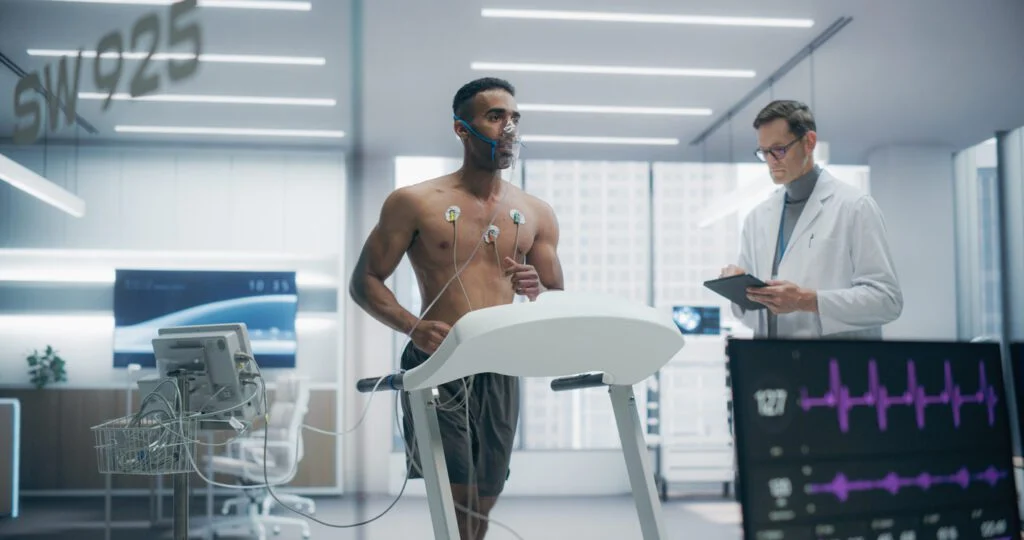
Perhaps the most robust indicator of longevity is VO2 max—the maximum amount of oxygen your body can utilize during intense exercise. Unlike obscure methylation markers, VO2 max is a functional measurement. Research indicates that individuals with higher VO2 max levels consistently show lower rates of cardiovascular disease, diabetes, and all-cause mortality. It serves as a "canary in the coal mine," signaling when the cardiovascular and respiratory systems begin to decline.
The Case for "Free" Biomarker Testing
You do not need a seven-figure bank account to assess your health. Before high-tech blood panels, researchers utilized functional tests that remain some of the most accurate predictors of longevity:
- The Sitting-Rising Test (SRT): A measure of strength, balance, and flexibility. Lower scores are statistically linked to higher mortality rates.
- Grip Strength: A surprisingly powerful proxy for whole-body muscle mass. Weak grip strength in mid-life is a strong predictor of future frailty.
- One-Leg Balance: This requires the brain, inner ear, and skeletal muscles to coordinate. An inability to hold this pose for 10 seconds is associated with increased health risks.
- The Pittsburgh Fatigability Scale: This measures how your body recovers from activity. Chronic, unexplained fatigue is a significant red flag that warrants medical investigation.
- Body Composition: Using a simple tape measure to monitor waist-to-hip ratios and overall body fat provides more actionable data than the scale alone.
Official Responses and Medical Reality
The medical establishment remains cautious regarding commercial bio-age tests. Most physicians argue that these tests should not replace standard preventative screenings. A lipid panel (cholesterol), blood glucose test, and blood pressure monitoring remain the "gold standard" for predicting cardiovascular events—the leading cause of death globally.
Furthermore, a significant point of contention exists regarding the accuracy of these tests. A New York Times investigation into Bryan Johnson’s own claims found that while he touted a "reversal" in age, some interpretations of his data suggested his biological age had actually increased over time. This highlights a critical caveat: Biological age is not a static number. It can fluctuate based on acute stress, illness, or recovery cycles.
Implications: Turning Data into Action
If you choose to pursue bio age testing, you must avoid the "data trap"—the tendency to collect metrics without changing behaviors.
The "Evergreen" Strategy
The most effective way to lower your biological age remains unchanged by trends:
- Consistent Strength Training: Protects metabolic health and bone density.
- Sleep Hygiene: The foundation of cellular repair.
- Nutritional Density: Minimizing ultra-processed foods and maximizing fiber and protein.
- Stress Management: Reducing chronic cortisol exposure.
The Danger of Proprietary Protocols
Be wary of any company that pairs a test result with an immediate "hard sell" for proprietary supplements or secret protocols. True health optimization is usually found in the "boring" basics—consistent exercise and a balanced lifestyle—rather than in expensive, unproven powders or tinctures.
Conclusion: Use Data as a Compass, Not a Mirror
Bio age testing can be a powerful tool, but it is best viewed as a compass, not a verdict. If your results show "accelerated aging," do not view it as a moral failing. Instead, treat it as a data point that suggests your current lifestyle might need an adjustment.
The goal is not to "hack" the aging process for the sake of a lower number on a certificate. The goal is to maximize your "healthspan"—the number of years you spend in good health, free from disability. If a test motivates you to start walking more, lifting heavier weights, or prioritizing your sleep, it has served its purpose. But always remember: the most profound longevity interventions are those that you can sustain for decades, not just those that offer a quick, marketable metric of success.
For those interested in professional guidance, certified health coaches specializing in Sleep, Stress Management, and Recovery (SSR) are equipped to help individuals translate these health metrics into sustainable lifestyle changes, ensuring that the data you collect today translates into a longer, more vibrant life tomorrow.