By Jackie Keating, LCSW
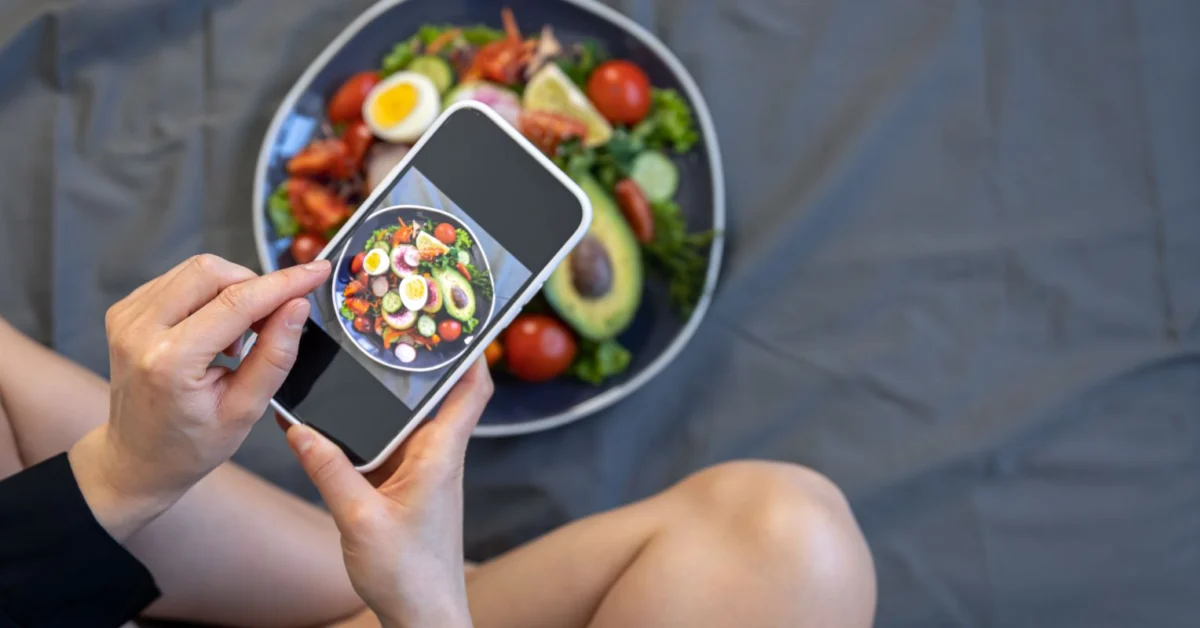
It is a familiar Sunday night ritual: the lights are dimmed, the house is quiet, and you reach for your phone. As you scroll through the endless stream of social media, looking for a brief mental escape, you are met with an onslaught of curated imagery. One influencer presents a "what I eat in a day" video, showcasing pristine, low-carb, calorie-restricted meals. Another pivots to humor, joking about a "rough night out" with a glass of wine in hand, while a "mom influencer" uses the trope of needing alcohol to survive the chaos of parenting. Within minutes, your feed is flooded with aggressive fitness advertisements promising a "total life transformation" in just three simple steps.
By Monday morning, these digital messages have manifested in the real world. A coworker discusses a restrictive new diet; a friend texts about "summer body" goals; and a celebrity endorses a plant-based regimen to millions. The message is persistent, pervasive, and increasingly dangerous. While social media was designed to connect us, it has evolved into a high-speed vehicle for diet culture—a system that weaponizes insecurity, monetizes self-doubt, and blurs the lines between health and harm.
The Economics of Insecurity: How Diet Culture Fuels the Wellness Market
Diet culture is more than just a preference for salads; it is a pervasive set of beliefs that equates thinness with moral virtue and health with physical appearance. In the digital age, this cultural pressure has been industrialized. The global wellness market is a behemoth, valued at over $160 billion in 2024, with projections suggesting it will balloon to $360 billion by 2034 (Finklea, 2025).
This staggering growth is not accidental. It is built on the systematic exploitation of human insecurity. Digital creators and corporations alike capitalize on the human desire for belonging and vitality, promoting a dizzying array of supplements, "detox" teas, and rigid fitness plans. When these products fail—as they inevitably do, because they ignore the biological reality that health is individual—the consumer is conditioned to blame themselves rather than the flawed system. This cycle of failure is the engine of the industry: it transforms low self-esteem into a recurring revenue stream.
The tactics are often insidious. Influencers frequently demonize specific food groups or engage in "fat-shaming" to validate their own restrictive behaviors. The underlying, unspoken promise is always the same: If you mimic my discipline, you will inherit my happiness. But beneath the filtered, high-definition aesthetic often lies a reality of extreme restriction, compulsive exercise, and significant psychological distress.
The Psychological Toll: A Generation at Risk
The impact of this constant exposure is not merely anecdotal; it is measurable and devastating. Research consistently highlights the correlation between heavy social media consumption and declining mental health. According to recent data from The REACH Institute (2025), nearly 46% of teens aged 13 to 17 report feeling worse about their physical appearance after spending time on social media. Perhaps more alarmingly, those who spend more than three hours a day on these platforms are twice as likely to develop clinical eating disorders compared to their peers.
The paradox of the "wellness" movement is that it frequently promotes behaviors that are clinically disordered. By masking restrictive eating as "clean eating" or "biohacking," the digital landscape provides a veneer of respectability to behaviors that can destroy a person’s metabolism, hormonal balance, and psychological well-being.
The Intersection of Eating Disorders and Substance Use
Perhaps the most overlooked consequence of modern digital culture is the dangerous overlap between eating disorders (EDs) and substance use disorders (SUDs). While they appear different—one rooted in control and food restriction, the other in consumption and escape—they are both fundamentally maladaptive coping mechanisms.
Both disorders often emerge as desperate attempts to manage overwhelming stress, trauma, or emotional pain. When the brain is under the pressure of societal expectations, individuals may turn to either restrictive dieting or substance use to numb or manage their reality. The National Eating Disorders Association (NEDA, 2023) estimates that 50% of individuals with an eating disorder also struggle with substance misuse.
The digital environment further complicates this. Social media platforms frequently glamorize both ends of this spectrum. On one side, "pro-ana" or extreme dieting content is often algorithmically served to vulnerable users; on the other, the "wine mom" culture and the glorification of party-lifestyle influencers normalize alcohol and drug use as necessary tools to "take the edge off." This normalization creates a seamless, albeit lethal, pipeline: a person may start by restricting calories to gain control, and eventually, find themselves utilizing stimulants to suppress appetite or alcohol to cope with the resulting anxiety.
Fatal Consequences and the Failure of Fragmented Care
The physical and psychological toll of these co-occurring disorders is profound. Anorexia nervosa already holds the highest mortality rate of any mental health condition, but when coupled with substance use, the risk of fatality skyrockets. Research indicates that the co-occurrence of alcohol or drug use with an eating disorder can nearly quadruple the mortality risk compared to an eating disorder alone (Mellentin et al., 2022).
Beyond the risk of death, these individuals face higher rates of suicide attempts, severe depression, and complex psychiatric comorbidities (SAMHSA, 2025). Despite this, our current medical infrastructure is fundamentally ill-equipped to treat these dual struggles.
The "Whack-a-Mole" Problem in Recovery
Modern healthcare often operates in silos. A patient might seek help for an eating disorder at a specialized facility, only to be told that they must first be "sober" before they can be treated for their relationship with food. Conversely, a substance abuse clinic may address the addiction while failing to recognize the underlying disordered eating that drives the patient’s anxiety and relapse risk.
This fragmentation leaves patients to play a life-or-death game of "whack-a-mole," bouncing between treatment centers without ever addressing the root causes of their suffering. Integrative, trauma-informed care is not just a clinical preference; it is a necessity for survival.
Implications: A Call for Cultural and Clinical Change
The crisis we are witnessing is not merely one of individual health; it is a systemic failure. As we look toward the next decade, several key implications emerge:
- Clinical Reform: Treatment models must evolve to treat eating disorders and substance use simultaneously. Holistic care must recognize the shared biological and psychological pathways of these conditions.
- Digital Literacy: We must teach the next generation to decode the "influencer" economy. Understanding that a social media post is a curated, monetized advertisement—not a health recommendation—is a vital survival skill in the 21st century.
- Accountability: Platforms must take greater responsibility for the content they push to vulnerable demographics. Algorithms that prioritize engagement over user well-being are directly contributing to the rise in mental health disorders.
- Redefining Health: We must move away from the aesthetic-driven definition of health and toward one that prioritizes metabolic function, psychological resilience, and sustainable nourishment.
The pressure to be "perfect" is a byproduct of a profit-driven culture that benefits from our feelings of inadequacy. Reclaiming our health requires us to disconnect from the digital noise and reconnect with the biological reality of our own bodies. Recovery is possible, but it requires a fundamental shift in how we perceive our worth, how we consume information, and how we demand care from a medical system that is only just beginning to understand the depth of this crisis.
References (Abridged Selection)
- Dane, A., & Bhatia, K. (2023). The social media diet: A scoping review to investigate the association between social media, body image and eating disorders.
- Finklea, K. (2025). The wrong influence: The link between diet culture and eating disorder. HopeHealth.
- Mellentin, A. I., et al. (2022). The impact of alcohol and other substance use disorders on mortality in patients with eating disorders.
- Pierce, S., Joy, J. M., & Wiss, D. A. (2025). Abstinence-based treatment of comorbid eating disorders and ultra-processed food addiction.
- The REACH Institute. (2025). How social media is impacting teens.