








In a landmark study that could fundamentally alter the landscape of orthopaedic medicine, researchers at Stanford Medicine have identified a molecular "switch" capable of reversing the degradation of cartilage in aging knee joints. By blocking a specific protein that accumulates with age, the team successfully stimulated the regeneration of healthy, functional articular cartilage in mice—a feat previously thought to be biologically impossible in adult mammals.
The discovery, published in the journal Science, offers the first glimmer of hope for a pharmacological cure for osteoarthritis, a degenerative condition that afflicts roughly one in five American adults. If the findings translate successfully from the laboratory to human clinical trials, it could herald the end of the "symptom-management era" of joint care, potentially replacing invasive total knee and hip replacement surgeries with simple oral medications or targeted injections.
The Gerozyme: Targeting the Root of Decay
At the heart of the research is a protein known as 15-PGDH. The research team, led by Helen Blau, PhD, and Nidhi Bhutani, PhD, classifies 15-PGDH as a "gerozyme"—a term coined to describe enzymes that proliferate as an organism ages, actively contributing to the decline of tissue function.
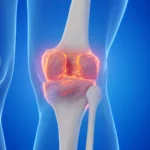
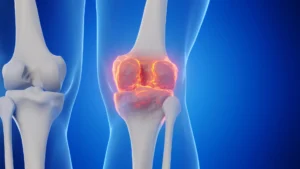
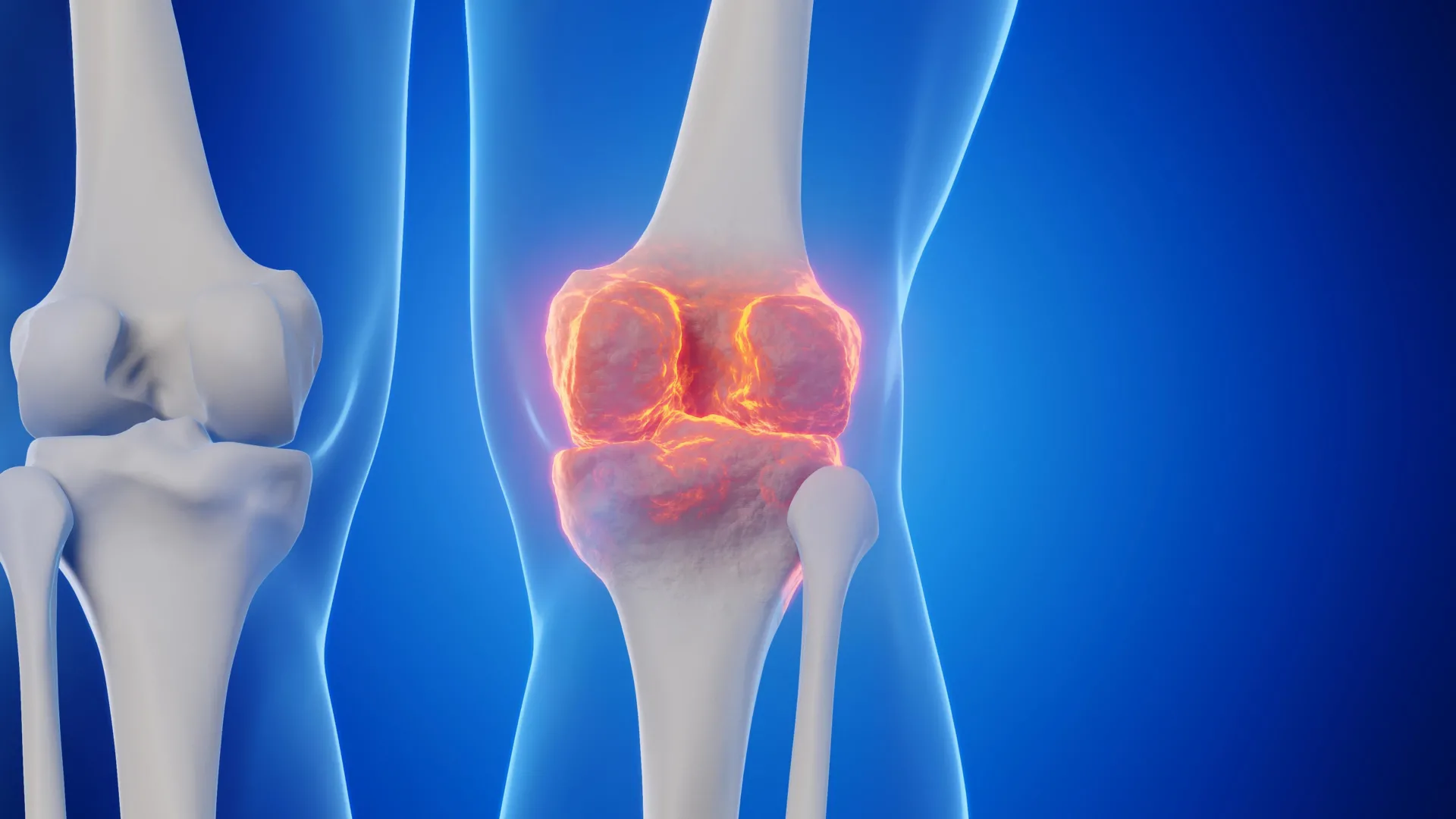
For years, the medical community has viewed articular cartilage—the smooth, slippery tissue that cushions the ends of bones—as a terminal tissue. Unlike skin or bone, which possess robust regenerative capabilities through stem cells, articular cartilage lacks such a natural repair mechanism. When it wears away due to aging, obesity, or traumatic injury, it typically remains worn, leading to the bone-on-bone friction that defines the agony of osteoarthritis.
"Millions of people suffer from joint pain and swelling as they age," said Dr. Bhutani, associate professor of orthopaedic surgery. "It is a huge unmet medical need. Until now, there has been no drug that directly treats the cause of cartilage loss. But this gerozyme inhibitor causes a dramatic regeneration of cartilage beyond that reported in response to any other drug or intervention."
Chronology of the Discovery
The path to this breakthrough was not linear; it was built upon years of prior research into tissue regeneration.
Early Muscle Research: The study began with the team’s previous discovery that 15-PGDH acts as a master regulator of aging across multiple tissue types. In earlier experiments, the team demonstrated that blocking this protein could significantly increase muscle mass and endurance in aging mice. Conversely, elevating 15-PGDH levels in young animals caused their muscles to wither and weaken.
The Cartilage Question: Observing that 15-PGDH influenced the health of bone, nerve, and blood cells, the Stanford researchers pivoted to a critical question: Could this same pathway be responsible for the deterioration of cartilage?
The Mouse Trials: The team compared 15-PGDH levels in the knee cartilage of young mice versus older counterparts. They discovered that levels of the protein doubled with age. When they administered a small-molecule inhibitor of 15-PGDH to the older mice—both through systemic abdominal injection and localized knee injection—the results were "striking." The cartilage, previously thin and degraded, began to thicken. Crucially, it was not the fibrous, scar-like tissue often seen in failed healing attempts, but high-quality hyaline cartilage, the type essential for friction-free joint movement.
The ACL Challenge: To test the drug’s efficacy under stress, the team simulated ACL tears, which are known precursors to post-traumatic osteoarthritis. Mice treated with the inhibitor twice a week for four weeks showed a massive reduction in the development of arthritis. Untreated mice, by contrast, developed the disease within the same four-week window.
Human Tissue Validation: The final phase of the study involved testing the inhibitor on human cartilage samples obtained from patients undergoing total knee replacement surgery. Within one week of exposure to the inhibitor, the human tissue showed a significant reduction in the markers of degradation and, most importantly, began to exhibit signs of regenerative activity.
Challenging the "Stem Cell" Paradigm
One of the most surprising aspects of this study is the mechanism by which the tissue regenerates. In many biological healing processes, recovery relies on the activation of dormant stem cells that multiply and differentiate into the required tissue type.
However, when the Stanford researchers analyzed the knee joints, they found no evidence of stem cell involvement. Instead, existing cartilage cells—known as chondrocytes—underwent a remarkable "youthful transformation." By blocking 15-PGDH, the cells shifted their gene expression patterns.
"This is a new way of regenerating adult tissue, and it has significant clinical promise," said Dr. Helen Blau, professor of microbiology and immunology and director of the Baxter Laboratory for Stem Cell Biology. "We were looking for stem cells, but they are clearly not involved. It’s very exciting."
The treatment shifted the population of chondrocytes:
- Inflammatory cells (those producing 15-PGDH and degradation markers) dropped from 8% to 3%.
- Fibrocartilage-producing cells (a less functional, "patch-job" type of cartilage) were cut in half.
- Hyaline-producing cells (the high-quality cartilage required for healthy joints) surged from 22% to 42%.
The Economic and Clinical Implications
Osteoarthritis is more than a quality-of-life issue; it is a massive economic burden. In the United States alone, the disease accounts for approximately $65 billion in direct healthcare costs annually. Current clinical protocols are strictly palliative—they focus on pain management through anti-inflammatories, physical therapy, or corticosteroid injections.
"Once the disease becomes severe, replacing the damaged joint surgically is the only remaining option," the researchers noted in their report. "There is currently no drug that can reliably slow or reverse osteoarthritis itself."
If a 15-PGDH inhibitor reaches the market, the shift in the standard of care would be seismic. Patients experiencing the early signs of joint pain could potentially take a course of medication to "rejuvenate" their joint lining, preventing the need for the surgical removal of bones and the installation of metal or plastic prosthetics.
Looking Ahead: The Road to Human Trials
While the results are undeniably promising, the researchers remain cautious. They emphasize that while the data from mouse models and ex vivo human tissue are robust, they do not yet prove that the treatment will safely and effectively prevent or reverse osteoarthritis in a living human body.
However, the path forward is clearer than it is for most experimental drugs. Because 15-PGDH inhibitors have already been subjected to Phase 1 clinical trials for muscle-wasting conditions, the safety profile of the drug class is already partially understood.
"Phase 1 clinical trials of a 15-PGDH inhibitor for muscle weakness have shown that it is safe and active in healthy volunteers," Dr. Blau noted. "Our hope is that a similar trial will be launched soon to test its effect in cartilage regeneration."
The researchers, who hold patent applications for the use of 15-PGDH inhibition in tissue rejuvenation, have licensed the technology to Epirium Bio, a move intended to accelerate the translation of these laboratory findings into clinical reality.
As the population ages, the prevalence of osteoarthritis is projected to skyrocket. This discovery offers more than just a new drug; it offers a new biological philosophy. By treating aging not as an inevitable decline but as a modifiable, protein-driven process, science may finally be closing the gap between chronic disability and restored mobility. For the millions currently waiting for their next joint replacement, this research provides the first real evidence that their own cells might one day be capable of healing themselves.