








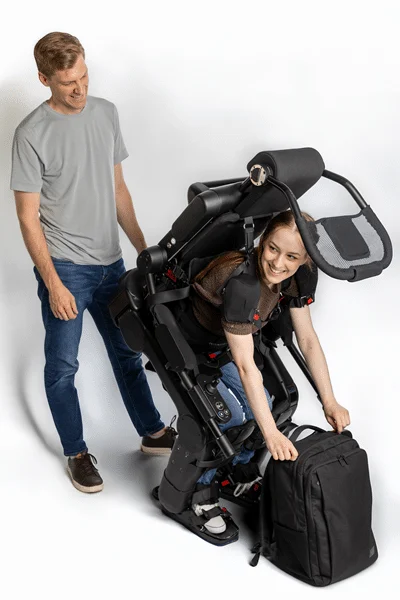
NEW YORK, NY – [Insert Date of Publication] – In a landmark advancement for assistive technology, Wandercraft, a pioneer in robotics for walking, has announced the full commercial launch of its groundbreaking Eve self-balancing personal exoskeleton in the United States. Following its pivotal FDA clearance, Eve is now available to eligible adults living with spinal cord injuries (SCI) at any neurological level, promising an unprecedented level of hands-free upright mobility and renewed independence. This launch marks a significant paradigm shift in rehabilitation and personal mobility, offering a unique solution that complements traditional wheelchairs and redefines the possibilities for daily living.
A New Era of Upright Mobility: Main Facts of Eve’s Launch
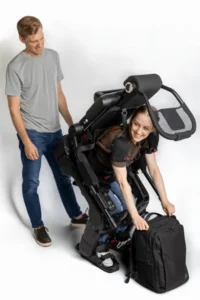
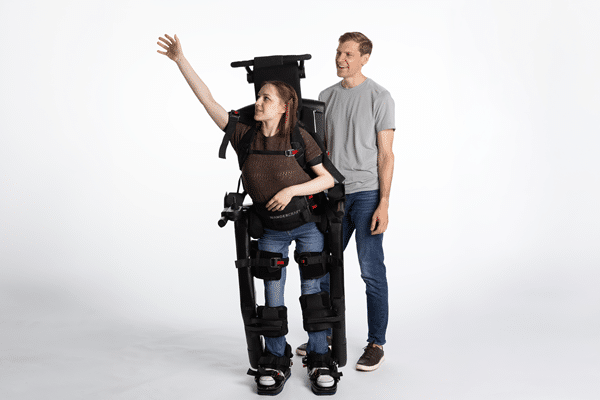
The commercial availability of Wandercraft’s Eve exoskeleton represents a monumental stride forward for individuals navigating life with spinal cord injuries. Unlike previous generations of exoskeletons that often necessitated the use of crutches or walkers for stability, Eve leverages sophisticated "physical AI" to maintain balance autonomously, thereby freeing the user’s hands. This innovative design allows users to engage in a multitude of everyday activities—from preparing meals and opening doors to carrying objects and interacting at eye level—all while experiencing the profound benefits of upright posture.
Crucially, Eve has received FDA clearance without restrictions based on the neurological level of spinal cord injury, a distinction that dramatically broadens its potential user base. This inclusivity means that adults with SCI, regardless of the specific level of their injury, can be considered eligible provided they can safely operate the device’s controller and have no contraindications. This represents a significant departure from the more restrictive eligibility criteria of earlier devices, underscoring the comprehensive safety data, robust clinical evidence, and extensive usability testing that underpinned Wandercraft’s successful FDA submission.
The process for obtaining an Eve exoskeleton is meticulously structured to ensure optimal user experience and safety. It begins with a thorough clinical evaluation and trial, followed by a physician’s order for eligible individuals. Each Eve device is then individually fitted and custom-manufactured. Post-delivery, users undergo a personalized training program facilitated by the Wandercraft team, with continuous support provided thereafter, emphasizing a holistic approach to integration into daily life.
The Journey to Independence: A Chronology of Innovation
Wandercraft’s journey to the commercial launch of Eve is a testament to years of relentless innovation and a deep commitment to transforming lives. Founded with a vision to enable walking for all, the French robotics company has invested heavily in research and development, pushing the boundaries of what was previously thought possible in bipedal robotics. The development of Eve, specifically, required overcoming immense engineering challenges to create a device that could not only support human weight but also autonomously adapt to complex environments and maintain balance without external aids.
The core of Eve’s innovation lies in its "physical AI," a sophisticated algorithmic framework that processes real-time sensor data to predict and counteract imbalances. This intelligent system mimics the intricate balance mechanisms of the human body, allowing for smooth, intuitive, and most importantly, hands-free movement. Years of iterative design, rigorous testing in laboratory settings, and extensive clinical trials were essential to refine this technology, ensuring both its efficacy and safety for a diverse population of users.
A pivotal moment in Eve’s trajectory was securing FDA clearance. This regulatory approval is not merely a bureaucratic hurdle; it signifies that the device has met the stringent safety and effectiveness standards required for medical devices in the United States. For Wandercraft, achieving this clearance validated years of scientific endeavor and paved the way for Eve to transition from a promising clinical tool to a commercially available personal mobility solution. The company’s ability to demonstrate safety and usability across various levels of spinal cord injury was a key factor in obtaining this broad clearance, setting a new benchmark for the industry.
Following FDA approval, Wandercraft meticulously prepared for its U.S. commercial launch, building an extensive infrastructure to support users every step of the way. This included establishing partnerships with leading rehabilitation technology providers, developing comprehensive training protocols, and setting up dedicated access teams to navigate the complexities of benefits, documentation, and reimbursement. This strategic approach ensures that the technological breakthrough translates into practical, accessible support for individuals ready to embrace a new chapter of mobility.
The Science Behind the Stand: Supporting Data and Technological Prowess
At the heart of Eve’s transformative capability is its unparalleled self-balancing technology, powered by what Wandercraft terms "physical AI." Unlike traditional exoskeletons that operate on more rigid, pre-programmed gait patterns and require human input for balance (often via crutches or walkers), Eve continuously analyzes the user’s movements and environment. Its advanced sensors and algorithms predict potential instabilities and make micro-adjustments in real-time, ensuring a stable, upright posture and hands-free movement. This dynamic balancing act is akin to how an able-bodied person maintains equilibrium, allowing for a much more natural and intuitive walking experience. The freedom this provides is profound, enabling users to perform tasks that were previously impossible while upright, such as carrying groceries, holding a conversation while walking, or even cooking.
The "any neurological level" eligibility is not just a marketing claim; it’s a testament to the depth of Wandercraft’s research and the robustness of Eve’s design. Historically, exoskeletons have often been restricted to individuals with lower-level spinal cord injuries due to the need for greater trunk control or upper body strength to operate assistive devices like crutches. Eve’s self-balancing nature circumvents these limitations, opening access to a population with higher-level injuries, including tetraplegia, who previously had very limited options for upright, hands-free mobility. This expanded eligibility is backed by extensive safety data, rigorous clinical evidence, and comprehensive usability testing that demonstrated Eve’s safe and effective operation across a broad spectrum of SCI patients.
The commercial launch is further bolstered by recent peer-reviewed research, which underscores Eve’s efficacy and the feasibility of its personal use. A significant study published in the Journal of Visualized Experiments (JoVE) investigated the training process for individuals with tetraplegia and high paraplegia to use a self-balancing exoskeleton for personal use, along with their companions. Conducted at prestigious institutions like Kessler Foundation and the James J. Peters VA Medical Center, the research reported compelling findings. Among the initial 16 participants who completed the protocol, all successfully achieved performance goals for standardized mobility assessments such as the Timed Up and Go (TUG) test and the 6-Minute Walk Test. Furthermore, 15 participants achieved the donning goal after only four training sessions, and all met the doffing goal, highlighting the device’s learnability and ease of use. Importantly, the study reported no serious adverse events among the participants, reinforcing Eve’s safety profile.
Complementary research presented at the Academy of Spinal Cord Injury Professionals (ASCIP) Annual Meeting further corroborated these findings. This study, involving the first 16 participant pairs from Wandercraft’s pivotal research, demonstrated that Eve facilitated safe, hands-free assisted walking for individuals with SCI, with a remarkably low adverse-event rate. Participants not only performed key mobility tasks but also engaged in activities of daily living with high perceived safety, user satisfaction, and ease of training. These scientific validations are critical, providing independent evidence of Eve’s capability to deliver on its promise of enhanced mobility and independence in real-world settings.
Voices from the Forefront: Official Responses and Personal Triumphs
The enthusiasm surrounding Eve’s commercial launch is palpable, echoed by both Wandercraft’s leadership and its pioneering users. Matthieu Masselin, co-founder and CEO of Wandercraft, articulated the profound significance of this moment: “FDA clearance showed that Eve was ready to move forward. Today is about making it a reality for the people we built it for. We have spent years developing the robotics, but our breakthroughs only matter when we’re able to better connect people to the world around them. That’s why we built an infrastructure that supports people every step of the way, from evaluation and fitting to reimbursement, training, and ongoing service.” Masselin’s statement underscores Wandercraft’s commitment not just to technological innovation, but to creating a comprehensive ecosystem that ensures users can fully integrate Eve into their lives.
Perhaps the most powerful testimonials come from those who have experienced Eve firsthand. Caroline Laubach, a Wandercraft test pilot, shared her personal journey, highlighting the emotional and practical impact of the device. “With Eve, being upright isn’t just about standing. It’s about having the freedom to use my hands, move through my home, and connect with people in a new way,” Laubach explained. “Those everyday moments bring me so much joy. What makes this milestone especially meaningful is knowing that more people will now have the chance to experience Eve for themselves and find that same joy in their own way.” Her words paint a vivid picture of the qualitative improvements Eve brings, transforming simple daily tasks into moments of profound liberation and connection.
From the scientific community, Dr. Gail Forrest, director of the Tim and Caroline Reynolds Center for Spinal Stimulation at Kessler Foundation, emphasized the rigorous validation process. “What is important about this work is that we evaluated more than whether someone could stand or walk in an exoskeleton,” Dr. Forrest stated. “We examined whether people with high-level spinal cord injuries and their companions could learn to use a self-balancing exoskeleton and perform functional tasks relevant to personal use. Commercial availability is an important next step toward translating that clinical work into carefully supported use in everyday life.” Dr. Forrest’s perspective highlights the meticulous approach to ensuring Eve’s readiness for broad personal use, moving beyond mere mobility to encompass functional independence in daily routines.
Broader Horizons: Implications for Patients, Healthcare, and Society
The commercial launch of Wandercraft’s Eve carries far-reaching implications that extend beyond individual users, promising to reshape the landscape of rehabilitation, assistive technology, and societal perceptions of disability.
Patient Empowerment and Quality of Life: For individuals with spinal cord injuries, Eve represents a profound leap toward greater independence and an enhanced quality of life. The ability to stand and move hands-free can significantly reduce secondary health complications associated with prolonged sitting, such as pressure sores, improved circulation, bone density maintenance, and better bowel and bladder function. Beyond the physical benefits, the psychological impact of being upright and eye-level with others, engaging actively in social interactions, and performing daily tasks autonomously cannot be overstated. It fosters a sense of dignity, confidence, and integration that can dramatically improve mental well-being and social participation.
Impact on the Healthcare Landscape: Eve’s introduction is poised to influence rehabilitation practices. As a "personal exoskeleton," it bridges the gap between clinic-based therapy and home use, allowing for continuous mobility and therapeutic engagement outside structured sessions. This could lead to innovative rehabilitation protocols that integrate hands-free exoskeletal use earlier and more consistently in a patient’s recovery journey. Its broad eligibility criteria will also challenge clinicians to rethink what’s possible for patients with higher-level injuries, potentially fostering new research into the long-term benefits of sustained upright mobility.
Economic Aspects and Accessibility: A crucial aspect of Eve’s accessibility is its coverage under Medicare. For eligible individuals who meet medical necessity requirements, qualifying personal exoskeletons are covered as custom-fitted orthoses under HCPCS billing code K1007. This vital reimbursement pathway significantly reduces the financial burden on users, making this advanced technology attainable for a broader segment of the population. Wandercraft’s dedicated access team plays a pivotal role in navigating the complexities of benefits, documentation, and coordination with clinicians and payers, ensuring a smoother process for patients and their care teams.
Strategic Distribution and Access: To ensure widespread availability and expert support, Wandercraft has established strategic partnerships across the U.S. National Seating & Mobility (NSM), a leader in Complex Rehabilitation Technology (CRT) distribution with over 180 locations, serves as Wandercraft’s exclusive CRT partner for Eve. NSM’s network of Assistive Technology Professionals (ATPs) and clinicians will be instrumental in evaluation, education, and delivery, providing the individualized support critical for sophisticated mobility devices.
Further expanding access, Good Shepherd Rehabilitation has been designated as a Wandercraft Center of Excellence, specializing in supporting patients with Atalante X (Wandercraft’s rehabilitation exoskeleton) and now Eve. Good Shepherd will serve as Wandercraft’s exclusive Eve partner in Pennsylvania’s Lehigh Valley, offering comprehensive support and opportunities for prospective users to experience the technology. Additionally, USVetServ, a Service-Disabled Veteran-Owned Small Business, will ensure that U.S. Department of Veterans Affairs medical centers and facilities nationwide have access to both Eve and Atalante X, providing critical support to veterans. These partnerships are essential in building a robust national network that can deliver both the technology and the necessary clinical and logistical support.
Future Outlook and Societal Transformation: The successful commercialization of Eve sets a powerful precedent for the future of assistive robotics. It underscores the potential for physical AI to democratize mobility, making advanced solutions accessible to individuals with varying levels of disability. This innovation could inspire further research and development in other areas of assistive technology, pushing the boundaries of what is considered achievable. Ultimately, Eve contributes to a broader societal shift towards greater inclusivity and accessibility, challenging existing paradigms about disability and fostering environments where everyone has the opportunity to participate fully and independently. The ability to stand tall, move freely, and engage hands-free is not just a technological achievement; it is a profound affirmation of human potential.
Wandercraft commemorated Eve’s U.S. commercial launch with an event at Cure in New York City, held in conjunction with United Spinal Association’s 80th-anniversary celebration. The event brought together spinal cord injury survivors, clinicians, researchers, disability advocates, policymakers, Eve pilots, their families, and Wandercraft leaders, featuring live demonstrations that showcased the device’s transformative capabilities.
To learn more about Eve or to request an evaluation, interested individuals are encouraged to visit: https://www.wandercraft.eu/form.