






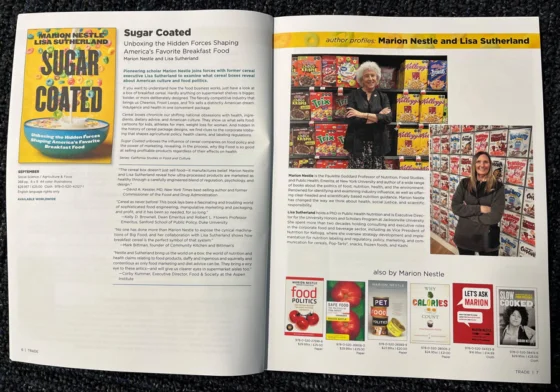
The landscape of food policy advocacy and nutritional critique is bracing for a significant addition this autumn. Marion Nestle, the preeminent scholar of food politics and emeritus professor at New York University, has officially unveiled her latest literary contribution, Sugar Coated, scheduled for release on September 8, 2026. Published by the University of California Press (UC Press), the work marks the seventh collaboration between the author and the publisher, cementing a long-standing partnership dedicated to demystifying the complex interplay between the food industry, government regulation, and public health.
As the Fall 2026 catalog from UC Press begins to circulate among academic circles and industry stakeholders, early details regarding Sugar Coated suggest an investigative deep dive into the historical and cultural significance of processed foods. Perhaps most notably, the book distinguishes itself through its aesthetic and pedagogical approach, featuring 44 full-color, full-page illustrations of cereal boxes—a visual history that serves as a cornerstone for Nestle’s broader critique of food marketing tactics.
Main Facts: A New Chapter in Food Politics
The announcement of Sugar Coated serves as a focal point for ongoing discussions regarding dietary health and the influence of corporate marketing on consumer behavior. With a publication date set for September 8, 2026, the book is currently available for pre-order, signaling high anticipation within the public health community.
Nestle, known for her rigorous approach to food systems, describes the project as a personal and professional milestone. Her history with UC Press has spanned decades, consistently producing seminal works that challenge the status quo of agricultural policy and dietary guidelines. Sugar Coated represents a thematic shift, moving from abstract policy analysis toward a more tangible examination of how branding and packaging—specifically the omnipresent iconography of breakfast cereals—have shaped the American diet.
The inclusion of 44 full-color, full-page illustrations is not merely a stylistic choice; it is a structural element of the argument. By cataloging the evolution of cereal box design, Nestle intends to demonstrate how companies have leveraged color, character, and health claims to cultivate brand loyalty among children and adults alike, often obfuscating the nutritional reality of the products contained within.
Chronology: The Partnership of Author and Publisher
To understand the significance of this release, one must examine the timeline of Nestle’s collaboration with the University of California Press. This relationship is not merely transactional; it is a collaborative effort to bring nuanced, evidence-based nutrition science to the general public.
- 1990s–2000s: The foundation of the partnership was laid as Nestle began publishing works that analyzed the "food politics" of the American diet. These early volumes established a framework for understanding how lobbying efforts influence the USDA’s dietary guidelines.
- 2010–2020: During this period, the collaboration deepened with the release of books that investigated the supply chain, global food systems, and the socio-economic factors driving obesity.
- 2024–2025: The research phase for Sugar Coated took place, involving intensive archival work into cereal packaging history. This period involved reconciling historical design trends with contemporary nutritional research.
- May 2026: The University of California Press releases its Fall 2026 catalog, providing the first public glimpse into the project’s scope and visual ambition.
- September 8, 2026: The official launch date for Sugar Coated, accompanied by planned lectures and industry discussions.
Supporting Data: The Case Against Processed Marketing
The core of Sugar Coated is supported by decades of data regarding the impact of hyper-processed foods on public health. While the book focuses on the visual language of the cereal aisle, the implications are rooted in hard data.
The Cereal Industry’s Economic Footprint
According to industry reports, the breakfast cereal market remains a multi-billion dollar enterprise, characterized by high profit margins and aggressive marketing spend. The "sugar-coated" nature of these products—often marketed as "whole grain" or "fortified"—presents a paradox for consumers. Nestle’s work highlights the discrepancy between the health halo projected by these boxes and the actual metabolic impact of their ingredients.
Visual Literacy and Public Health
Data from psychological studies cited in nutrition journals suggest that packaging design significantly influences consumer choice, particularly in the "pester power" of children. By analyzing the 44 illustrations included in her book, Nestle provides a visual taxonomy of how marketing design has evolved from simple product identification to sophisticated psychological engagement.
Nutritional Guidelines vs. Corporate Interests
The book further explores the historical tension between federal health recommendations—such as those published by the FDA—and the lobbying power of food manufacturers. This has historically resulted in dietary guidelines that, while scientifically sound, are often muted or diluted by the interests of the sugar and cereal lobbies.
Official Responses and Industry Reception
The announcement of Sugar Coated has prompted varying responses from across the food spectrum. Academic colleagues have lauded the book as a necessary addition to the field of food studies, noting that the combination of visual art and policy critique makes the subject matter more accessible.
"Marion Nestle has a rare ability to bridge the gap between complex science and daily life," notes a spokesperson from a prominent nutrition research institute. "By using cereal boxes as her entry point, she makes the often invisible mechanisms of food policy visible to the average consumer."
Conversely, representatives from the processed food industry have historically viewed such publications with caution. While there has been no official statement from major manufacturers regarding this specific book, similar works have previously been met with calls for "balanced perspectives" on the necessity of convenient, fortified food products for busy, modern households. The discourse surrounding Sugar Coated is expected to reignite debates over the ethics of marketing to minors and the transparency of nutritional labeling.
Implications: The Future of Consumer Awareness
The publication of Sugar Coated carries profound implications for how the public perceives food packaging and, by extension, how it navigates the grocery store.
Redefining Transparency
Nestle’s work advocates for a higher standard of transparency. By detailing the evolution of cereal packaging, she encourages readers to adopt a critical eye when navigating the supermarket. The implications for the industry could be significant, potentially fueling demand for more honest, less deceptive packaging laws.
The Role of Academic Publishing
The success and reach of a book like Sugar Coated underscore the vital role of university presses in the age of misinformation. In an era dominated by rapid social media trends and unverified health claims, the commitment of UC Press to long-form, peer-reviewed, and rigorously edited work provides a necessary counterweight to the fast-paced, often unreliable flow of digital information.
A Call to Legislative Action
Ultimately, the book is expected to serve as a rallying cry for policy reform. By illustrating the history of how sugar has been effectively "sold" to the American public, Nestle provides the intellectual ammunition for advocates pushing for stricter regulations on marketing sugary foods to children.
Educational Potential
Beyond the policy implications, Sugar Coated is poised to become a staple in university classrooms. Its interdisciplinary nature—blending art history, sociology, public health, and political science—makes it an ideal text for a new generation of students looking to understand the mechanics of the modern food system.
Conclusion
As September 8, 2026, approaches, the release of Sugar Coated stands as a testament to the enduring relevance of Marion Nestle’s work. Through a unique synthesis of visual storytelling and rigorous analysis, she continues to hold the food industry accountable while empowering consumers to make more informed decisions.
The book is not merely a critique of a single food category; it is an invitation to look closer at the items we place in our shopping carts every day. As the industry faces increased scrutiny, Nestle’s latest work serves as a reminder that understanding the history of our food is the first step toward reclaiming our health. With the support of the University of California Press, this publication is set to influence the conversation on food politics for years to come, reminding us all that there is far more to a box of cereal than meets the eye.
For those interested in the evolution of food policy and the intersection of visual culture and public health, Sugar Coated is an essential addition to the bookshelf, promising to change the way we look at the grocery store aisle forever.