












For many, the steady decline in walking quality—the shuffling gait, the reduced stride length, or the creeping discomfort—is accepted as an inevitable consequence of aging. We are conditioned to believe that as the decades pass, our movement must become more guarded and less fluid. However, leading experts in biomechanics and physical performance suggest that this perspective is fundamentally flawed. The "normal" decline in mobility is, in many cases, a preventable loss of efficiency that has been quietly developing for years, if not decades.
By focusing on the "windlass mechanism"—a complex, often overlooked biomechanical process in the foot—individuals over 60 can reclaim their stride, enhance their balance, and maintain an active, vibrant lifestyle well into their later years.
The Windlass Mechanism: Understanding Your Body’s Natural Winch
At the heart of every step you take lies the windlass mechanism. While it remains largely unknown to the general public, it is the primary engine of human locomotion. Think of your foot not as a static foundation, but as a dynamic, intelligent structure.
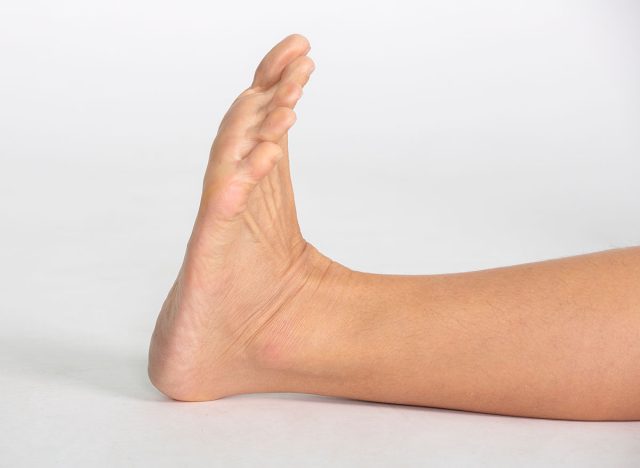
During the "push-off" phase of walking, as your heel leaves the ground and your big toe extends, the plantar fascia—the thick band of tissue running along the sole of your foot—tightens. This process functions identically to winding a rope around a winch. As the fascia pulls taut, it creates tension that raises the arch of the foot, transforming it from a supple, shock-absorbing structure into a rigid, powerful lever. This rigidity is essential for transferring force from your leg into the ground, propelling you forward with minimal energy expenditure.
When this mechanism functions correctly, walking feels effortless. Your foot accepts the load, stores the potential energy, and releases it in a seamless cycle. It is a masterpiece of biological engineering that occurs thousands of times daily, usually without a moment of conscious thought.

The "Single Point of Failure": Why Compensation Chains Occur
In the field of engineering, a "single point of failure" refers to a component that, when compromised, can lead to the collapse or malfunction of an entire system. The human body, as a kinetic chain, is remarkably similar.
When the windlass mechanism begins to falter—due to limited big toe mobility, restricted plantar fascia, or diminished ankle function—the body does not simply stop moving. Instead, it adapts. This is where the trouble begins. If the foot fails to act as a rigid lever, the knee is forced to compensate, often taking on stress it wasn’t designed to handle. This compensation then travels upward, altering hip mechanics, pelvic alignment, and even the rotational capacity of the rib cage.
These adaptations are subtle and gradual. Because the body is highly efficient at finding ways to keep you moving, you may not notice these shifts until you experience chronic pain or a significant loss of balance. Most people attribute these changes to "getting old," but in reality, they are the downstream effects of a foundational failure in the feet.
Flexibility as Adaptive Capacity
To address this, we must shift our definition of flexibility. Often, people view flexibility as the ability to reach their toes or perform a static stretch. From a performance perspective, flexibility is better defined as the body’s ability to adapt to force.
A healthy foot must be two things simultaneously: soft enough to absorb the impact of the ground, and stable enough to provide a platform for propulsion. This requires a healthy, resilient fascial network. Fascia is the connective tissue that envelopes our muscles, organs, and bones, acting as a global communication and distribution system for tension. When the plantar fascia loses its elasticity, the entire kinetic chain becomes "expensive" to operate—meaning it requires more energy to move, leading to shorter strides, increased fatigue, and a loss of confidence in one’s balance.
The Four Daily Moves to Restore Gait Efficiency
To maintain independence and movement quality after 60, one must prioritize the maintenance of the foot and ankle complex. The following four exercises are designed to restore the functionality of the windlass mechanism, ensuring that your body remains a fluid, efficient machine.
1. Toe Coordination: Reclaiming Independent Control
The loss of intrinsic foot muscle control is a hallmark of sedentary aging. The ability to articulate the big toe independently of the other four toes is vital for the windlass mechanism.
- The Technique: Sit with your feet flat on the floor. Attempt to lift only your big toe while keeping the other four toes pressed firmly into the ground. Ensure that there is no movement in your ankle, knee, or hip.
- The Goal: By isolating the big toe extensors, you are training the neural pathways required for the windlass mechanism to trigger during the gait cycle.
- Pro Tip: If you struggle, use your hand or your other foot to hold down the four smaller toes while you focus on the big toe. Perform 1–3 sets per foot daily.
2. Rolling and Unrolling: Building Dynamic Range
This exercise prepares the foot for the transition from the mid-stance phase to the push-off phase of walking.
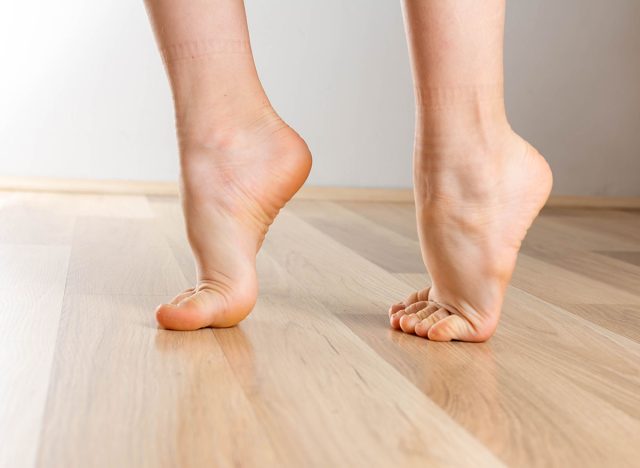
- The Technique: Start in a standing position. Slowly rise onto the ball of your foot, focusing on a smooth, controlled transition over the big toe joint. Lower yourself back down with the same level of control.
- The Goal: This improves the fluidity of the foot’s transition and strengthens the stabilizers of the ankle. It forces the fascia to load and unload under tension.
3. Myofascial Gastroc Stretch: Addressing Calf Tension
The gastrocnemius (the large calf muscle) often becomes tight, which can pull the heel into a position that inhibits the windlass mechanism.
- The Technique: Using an incline block, book, or step, place the ball of your foot on the elevated surface with your heel on the ground. Keep your leg straight and lean forward until you feel a gentle stretch in the calf.
- The Goal: To reduce the tension that restricts ankle dorsiflexion. Hold for 30–90 seconds. You can bias the stretch by turning your heel slightly inward or outward to hit different heads of the muscle.
4. Myofascial Soleus Stretch: Supporting the "Second Heart"
Often called the "second heart," the soleus muscle lies deep beneath the gastrocnemius and is crucial for venous return—pumping blood back from the legs to the heart.
- The Technique: Similar to the gastroc stretch, but with the knee bent. By bending the knee, you take the gastrocnemius out of the equation and place the stretch directly on the soleus.
- The Goal: Maintaining soleus flexibility is essential for both circulation and the ability to keep the heel on the ground longer during the walking stride, which allows the windlass mechanism more time to engage.
Implications for Longevity
The implications of these exercises extend far beyond the feet. By preserving the mechanical integrity of your gait, you are directly impacting your spinal health, your balance, and your overall metabolic output.
When movement is efficient, it is sustainable. When it is sustainable, you are more likely to remain active, which is the single most important factor in maintaining cognitive health, cardiovascular function, and independence as you age. The narrative of "inevitable decline" is a choice; by investing a few minutes each day into your foundation, you can ensure that the next twenty years are defined by strength, mobility, and the confidence to walk anywhere you choose.