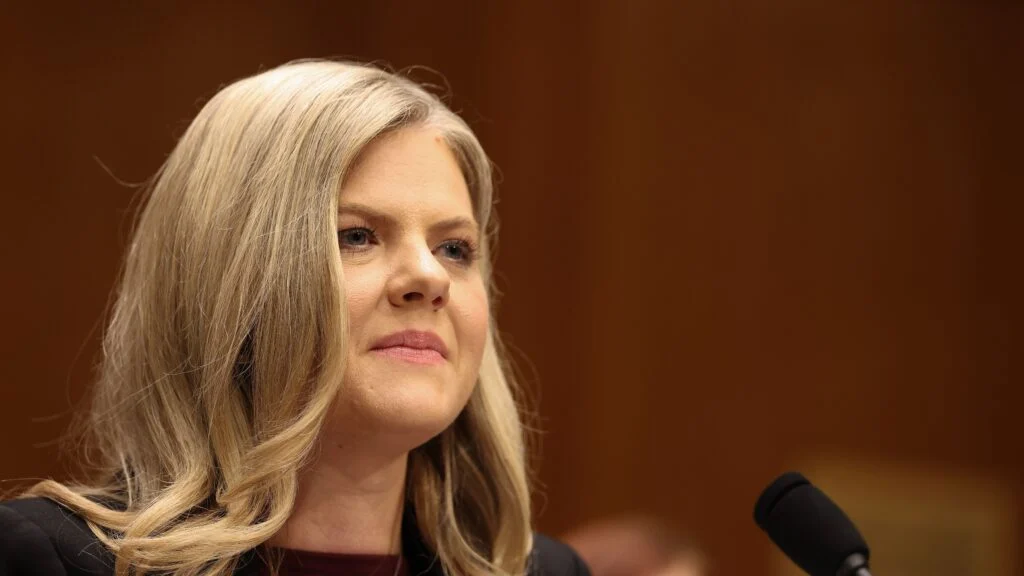
On Thursday, the U.S. Senate Committee on Health, Education, Labor, and Pensions convened a high-stakes confirmation hearing for Dr. Heidi Overton, the nominee for commissioner of the Food and Drug Administration (FDA). The hearing, which was intended to assess her qualifications to lead the nation’s primary regulatory body for public health, quickly devolved into a contentious debate over political loyalty and the future of reproductive healthcare.
For the medical community, the primary point of contention centered on mifepristone, the primary medication used in the two-drug regimen for medication abortion. When pressed by senators on her stance regarding the drug’s regulatory status, Dr. Overton—a nominee favored by anti-abortion groups—offered evasive responses, fueling fears that the agency’s scientific independence is being sacrificed at the altar of political ideology.
A Chronology of Conflict: Mifepristone Under Fire
The controversy surrounding mifepristone is not new, but it has reached a fever pitch under the current administration. For two decades, the medication has been the target of relentless legal, legislative, and social scrutiny, despite being one of the most studied and safest drugs in the pharmaceutical canon.
- 2000: The FDA approves mifepristone for the termination of early pregnancies.
- 2024: The U.S. Supreme Court unanimously dismisses FDA v. Alliance for Hippocratic Medicine, ruling that the plaintiffs challenging the FDA’s regulatory authority lacked legal standing.
- Spring 2026: A 5th Circuit order attempts to reinstate restrictive in-person dispensing requirements nationwide, a move temporarily stayed by the Supreme Court to preserve access during ongoing litigation.
- September 2026: Dr. Heidi Overton faces the Senate health committee, where she signals a willingness to revisit the agency’s internal safety studies on the drug.
Throughout this timeline, the narrative pushed by ideological opponents has remained consistent: that mifepristone is a danger to women’s health. However, data from global health organizations and the FDA itself contradict this claim, consistently showing that the drug carries a lower rate of adverse events than common over-the-counter medications like acetaminophen.
The Data: Safety vs. Political Narrative
The administrative "red tape" surrounding mifepristone—including the requirement for special clinician certification and unique pharmacy registration—is viewed by many medical professionals as a form of "medically unnecessary" regulatory burden.
To date, approximately 7.5 million Americans have safely utilized mifepristone. The American College of Obstetricians and Gynecologists (ACOG) has long advocated for its use not only for pregnancy termination but also for the management of early pregnancy loss. Despite this, the FDA has declined to officially add miscarriage management to the drug’s label, leaving patients to navigate a complex, bureaucratic, and often punitive system during moments of personal crisis.
When comparing the safety profile of mifepristone to other common drugs, the discrepancy in regulation is striking. Acetaminophen, available in any convenience store, is linked to hundreds of deaths annually. Conversely, the FDA has been unable to definitively attribute a significant number of deaths to the use of mifepristone over its entire history in the U.S. market. The ongoing requirement for a "permission slip" for mifepristone, while emergency contraception and birth control pills are increasingly available, suggests that the barriers are rooted in morality rather than medical science.
Official Responses and the Crisis of Credibility
The Senate hearing revealed a deep-seated anxiety regarding the FDA’s institutional integrity. The agency has undergone significant turmoil in the past year, including the departure of over 3,000 staff members. Senator Maggie Hassan (D-N.H.) epitomized the frustration of the committee when she challenged Dr. Overton to name a single instance where she disagreed with the President’s views on science-related issues. Dr. Overton’s failure to provide an answer—or to correct misinformation regarding vaccine schedules and food safety—drew sharp criticism from both sides of the aisle.
Industry leaders have also voiced their concerns. A biotech CEO recently noted in a public statement that allowing courts or political appointees to override the FDA’s scientific judgment threatens the entire drug development pipeline. If the FDA becomes a political instrument rather than a scientific referee, the global standing of the U.S. pharmaceutical industry could be irrevocably damaged.
Implications for Reproductive Rights and Telehealth
For the millions of patients who rely on telemedicine, the nomination of Dr. Overton represents an existential threat. The rise of telehealth has revolutionized reproductive healthcare by allowing patients to consult with clinicians via video and receive medication by mail. This shift has essentially neutralized the intimidation tactics previously used by anti-abortion protesters outside of physical clinics.
Today, approximately 30% of U.S. abortion patients utilize telehealth services. For many, this is the only viable path to care, particularly in states where the political climate is hostile. During the confirmation hearing, Senator Josh Hawley (R-Mo.) openly expressed his desire to halt the expansion of telehealth, highlighting that for the current administration, the restriction of abortion access is a primary legislative objective.
The implications of this shift are profound:
- Erosion of Evidence-Based Policy: If the FDA begins to treat settled science as "negotiable," the entire process of drug approval and post-market safety monitoring loses its foundation.
- Increased Health Inequity: Restrictions on telehealth will disproportionately affect low-income patients, those in rural areas, and those who cannot afford to travel across state lines.
- The "Workaround" Reality: As history shows, restricting access does not eliminate demand. If the government succeeds in restricting mifepristone, patients will turn to alternative methods—such as the use of misoprostol alone, which is effective but carries a different side-effect profile—or seek medications through unregulated, less safe channels.
Conclusion: The Path Forward
The nomination of Dr. Heidi Overton signals a turning point in the U.S. approach to public health. If she is confirmed, the FDA will be led by someone who has demonstrated a willingness to prioritize the administration’s political agenda over the agency’s mandate to protect the public based on rigorous, peer-reviewed science.
The battle over mifepristone is about more than a single drug; it is a battle for the soul of the FDA. The medical community, legal advocates, and patient rights groups are now faced with the reality that they must prepare for a landscape where scientific consensus is no longer a shield against political interference. As the nomination moves toward a final vote, the question remains: will the Senate uphold the integrity of the nation’s premier health agency, or will it allow the "fox" to fully enter the "hen house," potentially destabilizing decades of progress in reproductive medicine and scientific governance?
The fight to protect the FDA is not just a fight for reproductive rights—it is a fight for the future of medicine in America. The stability of the healthcare system relies on an agency that is, by definition, objective. If that objectivity is compromised, it is not just reproductive health that will suffer, but the standard of care for every American.
Julie F. Kay is a human rights attorney, founder and CEO of Reproductive Futures, and co-author of "Controlling Women: What We Must Do Now to Save Reproductive Freedom."