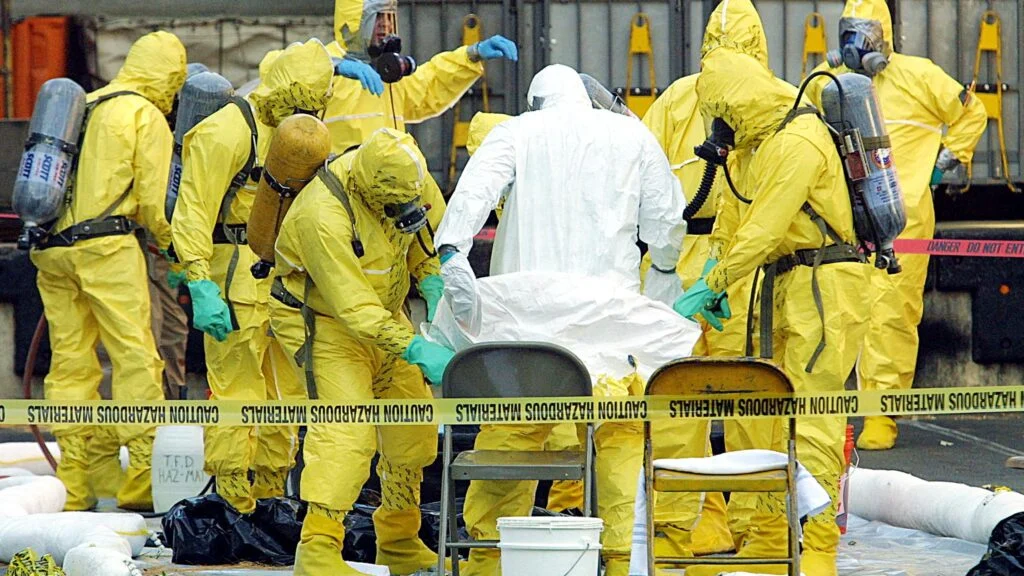
Twenty-five years ago, the United States was already reeling from the visceral shock of the September 11 terrorist attacks when a secondary, invisible, and insidious threat began to materialize in the nation’s mailboxes. What followed was a wave of terror that transcended the physical impact of the planes, fundamentally altering the way the country viewed public health, national security, and the sanctity of the postal system.
The 2001 anthrax attacks—a series of letters laden with lethal Bacillus anthracis spores mailed from New Jersey to media outlets and congressional offices—resulted in 22 confirmed cases of disease and five deaths. Beyond the human toll, the attacks prompted a societal paralysis and a response effort that cost the U.S. government billions of dollars. As we stand a quarter-century removed from these events, the lessons learned by the public health community remain critical to our survival in an era where biological threats are no longer just the domain of rogue actors, but potentially the output of sophisticated artificial intelligence.
A Chronology of Crisis: From Florida to the Capital
The public health emergency began not with a formal declaration, but with a clinical anomaly in Florida. In early October 2001, a photo editor for The Sun tabloid, based in Boca Raton, became severely ill. An astute clinician, noticing the telltale signs of the disease in a spinal tap, suspected anthrax—a diagnosis that initially seemed impossible in a modern domestic setting.
When the Centers for Disease Control and Prevention (CDC) was alerted via its newly established Laboratory Response Network, the initial hypothesis leaned toward natural exposure. However, the confirmation of a second case at American Media Incorporated (AMI) shifted the narrative instantly. With the nation already in a state of high alert, the specter of bioterrorism moved to the forefront.
The Two-Wave Assault
The investigation later identified two distinct mailings, each possessing unique characteristics that served as a grim, real-world laboratory for bioterrorists:
- The September 18 Mailing: These envelopes contained what investigators informally termed "crunchy" anthrax. The spores were clumped together, resulting in more cutaneous (skin) infections. These were largely confined to media workplaces.
- The October 9 Mailing: These letters utilized a "fine powder" formulation, designed to be more easily aerosolized. This mailing resulted in higher rates of inhalational anthrax, the most lethal form of the disease, and infected postal workers along the mail-processing pathways—people who were never the intended targets of the letters.
The fact that these two mailings produced different clinical outcomes suggested a deliberate, evolving experiment. For those of us working in the CDC’s Emergency Operations Center (EOC), which we stood up in one of the agency’s auditoriums, the fear was that this was merely the prelude to a much larger, more coordinated attack.
Supporting Data: The Science of Surveillance
The 2001 investigation was a landmark moment for molecular epidemiology. At the time, molecular testing was a relatively novel tool in the public health arsenal. By utilizing this technology, we were able to prove that the isolates recovered from patients, four powder-containing envelopes, and environmental samples were indistinguishable, pointing to a singular, common source.
The clinical findings were sobering. Our published research highlighted a stark divide in patient outcomes: approximately half of the victims suffered from cutaneous infections, while the remainder faced the highly fatal inhalational form.
The investigation also yielded a paradigm-shifting realization: our pre-attack guidance was fundamentally flawed. Existing literature suggested that the risk of re-aerosolization of anthrax spores was low. Consequently, our initial prophylaxis and decontamination protocols were narrowly focused on individuals and locations that had direct contact with the opened envelopes. The tragedy among postal workers forced us to discard these assumptions. As new evidence accumulated, we realized the danger was not localized; it was pervasive. Ultimately, approximately 32,000 people were placed on antimicrobial prophylaxis. Fortunately, this wider net likely saved countless lives.
Official Responses and the Evolution of Defense
The fallout from the anthrax attacks triggered a massive overhaul of U.S. biodefense infrastructure. The United States Postal Service (USPS) fundamentally altered its operations, introducing rigorous mail screening and re-engineering mail-sorting facilities to mitigate the risk of aerosolized agents. Furthermore, the federal government implemented "select-agent" regulations, placing stringent controls on who could access, store, or transport pathogens like Bacillus anthracis.
However, while our detection capabilities have reached new heights, the institutional capacity to respond has not kept pace. Today, we face a paradox: our technology for identifying biological threats is superior, but our organizational resilience is arguably weaker than it was in 2001.
The Modern Threat Landscape: AI and Emerging Risks
We are currently witnessing a dangerous erosion of our public health infrastructure. Recent cuts to civilian and military biodefense programs have left the nation more exposed. A report by the Center for Strategic and International Studies (CSIS) recently warned that Americans face greater risks from biological threats today than at any time this century.
This escalation is not merely a product of geopolitical instability; it is driven by technology. The rise of artificial intelligence has democratized the ability to design and synthesize pathogens. The Bipartisan Commission on Biodefense has noted that AI fundamentally transforms the biological threat landscape, lowering the barrier to entry for non-state actors to develop weapons that were once the sole province of nation-states.
Implications for the Future: Three Lessons
As I reflect on my 31 years at the CDC and my time leading the Epidemiology and Surveillance Team during the anthrax crisis, three urgent lessons define our current reality.
1. Detection Must Lead to Rapid Action
Detection is useless without interpretation and decisive, evidence-based action. I am deeply concerned by recent trends in administrative policy that have sought to undermine independent, scientific decision-making. If a real-time intentional biothreat signal were to emerge today, I fear that political interference and a lack of coordination with state and local governments would result in a sluggish, ineffective response.
2. Prepare for the "Wrong" Assumption
The greatest lesson of 2001 was that our initial assumptions were wrong. We must foster a culture of response that manages uncertainty and welcomes internal, science-driven dissent. Current leadership in some areas of the Department of Health and Human Services has demonstrated a concerning intolerance for dissenting dialogue, which acts as a major impediment to the rapid course correction required in a crisis.
3. Capability Must Be Maintained
Preparedness is not a static state; it is a muscle that must be continually exercised. Sophisticated technology cannot replace experienced human capital. With the CDC’s workforce capacity currently suffering significant declines—roughly 28% lower than 2024 levels—and a loss of senior scientific leadership, we are losing the very people capable of making the "defensible decisions under uncertainty" that saved lives in 2001.
Conclusion: A Call to Vigilance
Twenty-five years ago, we learned that the first signal of a biological attack is rarely the whole story. The strength of our response will depend not just on whether we have sensors in the field, but on whether we have the people, the institutional relationships, and the scientific integrity to interpret what those sensors are telling us.
With ongoing outbreaks of hantavirus, Ebola, and measles, the specter of an intentional threat remains a potent reminder of our vulnerability. We must move beyond the complacency that has set in since 2001. It is time to reinforce our public health institutions, protect the independence of our scientific agencies, and recognize that in the age of AI-facilitated pathogens, our most valuable biodefense asset is a well-supported, empowered, and truth-seeking workforce. The next threat may not arrive in an envelope, but the lessons of the past remain our best defense for the future.