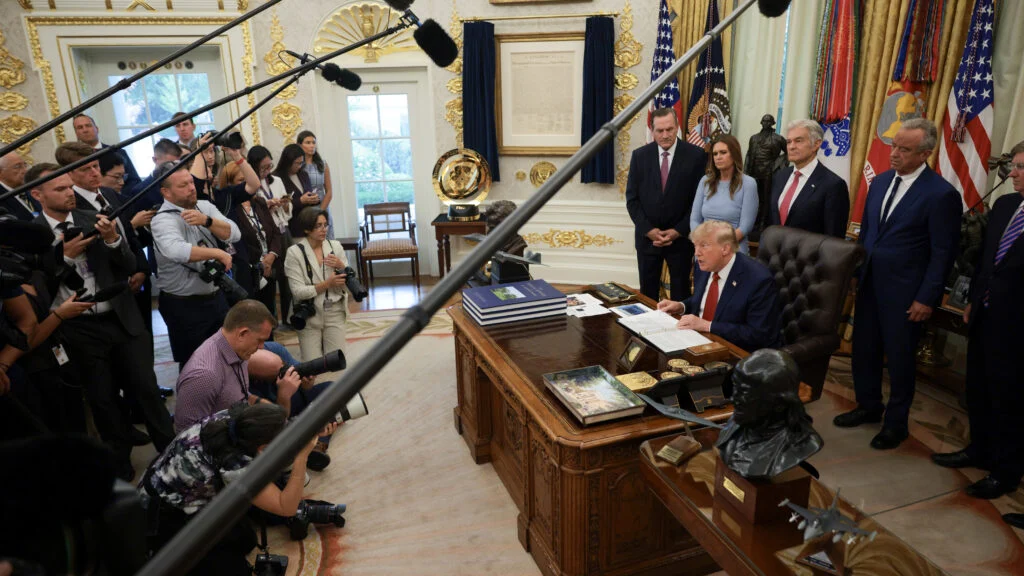
WASHINGTON — In a high-profile announcement delivered from the White House this past Friday, President Trump unveiled a sweeping new healthcare initiative aimed at curbing the rising tide of pharmaceutical expenditures within Medicaid programs. Dubbed the "GENEROUS" model, the program represents a federal effort to leverage the collective bargaining power of state Medicaid systems to secure more favorable pricing for life-saving medications. However, as the administration touts the project as a landmark achievement, healthcare policy experts, industry analysts, and state officials are left grappling with a series of unanswered questions regarding the initiative’s long-term efficacy, operational mechanics, and potential impact on patient access.
The Core Facts: What is the GENEROUS Model?
At its heart, the GENEROUS model is a federal demonstration project designed to alter the landscape of drug procurement for Medicaid. By standardizing certain aspects of drug payment and incentivizing states to adopt more rigorous negotiation tactics, the administration asserts that it can significantly reduce the "net cost" of drugs—the price paid by the state after rebates and discounts are accounted for.
The President’s announcement on Friday was framed as a comprehensive, national rollout. According to the administration’s initial statements, all 50 states, the District of Columbia, and Puerto Rico were slated to participate. The narrative presented was one of total unity, suggesting that the federal government had successfully secured the participation of every jurisdiction in the country to confront the pharmaceutical industry’s pricing strategies.
However, the reality behind the press release reveals a more complex bureaucratic timeline. While the administration touted universal participation, the Centers for Medicare and Medicaid Services (CMS) issued a clarifying statement later that afternoon. CMS noted that while 40 states and Puerto Rico had officially signed binding agreements to join the model, the remaining jurisdictions were still in the application phase. States have been given a strict deadline of the end of the month to finalize these agreements, creating a narrow window for state-level legal and financial departments to assess the risks and benefits of the federal proposal.
A Chronology of the Policy Rollout
The genesis of the GENEROUS model did not occur in a vacuum; it is the culmination of years of federal debate over how to manage the escalating costs of specialty drugs and high-priced biologics.
- Early 2023: Federal policy advisors began drafting frameworks for a state-led, federally-supported payment model to combat the volatility of Medicaid drug spending.
- Mid-2024: CMS conducted a series of closed-door briefings with state Medicaid directors to solicit feedback on the viability of a centralized negotiation model.
- Late 2024: The administration officially signaled that a "major announcement" regarding drug costs was imminent, leading to speculation that the White House would attempt to bypass legislative gridlock through executive action and demonstration waivers.
- Friday, Current Month: The formal announcement was made. President Trump emphasized the model as a pivotal shift in the relationship between the federal government and pharmaceutical manufacturers.
- Post-Announcement: CMS provided the granular breakdown of state participation, revealing that while the ambition is national, the operational logistics remain fluid as the month-end deadline approaches.
Supporting Data: The Medicaid Expenditure Crisis
To understand the weight of the GENEROUS model, one must look at the data driving the administration’s urgency. According to recent reports from the Kaiser Family Foundation and the Medicaid and CHIP Payment and Access Commission (MACPAC), drug spending has become the fastest-growing component of state Medicaid budgets.
In the last decade, Medicaid spending on outpatient drugs has grown by an average of 6% annually. This growth is driven primarily by the entry of specialty drugs—therapies used to treat rare diseases, oncology, and autoimmune conditions—which can cost upwards of $100,000 per patient per year. Because Medicaid is legally required to cover most FDA-approved drugs, states often find themselves with limited leverage to negotiate prices compared to private insurers, who have the ability to exclude certain drugs from their formularies.
The GENEROUS model seeks to disrupt this dynamic by providing states with additional federal support to establish "value-based" payment agreements. In these arrangements, the price paid for a drug is tied directly to the clinical outcomes it produces. If a drug fails to deliver the promised therapeutic benefit, the manufacturer must refund a portion of the cost. Proponents argue this will save taxpayers billions, while critics warn that the administrative burden of tracking patient outcomes could be prohibitively expensive for states with limited bureaucratic bandwidth.
Official Responses and Industry Skepticism
The reaction to the announcement has been polarized, reflecting the deep-seated tensions between the executive branch, state governments, and the pharmaceutical lobby.
The Administration’s Perspective:
White House officials maintain that the GENEROUS model is a "game changer" that places the patient at the center of the pricing conversation. They argue that by creating a unified front across state lines, the federal government can prevent manufacturers from "divide and conquer" tactics, where companies negotiate disparate deals with 50 different states, often obfuscating the true market value of the medication.

State Perspectives:
State Medicaid directors, speaking on the condition of anonymity due to the ongoing application process, have expressed a mixture of optimism and caution. "We want lower costs, certainly," one director stated. "But we are wary of any model that imposes federal mandates on our state-specific formularies. We need to ensure that this model doesn’t result in ‘one size fits all’ policies that don’t account for the unique demographics of our Medicaid populations."
Pharmaceutical Industry Reaction:
Industry groups, most notably PhRMA, have reacted with guarded concern. In a statement released shortly after the announcement, industry representatives warned that excessive government intervention could chill innovation. They argue that if the government dictates price points, companies may be less incentivized to invest in R&D for high-risk, high-reward specialty therapies. Furthermore, they have questioned whether the federal government has the statutory authority to enforce these agreements without explicit congressional approval, hinting at potential legal challenges on the horizon.
The Implications: What Comes Next?
The road ahead for the GENEROUS model is fraught with technical and political hurdles. The immediate challenge is the deadline at the end of the month. If the remaining ten states decline to participate, the "national" scope of the model will be significantly undermined, potentially leading to a fragmented system where some states benefit from federal support while others remain stuck in traditional, higher-cost procurement loops.
1. Legal Challenges
Given the precedent set by previous federal attempts to regulate drug prices, it is highly likely that legal challenges will emerge. Pharmaceutical companies may argue that the model constitutes an unconstitutional "taking" of intellectual property or that it exceeds the executive branch’s authority under the Social Security Act.
2. Implementation Barriers
Even if the model receives full participation, implementation will be a gargantuan task. Developing the data infrastructure to monitor "value-based" outcomes requires a level of integration between hospitals, pharmacies, and state agencies that currently does not exist in most states. The cost of building these systems could, in the short term, outweigh the savings promised by the model.
3. Patient Access Concerns
Patient advocacy groups have raised concerns about how these negotiations will impact access. If a state cannot reach a "value-based" agreement with a manufacturer, will that drug be removed from the formulary? If so, patients in those states could face significant hurdles in accessing specialized care. The administration has insisted that patient protections are built into the model, but the details of these safeguards remain opaque.
4. The Political Calculus
Ultimately, the GENEROUS model is as much a political tool as it is a policy one. With drug pricing remaining a top-of-mind issue for voters, the administration is clearly positioning itself as a proactive force in curbing costs. Whether the model produces measurable results before the next election cycle will likely determine its legacy.
Conclusion: A High-Stakes Gamble
The GENEROUS model represents an ambitious attempt to force a change in the pharmaceutical market’s status quo. While the administration’s enthusiasm is palpable, the lack of granular detail regarding how it will resolve the inherent conflict between state autonomy, pharmaceutical profitability, and patient access leaves many observers hesitant to declare it a success.
As the month-end deadline approaches, all eyes will be on the remaining states. Their decision to join—or to sit out—will serve as a bellwether for the future of federal-state healthcare partnerships. For now, the GENEROUS model remains a promising, yet profoundly incomplete, vision for the future of American healthcare. The question remains: can the administration turn this vision into a tangible reality, or will it become another footnote in the long, contentious history of drug pricing reform? The answer will unfold not in the press releases of the White House, but in the sterile, complex negotiations between state auditors, pharmaceutical executives, and the federal regulators tasked with making this model work.