











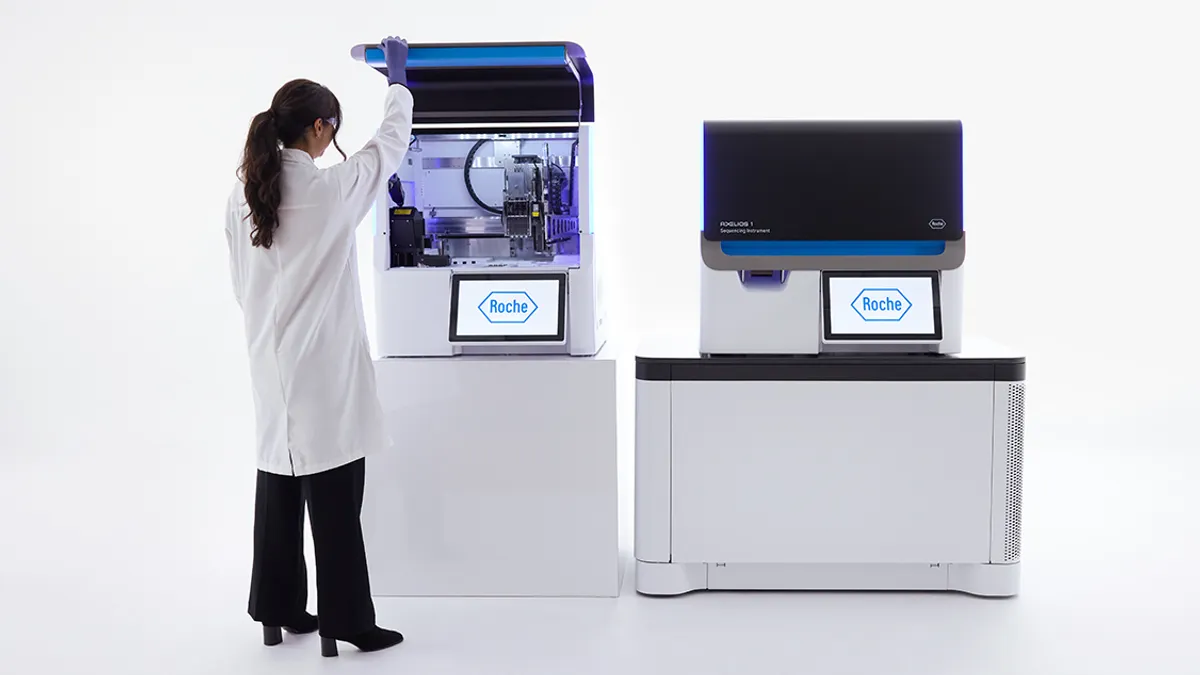
In the high-stakes world of life sciences, few markets are as entrenched and fiercely competitive as next-generation sequencing (NGS). For over a decade, Illumina has functioned as the undisputed titan of the industry, holding a massive, "sticky" installed base of clinical and research laboratories. However, a seismic shift may be underway. Roche’s recent unveiling of its Axelios 1 sequencing platform has sent ripples through Wall Street and the scientific community alike, marking what many industry observers believe is the most significant technological challenge to Illumina’s hegemony in years.
The Core Innovation: Sequencing by Expansion (SBX)
At the heart of the Axelios platform lies a novel approach to reading genetic material that Roche has dubbed "Sequencing by Expansion," or SBX. Traditional NGS technologies often struggle with the physical limitations of DNA and RNA molecules, which can be difficult to read with absolute precision at high speeds.
SBX represents a fundamental departure from existing paradigms. By converting DNA or RNA information into a longer, expanded molecule, the Axelios system effectively magnifies the signal, allowing for superior accuracy, increased scalability, and significantly faster processing speeds. Roche argues that this mechanism bypasses the inherent bottlenecks of current sequencing-by-synthesis methods, providing a higher fidelity readout that could prove revolutionary for complex genomic applications.
"These attributes, combined with our high level of cost efficiency, will enable the sequencing community to develop applications that previously were not feasible," said Matt Sause, CEO of Roche Diagnostics. For the research community, the promise is clear: higher resolution data at a lower price point, potentially unlocking doors in oncology, rare disease diagnostics, and infectious disease surveillance.
A Chronology of Ambition: From Failed M&A to Homegrown Disruption
Roche’s journey toward the Axelios 1 has been long and marked by a clear pivot in strategy.
- 2012: In a bold move that signaled its intent to lead the sequencing market, Roche launched an unsolicited bid to acquire Illumina. The attempt, valued at billions, was ultimately rejected by Illumina’s board, forcing Roche to retreat and reassess its position in the molecular diagnostics landscape.
- 2013–2024: Following the failed acquisition, Roche spent over a decade investing heavily in internal R&D. The company quietly assembled a team of engineers and geneticists tasked with creating a platform that wouldn’t just compete with Illumina, but would leapfrog it.
- February 2025: At a major genome science conference, Roche finally pulled back the curtain on the Axelios platform. The unveiling was timed to coincide with a period of market maturation, where laboratories are increasingly looking for ways to reduce costs while improving the quality of their whole genome sequencing (WGS) outputs.
- Post-Launch (Spring 2025): Since the initial announcement, Roche has been actively facilitating proof-of-principle studies. These early-stage tests have spanned critical sectors, including single-cell RNA sequencing and complex oncology panels, providing the first tangible evidence that SBX technology performs as advertised in real-world lab environments.
Supporting Data and Early Performance Metrics
While the Axelios system is still in its infancy regarding widespread adoption, the preliminary data shared by Roche and early testers has been compelling. The "expanded molecule" approach to sequencing has demonstrated a remarkable ability to handle high-throughput workloads without the typical trade-off in error rates.
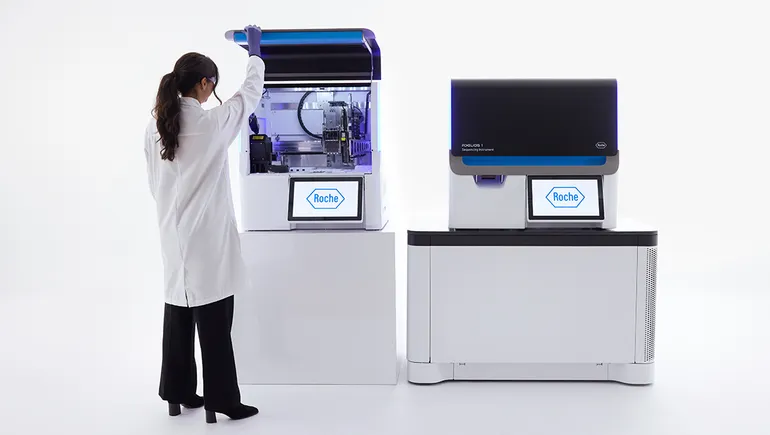
In comparative tests for whole genome sequencing, the Axelios 1 has shown a capacity for higher throughput per run compared to older, legacy systems, effectively lowering the cost-per-gigabase. Furthermore, in single-cell RNA sequencing—a rapidly growing field that requires extreme precision to differentiate between closely related cell types—the SBX technology’s increased signal-to-noise ratio has provided clearer insights than traditional methods.
However, data alone does not dictate market success. The broader industry, including analysts at J.P. Morgan and Jefferies, is watching closely to see if these performance gains hold up when scaled across thousands of diverse clinical samples, rather than just in controlled, high-level research settings.
The Battle of the Titans: Official Responses and Market Skepticism
The reaction from the investment community has been bifurcated. On one hand, analysts like Tycho Peterson of Jefferies have lauded the technology, characterizing it as the "greatest credible competitive threat in years." This sentiment underscores the market’s fatigue with the current status quo and an appetite for a new, powerful entrant.
Conversely, there is significant skepticism regarding the speed of adoption. In a note to clients, analysts at J.P. Morgan noted that while there is "general intrigue" regarding the SBX technology, the reality of laboratory procurement is far more conservative. Illumina’s ecosystem—comprising its NovaSeq X platform, its proprietary software, and its established clinical workflows—is notoriously "sticky."
"Management teams that are transitioning to Illumina’s NovaSeq X sequencer have indicated they aren’t urgently planning to switch," the J.P. Morgan report noted. This suggests that even if Axelios is technically superior, Roche faces a massive "switching cost" barrier. Labs are hesitant to abandon a platform that is already validated for regulatory compliance, reimbursed by insurance, and integrated into their existing diagnostic pipelines.
Implications for the Future of Diagnostics
The emergence of the Axelios 1 raises critical questions about the future trajectory of genomics.

The Clinical Transition
For hospital systems and diagnostic labs, the decision to pivot to a new platform involves more than just purchasing hardware. It involves retraining staff, validating bioinformatics pipelines, and updating regulatory filings. For Roche to succeed, it must prove that Axelios isn’t just a research toy, but a reliable, clinical-grade workhorse.
Cost-Efficiency and Democratization
If the SBX technology lives up to its promise of improved cost-efficiency, it could democratize sequencing, making high-depth whole genome sequencing accessible to smaller regional hospitals that previously had to outsource such work to centralized reference labs. This could radically change the standard of care for oncology patients, allowing for rapid, in-house genetic profiling to inform targeted therapy decisions.
The Innovation Arms Race
Ultimately, the arrival of Axelios serves as a wake-up call for the entire industry. Regardless of whether it immediately topples Illumina, its existence ensures that the "innovation arms race" will accelerate. Illumina, now under pressure from a credible competitor, will likely increase its own R&D spend, leading to faster cycles of technological advancement for the entire field.
Conclusion: A Long Road Ahead
Roche’s Axelios 1 is undeniably a significant technical achievement. By introducing the SBX method, the company has proven that it is capable of radical innovation in a space where many competitors have simply focused on incremental improvements. However, the path to market leadership is paved with more than just good engineering; it requires shifting the deep-seated loyalties of the global sequencing community.
As the industry moves through 2025 and beyond, the success of Axelios will depend on three key factors: the consistency of its performance in high-volume clinical settings, the robustness of the supporting software and data analysis ecosystem, and the company’s ability to offer a compelling economic incentive for labs to undergo the painful process of switching providers.
For now, the genomic world remains in a state of watchful waiting. The "greatest credible competitive threat" has arrived, but the battle for the future of DNA sequencing is only just beginning. The result will likely be a more competitive, faster, and more cost-effective landscape—a win for the scientists, clinicians, and patients who rely on the power of the genome to change lives.