As the human body ages, the definition of "fitness" shifts. For those over 50, the vanity-driven pursuit of a six-pack is often replaced by a more practical, life-sustaining goal: functional longevity. A strong core is the biological equivalent of a building’s foundation; it is the silent engine that allows for seamless movement, prevents chronic pain, and maintains the independence necessary to navigate daily life with confidence.
However, many individuals enter their fifth and sixth decades with misconceptions about what "core strength" actually entails. It is not merely the ability to perform a hundred crunches; it is the capacity to stabilize the spine, resist unwanted rotation, and generate power through the hips while keeping the torso rigid.
The Core as a Kinetic Anchor
When we discuss the core, we are not just talking about the rectus abdominis—the "six-pack" muscle. We are referring to a complex cylinder of muscles including the transverse abdominis, obliques, multifidus, and the pelvic floor. Together, these muscles act as an internal corset that protects the lumbar spine and serves as the bridge between the upper and lower body.
After 50, the degradation of muscle mass (sarcopenia) and changes in spinal integrity make core stability non-negotiable. According to recent clinical observations, a well-conditioned core directly correlates with better balance, a reduced risk of falls, and a decreased likelihood of lower back injuries. If your core is weak, your body will compensate by placing excessive strain on your joints, leading to the aches and stiffness often mistakenly attributed solely to "getting older."
The Five-Step Functional Assessment
To determine where you stand, we have identified five foundational movements. These are not merely exercises; they are diagnostic tools. By measuring your ability to maintain tension and alignment under these specific conditions, you can identify hidden weaknesses that may be hindering your physical performance.
1. The Forearm Plank: The Gold Standard of Endurance
The forearm plank is the ultimate test of total-body isometric tension. It requires the abdominal wall to brace against gravity while the glutes and shoulders provide a stable platform.
- The Diagnostic: Can you hold a rigid, straight-line position for 60 seconds? If your hips sag or your lower back arches, your endurance is likely insufficient to support your spine during strenuous activity.
- The Goal: A 60-second hold with perfect form—where the glutes are squeezed, the core is braced, and the neck remains in a neutral position.
- Progression: If you struggle, start with an incline plank (resting your forearms on a sturdy bench or countertop) to reduce the load while mastering the technique.
2. The Side Plank: Lateral Stability
Many people train in the sagittal plane (forward and backward) but neglect the frontal plane (side-to-side). The side plank is critical for strengthening the obliques and quadratus lumborum, muscles essential for preventing "side-sway" while walking or carrying groceries.
- The Diagnostic: Can you hold a perfectly stacked position for 30 seconds per side without your hips dipping toward the floor or your chest rotating?
- The Goal: 30 seconds per side. Any significant discrepancy between your left and right sides is a red flag for potential injury.
- Progression: Use the bent-knee variation to shorten the lever and reduce intensity until you have the baseline strength to transition to full-leg support.
3. The Dead Bug: Controlled Coordination
The Dead Bug is perhaps the most misunderstood exercise in the fitness world. It is not about how fast you move your limbs, but about how well you can keep your lumbar spine glued to the floor while your limbs reach away from the center.
- The Diagnostic: As you extend an arm and the opposite leg, does your lower back arch off the floor? If it does, your core is failing to stabilize the spine against the weight of your limbs.
- The Goal: 10 slow, deliberate repetitions on each side. The movement should be slow enough that you could stop at any point.
- Progression: Utilize a "Wall Press" variation, where you push your hands against a wall to engage your lats and core before beginning the leg movements.
4. The Glute Bridge Hold: Posterior Chain Integration
Your core cannot function in isolation; it requires the support of your glutes. The Glute Bridge tests your ability to maintain a neutral pelvis while the posterior chain is under load.
- The Diagnostic: Can you hold a bridge for 60 seconds without feeling a "cramp" or strain in your lower back? If you feel it in your back, you are likely using your lumbar extensors to compensate for weak glutes.
- The Goal: A steady 60-second hold. Your knees, hips, and shoulders should form a straight, unwavering line.
- Progression: If 60 seconds is too easy, transition to the Single-Leg Bridge to isolate each hip’s ability to stabilize the pelvis.
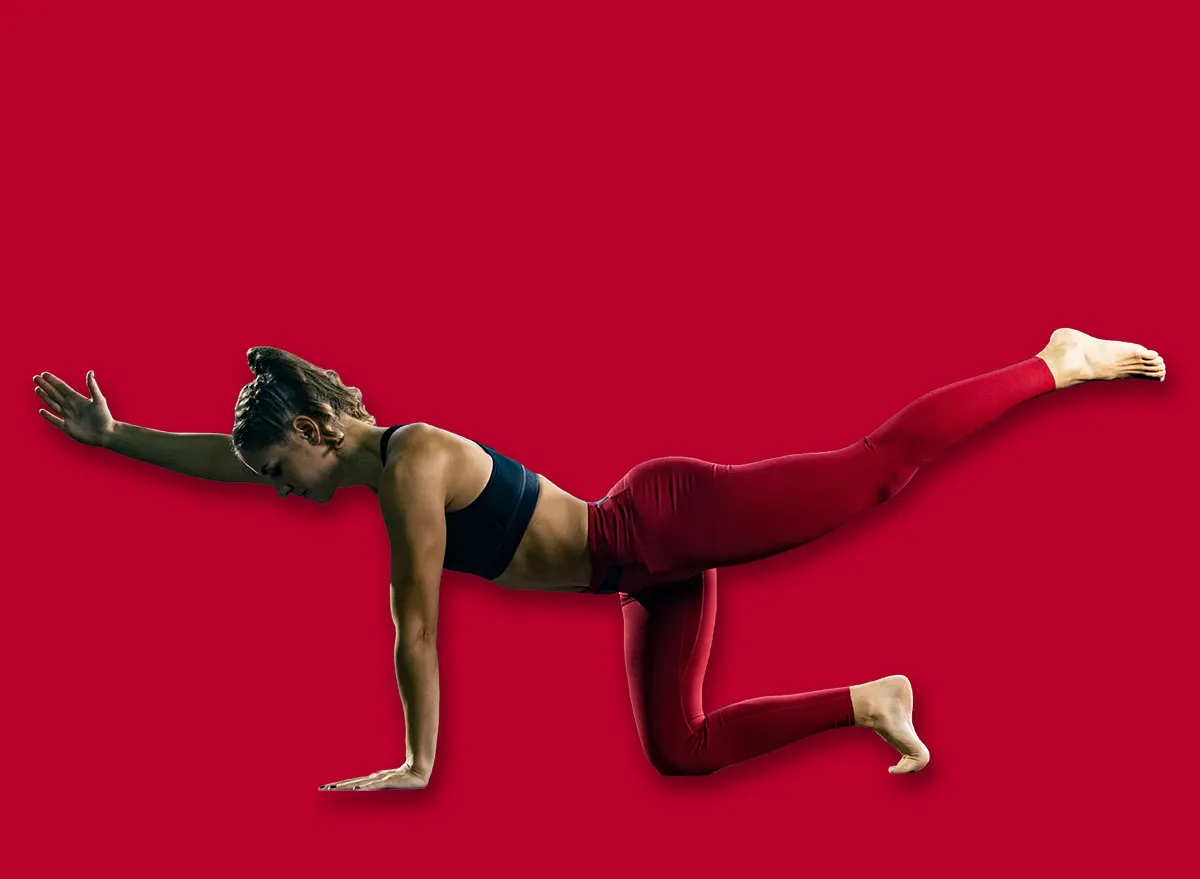
5. The Bird Dog: The Balance and Stability Hybrid
The Bird Dog requires you to stabilize the spine while moving limbs in a cross-body pattern. This mirrors the mechanics of walking and running.
- The Diagnostic: Can you extend your arm and opposite leg without your torso twisting or your hips shifting? If you wobble, it indicates a need for better neuromuscular control.
- The Goal: 10 controlled reps per side. The emphasis must be on the "reach"—stretching the limb long rather than high.
- Progression: Increase the challenge by holding the fully extended position for five seconds at the top of each repetition.
Implications for Longevity and Daily Function
The implications of failing these tests are not immediate catastrophes, but rather a slow decline in quality of life. A weak core leads to "energy leaks." When you reach for a heavy object, a stable core transfers the force from your legs through your torso. If that connection is weak, the force is absorbed by the spinal discs and the ligaments of the lower back.
By achieving the goals listed above, you are essentially "future-proofing" your body. You are training your nervous system to engage the correct muscles automatically. This is what experts call "functional carryover"—the ability to perform chores, play with grandchildren, or participate in sports without the constant fear of pulling a muscle or "throwing out" your back.
Official Perspectives on Core Training for Seniors
Medical professionals and physical therapists increasingly emphasize "anti-movement" training over traditional crunches. The spine is designed to move, but the core’s primary job in daily life is to resist unwanted movement (like twisting while lifting a box).
"The focus for the over-50 population should be on bracing and stabilization," notes a leading specialist in geriatric physical therapy. "We want to train the body to stay rigid when the environment tries to force it out of alignment."
Furthermore, data from studies on spinal health suggest that chronic back pain in older adults is frequently linked to a lack of deep abdominal engagement. By practicing these five movements, you are not just building muscles; you are retraining your body to handle the forces of gravity more efficiently.
Practical Implementation: Building Your Routine
You do not need an hour at the gym to build this strength. In fact, consistency beats intensity every time. Integrate these movements into your morning routine or as a warm-up before your daily walk.
- Start Small: Begin with three days a week.
- Focus on Form: Never trade reps for quality. If your form breaks, the set is over.
- Progressive Overload: Once you hit the goals listed (e.g., 60 seconds for a plank), increase the difficulty by slowing down the movement or adding slight external resistance (such as a light weight held in the hand).
- Listen to the Body: Sharp pain is a signal to stop. Discomfort from muscle fatigue is a signal to continue.
Conclusion
Reaching age 50 is a milestone that necessitates a transition in how we treat our bodies. The vanity-based workouts of our youth—focused on aesthetics—must give way to longevity-based workouts focused on resilience. By mastering the Forearm Plank, Side Plank, Dead Bug, Glute Bridge, and Bird Dog, you are investing in the most important asset you own: your ability to move through the world with strength, stability, and ease.
Consistency is the key. Start today, maintain your form, and you will find that the foundation of your health is much stronger than you thought.