In the rapidly evolving landscape of sleep medicine, the quest for balancing diagnostic accuracy with operational efficiency has never been more critical. As the prevalence of Obstructive Sleep Apnea (OSA) continues to rise globally, clinicians are under increasing pressure to streamline patient pathways without compromising the standard of care. Among the tools facilitating this transition, overnight pulse oximetry has emerged as a cornerstone of modern, multidisciplinary respiratory practice.
While once viewed primarily as a basic monitoring tool, overnight pulse oximetry is now being integrated into sophisticated clinical workflows. From initial prescreening and therapy follow-up to the assessment of oral appliances, this noninvasive technology provides clinicians with vital, objective data on nocturnal oxygen saturation and pulse rate patterns.
The Main Facts: Defining the Role of Pulse Oximetry
At its core, overnight pulse oximetry provides a window into a patient’s physiological state during the hours of sleep. By recording the oxygen saturation ($SpO_2$) and pulse rate throughout the night, the device captures critical data regarding nocturnal oxygen patterns. This information serves as a vital adjunct to the clinical history and physical examination, particularly when evaluating patients for sleep-disordered breathing.
However, it is essential to establish what this technology is—and what it is not. According to experts, overnight pulse oximetry functions best as a triage tool. It allows clinicians to identify patients who exhibit concerning oxygen desaturation trends, thereby facilitating more informed decisions regarding the necessity of further diagnostic interventions.
Key Applications Include:
- Prescreening for OSA: Identifying individuals at high risk who require formal diagnostic testing.
- Therapy Follow-up: Assessing the efficacy of existing treatments, including Continuous Positive Airway Pressure (CPAP) therapy.
- Oral Appliance Assessment: Monitoring how well an oral appliance maintains oxygen levels during the night.
- Remote Monitoring: Facilitating patient management outside of the traditional clinical environment.
Chronology: From Bedside Monitoring to Digital Integration
The utility of pulse oximetry has been recognized for decades, but its clinical application has undergone a significant transformation. Historically, pulse oximetry was tethered to bedside monitors in clinical or hospital settings, requiring cumbersome equipment and manual data extraction.
Phase 1: The Analog Era
In the early stages of its adoption, pulse oximetry was largely limited to acute care settings. The technology was cumbersome, and the data was often recorded on thermal paper strips that required manual interpretation by a technician. This created a significant bottleneck in sleep medicine, where the volume of patients often exceeded the capacity of diagnostic labs.
Phase 2: Ambulatory Advancements
The introduction of portable, battery-operated pulse oximeters allowed for home-based monitoring. This shifted the burden away from the hospital, allowing patients to be monitored in their natural sleep environment. While this improved patient comfort, it introduced challenges regarding data management, as clinicians still had to manually retrieve and download data from devices.
Phase 3: The Cloud-Connected Revolution
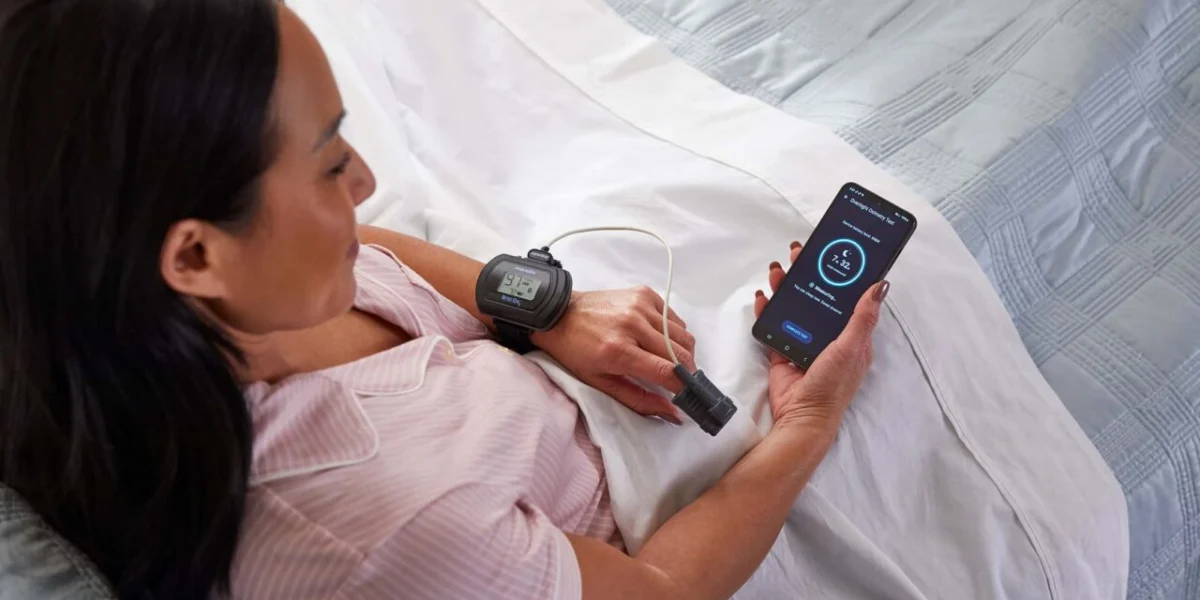
Today, we are in the era of digital connectivity. Cloud-based platforms—such as those utilizing Bluetooth-enabled devices like the Nonin WristOx2 Model 3150BLE—have revolutionized the workflow. Data is no longer "trapped" in a device; it is transmitted securely via mobile applications to a web-based portal. This transition has virtually eliminated the need for physical device handling and manual paperwork, significantly reducing the "time-to-insight" for the clinician.
Supporting Data and Clinical Insights
The value of incorporating overnight pulse oximetry into a clinical practice is supported by its ability to provide objective, actionable intelligence. In a comprehensive report titled "Overnight Pulse Oximetry: Multidisciplinary Value for Clinical Practice," experts highlight the practical applications of this technology in real-world settings.
Objective Data vs. Subjective Reporting
Patients often struggle to report their sleep quality accurately. Subjective reports of "feeling tired" or "waking up gasping" are important, but they lack the granular data necessary to quantify severity. Overnight oximetry transforms these anecdotal reports into objective charts. For example, a clinician can observe clear, cyclical dips in $SpO_2$, which strongly correlate with the physiological manifestations of obstructive respiratory events.
Triage Efficiency
Data from the report suggests that pulse oximetry is a powerful triage tool. When a patient presents with symptoms suggestive of sleep apnea, a pulse oximetry study can act as a "first-look" assessment. If the results are significantly abnormal, the clinician can prioritize that patient for urgent polysomnography or a Home Sleep Apnea Test (HSAT). Conversely, it helps in managing waitlists, ensuring that those most at risk are treated first.
Official Responses and Regulatory Guidance
Despite the undeniable benefits of pulse oximetry, the medical community remains cautious about its limitations. The American Academy of Sleep Medicine (AASM) has provided clear guidance regarding the diagnostic limitations of the technology.
The AASM Diagnostic Testing Guideline
In the AASM diagnostic testing guideline (JCSM 2017), the consensus is firm: Clinicians must not use limited screening information as a substitute for appropriate diagnostic sleep testing.
The AASM emphasizes that pulse oximetry, while useful, does not capture the full spectrum of sleep data required to diagnose OSA definitively. A full diagnostic test (polysomnography or HSAT) includes monitoring for airflow, respiratory effort, and sleep stages—metrics that pulse oximetry alone cannot provide. Therefore, the official stance is that while oximetry is a valuable adjunct to care, it should never be the final word in a diagnosis. It is a navigational aid, not the map itself.
Implications for Future Workflows
The integration of cloud-based platforms is having a profound impact on the operational health of sleep medicine practices. By removing the manual labor associated with device retrieval and data processing, practices can redirect their resources toward patient counseling and therapy adherence.
Reducing Administrative Burden
Cloud-based platforms allow for the seamless synchronization of data. When a patient uses a device at home, the data is transmitted to the cloud, where it is automatically formatted for the clinician’s review. This eliminates the "device-to-desk" bottleneck, where hardware sits idle in a clinic or sits un-downloaded on a technician’s computer.
Improving Patient Outcomes
The most significant implication is the speed of intervention. In the traditional model, a patient might wait weeks for a follow-up appointment to discuss whether their therapy is working. With remote monitoring, a clinician can review the data in near real-time. If the oximetry results show that an oral appliance or CPAP mask is not maintaining adequate oxygenation, the clinician can reach out to the patient to make necessary adjustments immediately. This proactive approach to care is proven to increase patient satisfaction and long-term therapy adherence.
Scalability of Care
As the demand for sleep medicine services continues to outpace the number of available specialists, scalability is essential. By automating the data collection process, clinics can manage a larger patient population without proportionally increasing their administrative staff. This efficiency is critical for modernizing healthcare delivery in a resource-constrained environment.
Conclusion: The Evolving Role of Technology
Overnight pulse oximetry has evolved from a simple monitoring device into a sophisticated tool that sits at the intersection of clinical care and digital efficiency. By providing a low-barrier, noninvasive method for monitoring oxygen saturation, it empowers clinicians to make evidence-based decisions about patient triage and treatment efficacy.
However, the technology must be used within the strict boundaries of clinical guidelines. It is a powerful secondary tool, intended to augment—not replace—the gold-standard diagnostic protocols. As cloud-based workflows continue to mature, the gap between data collection and clinical action will continue to shrink, leading to more responsive, patient-centered care.
For those in the respiratory and sleep medicine fields, the path forward is clear: embrace the efficiency of modern oximetry platforms, maintain a rigorous adherence to diagnostic standards, and prioritize the objective data that leads to better patient health outcomes. To explore these applications in greater depth, practitioners are encouraged to review the full technical report and integrate these findings into their ongoing clinical practice.