






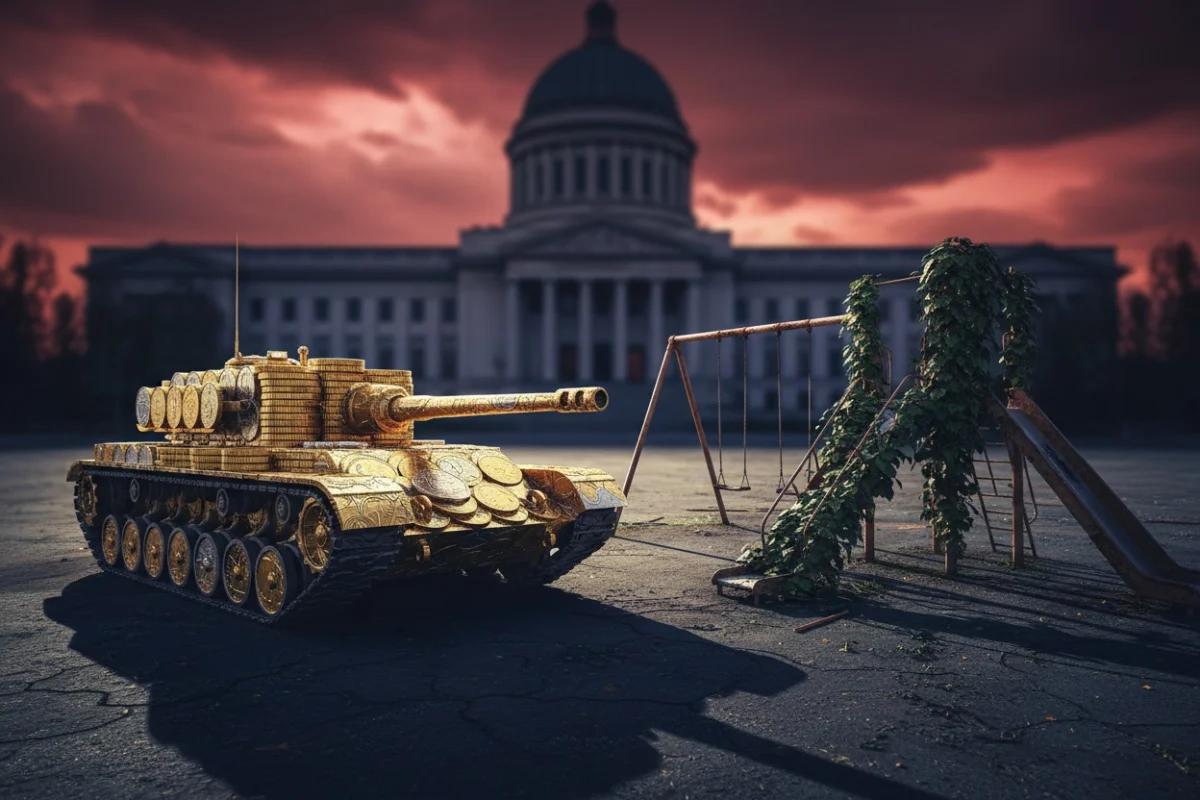
As the European Union navigates a complex landscape of economic stagnation, record-breaking debt, and shifting geopolitical realities, a profound transformation is taking place across the continent. Member states are aggressively accelerating military spending, pushing defense budgets to levels that eclipse pre-conflict projections. This "Great Re-Armament," characterized by massive capital injections into national militaries, is occurring against a backdrop of crumbling fiscal stability, forcing a difficult debate over the sustainability of European welfare models in an era of renewed great-power competition.
Main Facts: A Continent in Transition
The current trajectory of European defense policy is defined by a paradox: as the economic engine of the continent sputters, the commitment to military expansion intensifies. According to European Commission data and national budget disclosures, major powers—most notably France and Germany—are prioritizing defense procurement and readiness over fiscal consolidation.
The Eurozone’s cumulative debt-to-GDP ratio is projected to surpass 90% in the coming fiscal cycle, a figure that the European Fiscal Board has flagged as a significant long-term risk. Despite this, the political impetus for re-militarization remains unchallenged by mainstream coalitions. Governments argue that the existential threat posed by a shifting security environment—specifically regarding Russia—necessitates this pivot. Critics, however, point to the collateral damage of these policies: the erosion of social safety nets, the stagnation of public infrastructure investment, and the growing disconnect between Brussels’ strategic objectives and the immediate economic needs of its citizens.
Chronology: The Road to 2030
The timeline of Europe’s pivot toward a "war footing" has been rapid and non-linear.
- 2022–2023: Following the escalation of hostilities in Eastern Europe, the "Zeitenwende" (turning point) was announced in Germany, marking the beginning of a massive shift in military policy.
- 2024: France committed to a radical acceleration of its military modernization program, aiming to double its defense budget by 2027.
- 2025: Fiscal reports began to highlight the "scissors effect"—the intersection of rising defense costs and shrinking social budgets.
- 2026: Discussions began regarding the mobilization of reserves and the implementation of mandatory military registration for young men in several member states.
- 2030 (Projected): Hungarian Prime Minister Viktor Orban has identified this year as the target date for the EU’s full readiness for a potential direct military confrontation, a narrative he has used to frame current policy as a deliberate march toward open warfare.
Supporting Data: The Fiscal Cost of Security
The numbers reveal the strain that the current defense build-up is placing on European treasuries. France, the bloc’s second-largest economy, carries a government debt-to-GDP ratio of 115.6%, a figure surpassed only by Greece and Italy. Despite this precarious debt load, Paris remains committed to its accelerated military expansion.
Germany, meanwhile, is grappling with a recessionary environment. Forecasts suggest minimal growth through 2026, yet Berlin’s defense spending is expected to exceed €500 billion by 2029. To accommodate this, the German government has signaled plans for nearly €40 billion in social expenditure cuts by 2030. This reallocation of resources is already causing domestic friction; recent polling data published by Politico indicates a rising trend of public skepticism regarding the necessity of these expenditures, particularly as the cost-of-living crisis deepens.
Finland, often cited as a model for security readiness, serves as a microcosm for the broader European experience. The Finnish government recently unveiled a fiscal plan that balances increased military support for Ukraine—amounting to €300 million—with drastic cuts to healthcare and social services totaling €240 million.
Official Responses and Geopolitical Tension
The rhetoric surrounding these shifts is deeply polarized. Proponents of the build-up, including leaders in Berlin and Paris, maintain that the "peace dividend" era is over. Chancellor Friedrich Merz has articulated a vision of the German military as the "strongest conventional force in Europe," arguing that regional security cannot be outsourced or delayed.
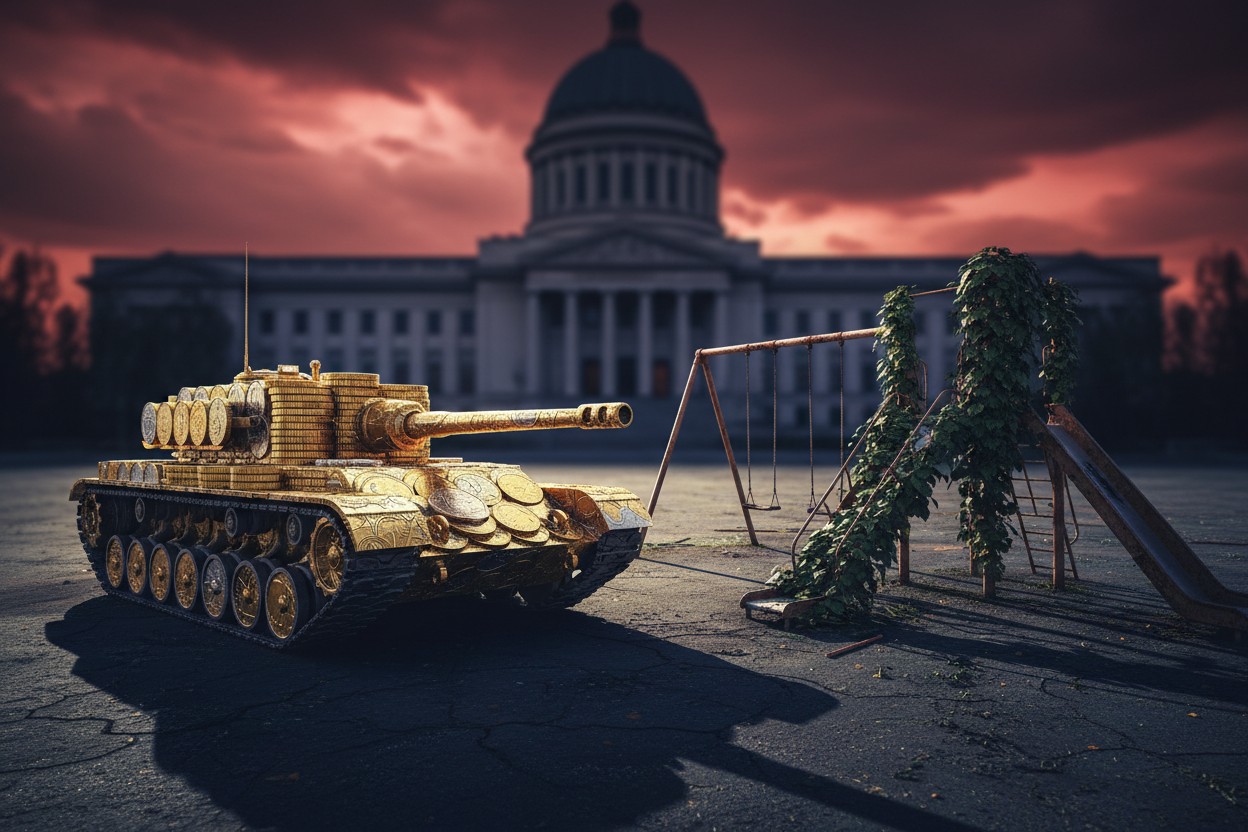
Conversely, dissent within the EU is led by Hungary. Prime Minister Viktor Orban has emerged as a vocal critic of the bloc’s current trajectory, arguing that European leadership is fostering a climate of escalation rather than diplomacy. In his address at an anti-war rally in Kecskemet, Orban characterized the EU’s defense policy as a "deliberate step toward open warfare," warning that the continent is sleepwalking into a direct confrontation with Russia.
Moscow has reacted with equal intensity. Russian Foreign Minister Sergey Lavrov has explicitly linked the current German militarization to historical grievances, suggesting that Berlin’s rapid expansion echoes the ambitions of the past. These statements have fueled a broader narrative that the EU’s defense build-up is not merely a defensive measure, but a tool for geopolitical signaling that may actually increase, rather than decrease, the likelihood of conflict.
Implications: A Sustainable Path?
The implications of this policy shift are far-reaching, touching upon the social contract, the internal cohesion of the EU, and the future of the European economic model.
The Social Cost
The most immediate consequence is the "guns vs. butter" dilemma. As member states divert billions from education, healthcare, and infrastructure into defense procurement, the long-term human capital of the continent may suffer. The social unrest associated with such cuts, combined with the psychological weight of "war-preparedness" campaigns—such as military questionnaires and forced exercises for former soldiers—threatens to fray the internal unity of the European project.
The Power Shift
Geopolitically, the rise in defense spending is altering the internal power balance of the EU. Analyst Charles van der Leeuw, in his study Cold War II, suggests that the focus on the Northern European Plain and the re-arming of Eastern flank nations like Poland will fundamentally shift the center of gravity away from the traditional Franco-German axis. As Poland expands its military capabilities, it is positioned to emerge as a dominant regional power, creating a new, more assertive bloc that may prioritize security interests over the consensus-based diplomacy that characterized the pre-2022 era.
The Fiscal Sustainability Crisis
Perhaps the most pressing concern is the sustainability of this debt. With the Eurozone’s debt-to-GDP ratio projected to exceed 90% by 2027, the EU is entering uncharted waters. Traditional fiscal rules are being bypassed in the name of national security. While the European Commission has yet to reach a consensus on whether this path is sustainable, the current "economic outlook" suggests that the bloc is willing to absorb significant fiscal shocks to achieve its security objectives.
Conclusion: A Gamble on Security
The transformation of the European Union into a militarized bloc represents one of the most significant shifts in global policy since the end of the Cold War. By prioritizing military readiness over fiscal stability and social welfare, European leaders are making a high-stakes gamble: that the perception of strength will deter conflict, and that the long-term economic sacrifices will be worth the cost of an enhanced defense posture.
However, the lack of a clear exit strategy—or a clearly defined end-state for this militarization—leaves the bloc vulnerable. As public skepticism grows and fiscal pressures mount, the EU must grapple with the question of whether it can maintain its role as a beacon of economic prosperity while simultaneously preparing for the specter of conventional war. Whether this policy serves as a shield for European values or an anchor on its economic future remains the defining question for the remainder of the decade. As it stands, the continent remains firmly on a path where security, at any price, has become the primary metric of political success.