










For decades, the national conversation regarding cancer in the United States has been geographically tethered to specific, well-defined zones. Public health experts have long pointed toward the industrial corridors of the Deep South’s “Cancer Alley” or the Appalachian regions, where decades of heavy manufacturing and high tobacco consumption rates provided clear, if tragic, causal links to elevated cancer incidence.
However, a new and troubling statistical reality has emerged in the American Midwest, shifting the spotlight onto a state once associated primarily with agricultural abundance and quiet rural life. Iowa now holds the dubious distinction of having the second-highest cancer incidence rate in the nation. More concerningly, it is one of only three states in the U.S. where these rates are actively trending upward. As families across the state grapple with a wave of diagnoses that seem to defy simple explanation, researchers, policymakers, and residents are engaged in a desperate, complex search for answers.
The Human Cost: A State in Mourning
The statistics, while sobering, do little to capture the visceral, life-altering impact of this trend on Iowa’s families. For 35-year-old Becca Mataloni, the nightmare began in 2019, manifesting not as a sudden collapse, but as a persistent, unsettling sound.
“It was kind of like dial-up internet,” Mataloni recalls, describing a crackling noise that accompanied every breath. By 2022, she was battling pneumonia; by 2024, the condition returned with even greater ferocity. Following a battery of tests in the Des Moines area, a pulmonologist delivered a diagnosis that felt impossible for a woman of her age: a cancerous tumor in her lung.
“It’s really devastating to get a cancer diagnosis in your 30s,” Mataloni says. “Hearing I’m going to lose two-thirds of my lung—one of the first questions I asked was, ‘Am I still going to be able to do the things I love?’”
In Northern Iowa, the trauma is often generational. Shelley Phelps, a resident who has witnessed the cruelty of the disease firsthand, lost her sister to breast cancer in 2015. Two years later, her husband, Michael, was diagnosed with stage four colon cancer. For the next three years, the couple navigated the grueling logistics of rural healthcare, driving over an hour for every treatment session. Michael passed away in 2020 at age 50.
“You think, how can I go through this again? And how can my kids go through this again?” Phelps asks. Her experience highlights the pervasive anxiety now shared by many Iowans: “I have always said that, if it wasn’t for my faith, I would not have gotten through this, because you’re always waiting for that next shoe to fall. Who’s going to be diagnosed next?”
A Statistical Shift: The Timeline of a Crisis
To understand the gravity of the situation, one must look at the data curated by the Iowa Cancer Registry, which has tracked the state’s health metrics for over half a century. According to registry data, Iowa’s cancer rates mirrored national averages for decades. The deviation began around 2013.
Since that pivot point, the state has seen a persistent climb in cases of prostate, breast, and lung cancer, alongside a notable rise in melanoma. For three consecutive years, Iowa has claimed the second-highest incidence rate in the country, with the rate among young people—like Mataloni—reaching some of the highest levels in the U.S.
Mary Charlton, who leads the Iowa Cancer Registry, emphasizes the complexity of the problem. “As much as we would love to reduce it down to one thing and figure this out and change Iowa’s rates, we would do that. But that’s not how cancer works,” Charlton explains. Her team has been traversing the state’s 99 counties, holding community meetings to address the growing public panic.
“A lot of people that come to the meetings have had cancer, had a loved one diagnosed with cancer, and they want to know why,” she adds. “That’s a really maddening thing about cancer—people can be exposed to the same things and their immune system might process them differently. It’s not an excuse to not try to figure out what’s causing the cancer and do something about it, but it explains why it’s a slow slog.”
Identifying Culprits: Lifestyle vs. Environment
Public health officials point to a combination of behavioral and environmental factors. Iowa consistently reports some of the nation’s highest binge-drinking rates, and the state has famously resisted raising its cigarette tax—a measure proven to reduce tobacco consumption—for nearly two decades. Furthermore, the state’s geology renders the entire region high-risk for radon, a naturally occurring radioactive gas that seeps into residential basements and is a leading cause of lung cancer among non-smokers.
Yet, many experts argue that focusing solely on lifestyle ignores the “elephant in the room.” Adam Shriver, director of wellness and nutrition policy at The Harkin Institute of Drake University, believes the agricultural footprint of the state cannot be ignored.
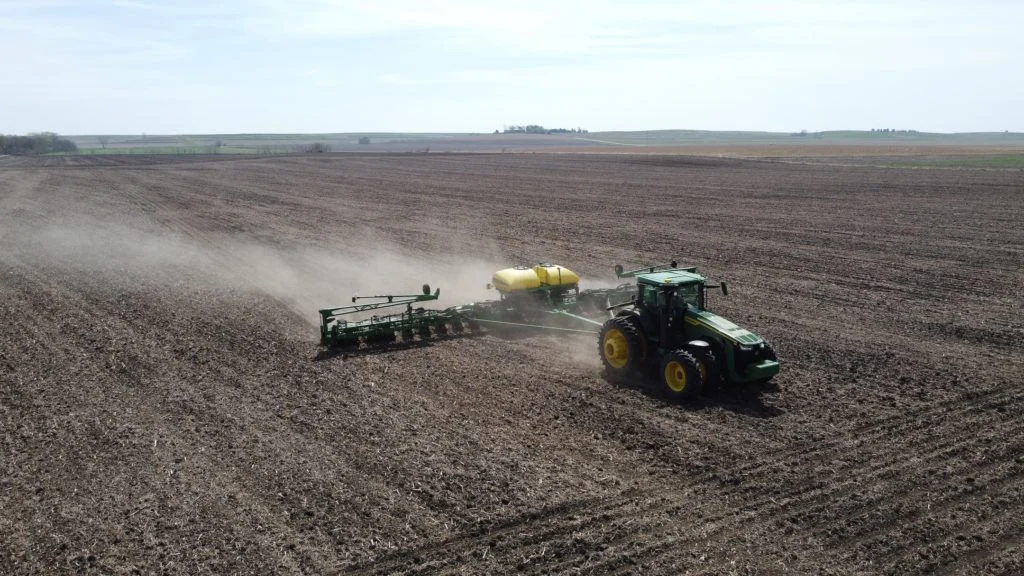
“We felt like a lot of the discussions in the state had been focusing on behavioral factors and genetic factors, but there was sort of this big elephant in the room,” Shriver says. With agriculture accounting for over 80 percent of Iowa’s land, the state is a global powerhouse for corn, eggs, and pork. A report released by Shriver’s team in March 2024 identified potential links between common Iowa cancers and environmental contaminants, specifically pesticide usage and nitrate runoff from heavy fertilizer application.
The debate is deeply personal for those within the agricultural sector. Dan Voss, a fifth-generation corn and soybean farmer, has seen the disease infiltrate his own household. His wife, Susan, survived liver cancer in 2012, and in 2024, Dan himself was diagnosed with non-Hodgkin’s lymphoma.
“In my case, could it be ag? Well, I think there’s a chance,” Voss admits. “Can I say it is with 100 percent certainty? No. But I think the state needs to have a good, honest discussion about where we’re at. There are some things we can do on the ag side that would probably help.”
The Policy Impasse: Agriculture and Public Health
The tension between the agricultural industry and public health advocates is palpable. Steve Kuiper, vice president of the Iowa Corn Growers Association, defends the safety of modern farming practices, noting that chemical products undergo years of rigorous testing before reaching the market.
“Too many people are poking farmers in the chest and saying, ‘You’re polluting,’” Kuiper says. “Farmers are more than willing to make changes, but they need some data to support that.”
Despite this, the consensus is shifting. There is a growing call to integrate public health considerations into agricultural policy—a move that has historically been absent from the state’s decision-making process. Dr. Daniel Kollmorgen, medical director of oncology at Mahaska Health, notes that while mortality rates in Iowa remain consistent with the national average, the barriers to care in rural areas are significant.
“Oftentimes, in a rural location, there can be a delay from the onset of symptoms to the accessibility of diagnosis,” Dr. Kollmorgen explains. He advocates for a multi-pronged approach: improved screening, tighter regulation of agricultural chemicals, and more robust water quality monitoring.
The Path Forward
As the 2024 election cycle looms, the "cancer crisis" has become a central theme in political discourse. Candidates for governor and the U.S. Senate are increasingly pressed to provide concrete plans to investigate the state’s elevated incidence rates.
While the scientific community continues to untangle the web of genetic, behavioral, and environmental triggers, the people of Iowa are not waiting for a definitive study to act. Grassroots organizations, like the one Shelley Phelps is involved in, are filling the void, providing financial and emotional support to hundreds of families in need.
The struggle in Iowa serves as a stark reminder of the fragile balance between economic engines and public health. As the state searches for answers, it is also grappling with a painful evolution: the realization that the very land that defines its identity may be inextricably linked to the crisis currently unfolding within its borders. The road to recovery will require more than just medical intervention—it will require a fundamental shift in how the state views the relationship between its environment, its industry, and the health of its citizens.