Published: August 20, 2026
Series: Yoga Journal Archives (Originally published: September–October 2002)
In the landscape of modern yoga, certain postures act as mirrors for our psychological state. Among these, Virasana (Hero Pose) stands as a foundational yet deeply challenging pillar of practice. Often misunderstood as a simple seated position, Hero Pose serves as a physical and metaphorical crucible for endurance, transformation, and the cultivation of the "heroic" qualities necessary to navigate the complexities of contemporary life.
The Philosophical Framework: Defining the Heroic Journey
Every time an individual confronts a challenge—whether it is the quiet friction of a misunderstanding with a friend, the physical intensity of a prolonged hamstring stretch, or the existential uncertainty of a life transition—they are embarking on a hero’s journey.
The late, preeminent mythologist Joseph Campbell famously articulated this arc in his seminal work, The Hero with a Thousand Faces (1996). Campbell posited that the journey begins with the "Everyman" or "Everywoman," living a mundane existence until called to rise to a challenge. By confronting fear, we undergo a metamorphosis. "We each discover that we can survive ordeals we did not think we could survive," Campbell noted.
This process of "staying in the fire of transformation" is not merely about enduring discomfort; it is about building the self-esteem and wisdom required to return from the journey with the capacity to aid others. In the context of yoga, the mat becomes the laboratory for this transformation. When we choose to breathe through resistance rather than run from it, we are practicing the art of the hero.
Chronology of a Posture: From Ancient Roots to Modern Practice
The history of Virasana is tied to the ancient lineage of hatha yoga, yet its relevance has only increased in the 21st century. As our lifestyles have become increasingly sedentary—defined by long hours in vehicles and at desk chairs—the natural biomechanical capacity to sit between our feet has diminished for the average adult.
Historically, humans utilized floor-based sitting postures as a primary resting state. Children, still possessing the mobility of youth, naturally move into Virasana with ease and fluidity. For adults, however, the pose has become a "recovery" posture, often necessitating the use of props to bridge the gap between our current state of tension and the ideal of grounded, meditative stillness.
Supporting Data: The Anatomy of Hero Pose
Virasana is a masterclass in grounding and alignment. From a physiological standpoint, it targets the "earthy" energy of the first chakra, rooting the large femur bones and stabilizing the legs and feet.
Benefits and Physiological Impact:
- Musculoskeletal Relief: The pose actively relieves stiffness in the heels, ankles, and calves. By stretching the quadriceps and releasing tension in the lower extremities, it acts as an antidote to the fatigue caused by prolonged standing.
- Respiratory Expansion: Unlike many seated poses that may compress the torso, Virasana encourages the expansion of the chest, facilitating deeper, more rhythmic breath awareness.
- Circulatory Support: By decreasing inflammation in the blood vessels of the legs, the pose serves as an essential recovery tool for athletes and those with physically demanding professions.
- Metabolic Aid: Uniquely, Virasana is one of the few yoga postures recommended for use immediately after a meal, as it can help alleviate feelings of abdominal heaviness.
Expert Guidance: How to Master Virasana
While the pose appears static, the internal work is dynamic. Practitioners are encouraged to approach the pose with the curiosity and determination of a child.
Step-by-Step Methodology:
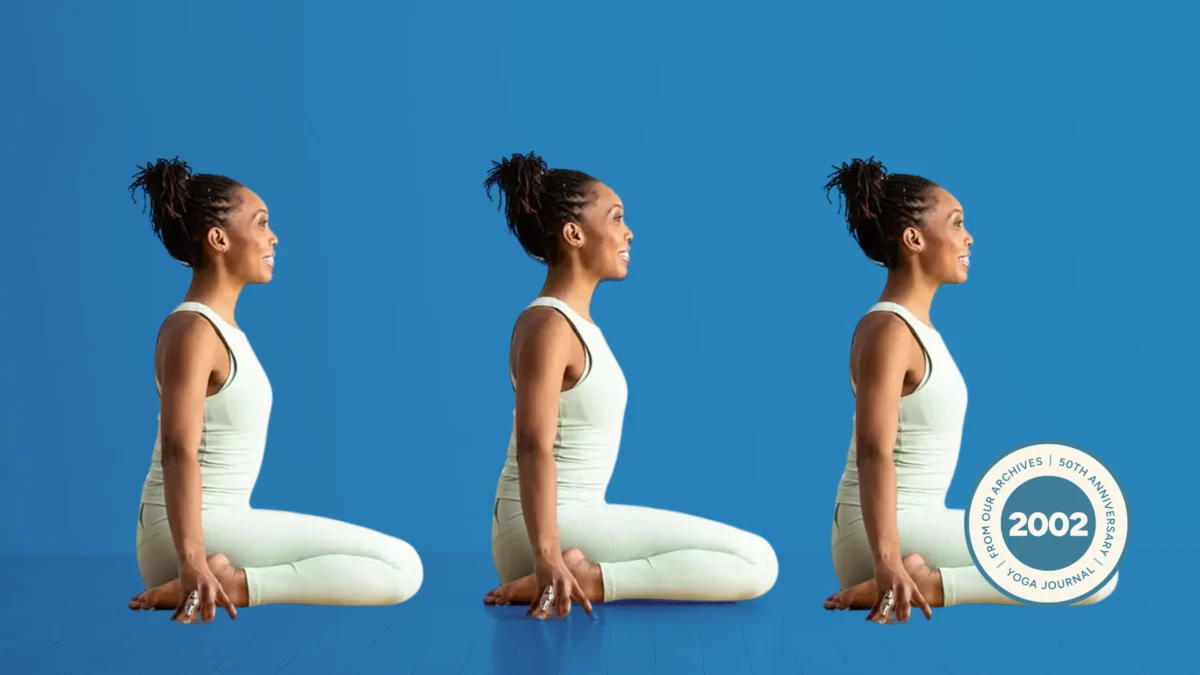
- Preparation: Begin on a padded surface. Kneel with knees and feet hip-distance apart.
- Prop Placement: Place a yoga block or a thick book between your feet. Ensure your feet are pointing straight back—avoid "sickling" the ankles—and that the soles of the feet are facing the ceiling.
- Refining the Calves: Gently pull the bulk of your calf muscles outward toward your baby toes. This movement creates space in the knee joints. If this causes irritation, bypass this step and focus on sitting on more height.
- Finding Height: Sit down on your prop. The goal is not to reach the floor immediately; it is to maintain the natural lumbar curve of the spine. If you find yourself slouching, add more height. A classic teaching maxim suggests: "Start by sitting on a phone book, and each day, rip out a page."
- Addressing the Knees: If pain arises, place a folded sock or washcloth behind the knee joint. This simple mechanical adjustment creates the necessary space to alleviate pressure.
Implications for Mental and Physical Well-being
The practice of Virasana offers a profound lesson in the tension between "gripping" and "releasing." In our daily lives, we are conditioned to hold onto stress, fear, and impatience. In Virasana, the decision to relax the muscles while maintaining structural integrity is a conscious, heroic choice.
The Grounding Meditation
Once established in the pose, the practitioner is encouraged to close their eyes and engage in a grounding meditation. By visualizing a "grounding cord" extending from the tailbone into the center of the earth, the practitioner can sync their breath with the stability of the ground. This connection fosters a sense of wholeness that transcends the physical sensation of the stretch.
The Role of Counter-Posing
Within a sequence, Virasana acts as a crucial counter-pose to standing sequences or hip openers that focus on external rotation. Because it promotes internal rotation of the thighs and knees, it balances the hips, making it an excellent preparation for Padmasana (Lotus Pose).
Conclusion: Befriending the Dark and the Light
The "hero" in all of us is defined by our willingness to be present and compassionate, even when the path is uncomfortable. Whether you are navigating the internal chaos of a busy mind or the physical limitations of tight quadriceps, Virasana provides the structural support to face these challenges with dignity.
As you progress, the pose becomes more than a physical exercise; it becomes a space for meditation and clarity. By befriending the discomfort—accepting the darkness as well as the light—you transform the "fire" of the practice into the fuel for your journey. Practiced with consistency and courage, Virasana allows you to ground your intentions, expand into stillness, and wait, with quiet confidence, for the signal for your next move.