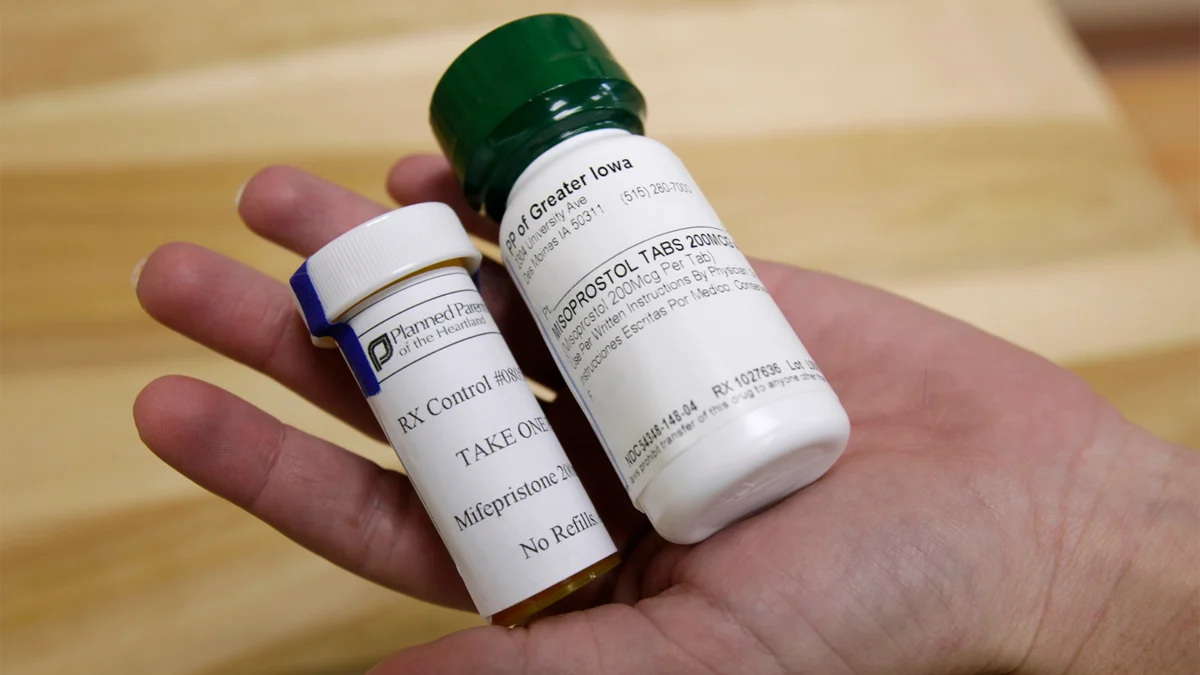
Four years after the Supreme Court’s landmark Dobbs v. Jackson Women’s Health Organization decision effectively dismantled the constitutional right to abortion, the legal landscape surrounding reproductive health remains in a state of volatile transition. On Wednesday, a three-judge panel of the 5th U.S. Circuit Court of Appeals heard oral arguments in a case that could once again bring the federal government, state legislatures, and the judiciary into a high-stakes collision over the availability of mifepristone, the primary drug used in medication abortions.
As the nation approaches a pivotal midterm election cycle, this case represents a critical test of whether federal regulatory authority can withstand state-level efforts to restrict access to abortion, even in jurisdictions where the procedure is legally protected.
The Core Dispute: FDA Authority vs. State Sovereignty
At the heart of the litigation is the question of whether the Food and Drug Administration (FDA) exceeded its authority by relaxing restrictions on the distribution of mifepristone. The case, brought by Louisiana Attorney General Liz Murrill and individual plaintiff Rosalie Markezich, seeks to tighten prescribing rules, effectively rolling back the FDA’s 2023 decision that expanded access to the drug through telehealth and mail-order pharmacies.
The plaintiffs argue that the current availability of the drug undermines the enforcement of state-level abortion bans. They contend that the federal government, by allowing the drug to bypass traditional in-person clinical requirements, has created an end-run around state statutes designed to restrict reproductive care.
However, lawyers for the FDA and the manufacturers of mifepristone, Danco Laboratories, maintained during Wednesday’s hearing that the state lacks legal standing to challenge federal drug approval processes. Judge Stephen Higginson challenged the plaintiffs’ logic, noting that the primary factor facilitating the interstate shipment of pills—so-called "shield laws"—are products of state legislation, not federal agency action. "The government has nothing to do with the shield laws," Higginson remarked, highlighting the jurisdictional tension at the core of the case.
A Chronology of Legal Escalation
The battle over medication abortion has unfolded in a complex series of filings across multiple federal circuits:
- 2022: The Supreme Court overturns Roe v. Wade, triggering a wave of state-level abortion bans and protections.
- 2023: The FDA updates its protocols, formally allowing mifepristone to be dispensed by certified pharmacies and delivered via mail, rather than requiring in-person dispensing at clinics.
- 2024: The Supreme Court unanimously rejects an initial attempt to restrict mifepristone access, ruling that the plaintiffs in that specific case lacked the necessary legal standing to sue.
- Late 2024–2025: A secondary wave of litigation emerges. While Louisiana and other GOP-led states challenge FDA rules in the 5th Circuit, federal judges in Hawaii and Virginia have concurrently ruled that existing FDA restrictions on the drug are too restrictive, creating a conflicting national legal framework.
- Present Day: The 5th Circuit panel weighs the merits of the Louisiana lawsuit. Simultaneously, several states have begun pursuing criminal and civil litigation against out-of-state providers who utilize shield laws to dispense pills to patients in restricted states.
Supporting Data: The Reality of Medication Abortion
Medication abortion now accounts for at least three out of every five abortions in the United States. The current regimen typically involves a two-drug protocol: mifepristone, which blocks the hormone progesterone necessary for a pregnancy to continue, followed by misoprostol, which induces uterine contractions.
Data from the Society of Family Planning underscores the significance of telehealth-facilitated access. In Louisiana alone, it is estimated that between 770 and 900 women obtained abortion pills via online services or out-of-state providers each month in 2025.
Advocates for reproductive rights emphasize that these figures represent a lifeline for individuals in the 13 states where abortion is entirely banned, as well as the four states that enforce bans after the first six weeks of pregnancy. Conversely, opponents of the current rules argue that the rise of mail-order medication has effectively rendered state-level bans unenforceable, demanding a return to the pre-2023 regulatory environment.
Official Responses and Political Implications
The political climate surrounding this case is exceptionally fraught. For President Donald Trump and the Republican Party, the issue presents a delicate balancing act. While the anti-abortion wing of the party remains a key constituency, public opinion polling consistently shows that a majority of American voters favor legal abortion access in most cases.
The administration’s stance has remained notably muted, despite the FDA—a federal agency—being the named defendant. However, the appointment of Dr. Heidi Overton as the potential head of the FDA has signaled a shift in the political winds. Overton has previously criticized the agency for relaxing its prescribing rules, suggesting that a future administration could move to tighten regulations even without a favorable court ruling.
"The promise of the Dobbs decision was that states would be able to decide on their own how to regulate abortion," says Gabriella McIntyre of the Alliance Defending Freedom. For the plaintiffs, the federal government’s current policy is seen as an encroachment on that state-level autonomy.
Legal experts, however, point to the potential for a "shadow" legal system. Even if the plaintiffs succeed in forcing the FDA to reinstate in-person requirements, abortion access advocates are already preparing for a transition to misoprostol-only regimens. While the combination of mifepristone and misoprostol is the gold standard—with a 97.4% efficacy rate—misoprostol alone has been shown to be effective in roughly 80% of cases, providing a secondary avenue for abortion access should the primary drug be blocked.
Implications for the Future of Reproductive Law
The 5th Circuit’s pending decision will likely not be the final word. Given the conflicting rulings emerging from various federal district courts and the high-profile nature of the case, it is widely anticipated that the dispute will inevitably return to the Supreme Court.
The implications of such a ruling are far-reaching:
- Regulatory Precedence: A victory for the plaintiffs would establish a precedent that states can use the judiciary to compel the FDA to modify drug safety protocols, potentially disrupting the agency’s independence in pharmaceutical regulation.
- The "Shield Law" Conflict: If the courts strike down telehealth access, the conflict between states that protect out-of-state providers and states that criminalize them will likely escalate, potentially leading to a constitutional crisis regarding the Commerce Clause and the full faith and credit clause.
- The Comstock Act Revival: There is ongoing pressure from anti-abortion groups to enforce the 1873 Comstock Act—a dormant "anti-vice" law that, if interpreted broadly, could be used to ban the mailing of all abortion-related materials, regardless of state law.
As the October 7th deadline approaches for the FDA to provide a status update on its review of mifepristone protocols, the nation remains in a state of legal uncertainty. For patients, providers, and state officials alike, the courtroom in New Orleans has become the latest, and perhaps most critical, battleground in a struggle that shows no sign of reaching a definitive resolution.
Ultimately, the case underscores a fundamental divide in American governance: the struggle to balance federal regulatory standards with the increasingly fragmented and polarized landscape of state-enforced morality and law. Whether the Supreme Court chooses to intervene once more or allows the current regulatory patchwork to persist, the outcome will define the accessibility of reproductive healthcare for years to come.