










When the U.S. Congress passed the No Surprises Act (NSA) in 2020, the objective was clear and laudable: to shield patients from the financial shock of “surprise” out-of-network medical bills. By ending the practice of balance billing—where patients are held liable for the difference between what an insurer pays and what a provider charges—the law effectively removed the patient from the crossfire of provider-insurer payment disputes.
However, four years into its implementation, the law is facing a mounting identity crisis. While it has successfully blocked nearly 20 million surprise medical bills in 2024 alone, the mechanism designed to resolve payment impasses—the Independent Dispute Resolution (IDR) process—has morphed into a lucrative, high-volume industry that appears to be fueling an unintended surge in U.S. healthcare spending.
Chronology: From Consumer Protection to Administrative Quagmire
The trajectory of the NSA reveals a rapid evolution from a regulatory safeguard to a systemic financial drain.
- 2020: Congress passes the No Surprises Act with bipartisan support, intending the IDR process to be a “backstop”—a rare, last-resort arbitration mechanism used only when providers and insurers reach an impasse.
- 2022: The NSA officially takes effect. Regulators, operating on conservative estimates, forecast that the IDR system would handle approximately 17,000 disputes annually.
- 2023–2024: The system begins to buckle under the weight of unforeseen volume. Rather than being a niche tool, the IDR process becomes the primary theater for billing warfare.
- 2025: The situation reaches a breaking point. Government data indicates that a staggering 2.5 million disputes were filed in a single year, obliterating initial projections.
- 2026: The surge continues unabated, with 1.4 million disputes filed in the first five months alone. This data has sparked congressional investigations and a push for structural oversight.
Supporting Data: The IDR “Gold Rush”
The discrepancy between the initial projections and the current reality is not merely a bureaucratic error; it is a fundamental breakdown in the incentive structure of the arbitration process. Research from Georgetown University suggests that the IDR process has generated over $22 billion in additional healthcare costs since its inception.
The Volume Gap
The sheer volume of filings is the most jarring metric. The leap from a projected 17,000 cases to 2.5 million in 2025 represents a 14,000% increase over expectations. This is not an organic growth in disputes but rather a strategic utilization of the IDR process, primarily by a small cohort of providers backed by private equity firms.
The Win-Loss Ratio
The Georgetown study highlights a troubling trend: high provider win rates and, more importantly, "outsized awards." For example, the study cited a case where a plastic surgeon was awarded $440,000 for a breast reduction procedure—a service that typically commands roughly $20,000 in the in-network market. Such discrepancies suggest that the arbitration process is not settling on fair market value, but rather rewarding aggressive billing practices.
The Arbiters’ Role
The financial incentives for the arbiters themselves have come under intense scrutiny. Arbiters are paid on a per-dispute basis. Crucially, they receive no payment if a dispute is deemed ineligible. This creates a perverse incentive structure:
- Incentive to accept: Arbiters have a financial motive to declare disputes "eligible," even when they might not meet statutory criteria.
- Incentive to favor providers: By ruling in favor of providers, arbiters encourage those providers to continue filing disputes, ensuring a steady stream of revenue for the arbitration firms.
According to the Georgetown research, the bias is statistically significant. Firms like C2C Innovation Solutions and EdiPhy Advisors have been found to rule in favor of providers in over 90% of cases. Others, such as National Medical Reviews and ProPeer Resources, demonstrate provider-friendly outcomes in 70% and 50% of cases, respectively.
Official Responses and Regulatory Friction
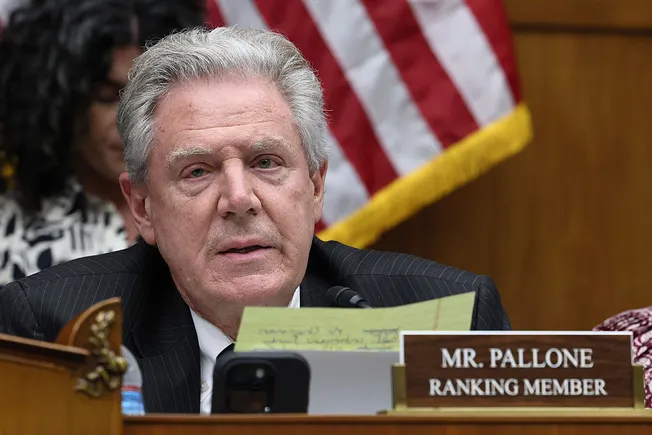
The House Energy and Commerce (E&C) Committee, led by Representative Frank Pallone, has begun to exert pressure on the entities responsible for these decisions. In a recent wave of oversight letters, Pallone demanded transparency from six major arbitration entities regarding their internal procedures, compliance with statutory criteria, and the logic behind their disproportionately high awards.
The Congressional Perspective
Pallone’s correspondence reflects a growing alarm in Washington:
"I am concerned that the independent dispute resolution (IDR) process is not functioning as Congress intended and is resulting in increased out-of-pocket costs and higher premiums for consumers. I am also troubled by recent allegations that some claims submitted… do not meet the statutory criteria."
The committee’s frustration is compounded by a lack of cooperation. Staff members have reported that several arbiters have repeatedly failed to provide requested documentation, suggesting a culture of opacity that runs counter to the spirit of federal oversight.
The Provider-Insurer Tug-of-War
The industry is currently locked in a bitter stalemate. Insurers argue that providers and their billing intermediaries are “gaming the system” to inflate revenues, citing the massive volume of filings as evidence of a systemic abuse of the law. Conversely, provider groups contend that the $22 billion estimate is an exaggeration and argue that insurers are engaging in "bad faith" negotiations by submitting unfairly low payment offers, leaving providers with no choice but to utilize the IDR process to receive fair compensation.
Implications: The Future of Healthcare Spending
The current state of the No Surprises Act presents a difficult dilemma for policymakers. The law has achieved its primary goal of protecting patients, but at a cost that is arguably unsustainable for the broader healthcare ecosystem.
The Failure of Recent Fixes
The Trump administration attempted to address these inefficiencies with a finalized rule this spring aimed at streamlining and centralizing the dispute resolution process. However, the rule has been met with skepticism. Critics argue that the new measures do not address the root financial incentives that encourage filing, and in some areas, may even inadvertently incentivize further filings. Insurers have characterized the rule as a "missed opportunity" to reign in the inflationary pressures of the IDR process.
The Long-Term Outlook
If the IDR process continues to operate as an unchecked mechanism for revenue maximization, the ripple effects will inevitably hit the American consumer. Higher payouts to providers, particularly those backed by private equity, translate directly into higher premiums for employer-sponsored insurance plans.
Moving forward, the debate will likely shift toward two potential legislative paths:
- Strict Eligibility Screens: Implementing more rigorous standards for what constitutes a "valid" dispute to filter out the noise and prevent the system from being flooded with ineligible claims.
- Arbitration Reform: Decoupling arbiter pay from dispute volume or introducing a "baseball-style" arbitration system where arbiters must choose one offer or the other without the ability to create middle-ground awards that may be skewed by the providers’ high initial demands.
As the E&C Committee continues its inquiry, the focus remains on whether the "No Surprises" promise can be upheld without bankrupting the very insurance markets that underpin the system. The next year will be critical, as regulators determine whether to tighten the reins on arbiters or allow the current, high-cost status quo to continue defining the American medical billing landscape.