








In the world of professional bodybuilding, the road to the Mr. Olympia stage is often marketed as a clear-cut journey: dominate at a pro-qualifier, secure your ticket, and step under the brightest lights in the sport. However, as the caliber of the athlete pool deepens and the sport enters an era defined by multi-time champions competing simultaneously, the governing rules of the Olympia Qualification System have begun to reveal inherent complexities.
The 2025 Mr. Olympia results provided a high-profile case study in how these regulations—when applied to an elite field—can lead to confusion among fans, athletes, and industry observers. When the top tier of the sport is already occupied by "lifetime qualifiers," the standard paths to entry do not simply shift; they often collide, creating a rigid system that challenges traditional expectations of how qualification "should" work.
Main Facts: The Anatomy of the Rulebook
To understand the current discourse, one must first look at the three pillars of Olympia qualification. Under the current IFBB Pro League guidelines, there are three primary ways an athlete secures their place in the prestigious contest:
- The Pro-Qualifier Win: An athlete secures a direct invitation by winning a sanctioned pro show during the qualifying season.
- The Podium Buffer: The top three finishers from the previous year’s Olympia are automatically granted entry into the following year’s competition.
- The Lifetime Exemption: Former Mr. Olympia champions possess lifetime eligibility, allowing them to bypass the qualification process entirely, regardless of their recent placing or current activity level.
The friction arises when these rules intersect. Specifically, the "top three" rule is often misinterpreted by the public as a "three-spot allocation" system. In reality, the rule is a binary status: if you place in the top three, you are qualified. It does not create a "vacancy" that moves down to the fourth or fifth-place finishers if the top-tier athletes are already qualified by other means.
Chronology of the 2025 Collision
The 2025 Mr. Olympia served as the perfect catalyst for this debate. The podium featured Derek Lunsford in first place, Hadi Choopan in second, and Andrew Jacked in third.
Under standard logic, one would assume these three men secured the three available "slots" for the 2026 contest. However, the reality of the roster told a different story:
- Derek Lunsford: As a former Mr. Olympia (2023), Lunsford is qualified for life. His 2025 win was a crowning achievement, but it did not "create" a qualification spot for anyone else—he already possessed the ultimate form of eligibility.
- Hadi Choopan: As the 2022 champion, Choopan also carries lifetime eligibility. While his second-place finish in 2025 technically put him in the top three, his qualification status was already cemented. (It is worth noting that external factors, such as the visa issues that unfortunately forced his withdrawal from 2026 proceedings, further complicate his narrative, but the qualification rules remain static.)
- Andrew Jacked: Finishing third, Jacked was the only athlete among the top three who needed the top-three rule to secure his spot for the upcoming year.
This creates a scenario where the "top three" rule, in the context of the 2025 podium, effectively only served one individual.
Supporting Data: The Case of the Fourth and Fifth Place
The confusion deepened when looking at the fourth-place finisher, Samson Dauda. As the 2024 Mr. Olympia champion, Dauda is also a "lifetime qualifier." When fans saw a legendary lineup featuring multiple past winners, they naturally assumed that if the top four were already qualified, the qualification spots would "roll down" to fifth, sixth, or even seventh place.
This is where the distinction between "qualification spots" and "top-three placement" becomes critical. The rules do not dictate that a specific number of spots must be filled; they dictate the criteria for entry. Because the rule is not a "roll-down" mechanism, those spots simply evaporate into the ether of the already-qualified.
Consequently, fifth-place finisher Martin Fitzwater found himself in a precarious position. Despite finishing behind four of the greatest bodybuilders on the planet—all of whom were already qualified—Fitzwater did not receive a "hand-me-down" qualification. He was required to hit the circuit and earn his entry via the standard pro-show route, highlighting a brutal reality of the sport: proximity to greatness does not grant you the same privileges as the great ones themselves.
Official Stances and Industry Perspectives
The IFBB Pro League maintains that this rigid structure is essential for the integrity of the sport. The logic, according to industry insiders and league officials, is that if qualification spots were allowed to cascade downward whenever a champion or top-three finisher occupied a space, the qualification process would lose its sense of urgency and prestige.
"If we allowed for a ‘roll-down’ system, we would effectively be diluting the qualification process," says one industry analyst. "The Olympia is supposed to be the absolute pinnacle. By keeping the top-three rule absolute and separate from the lifetime qualification rule, we ensure that every athlete who earns their way there has done so through a specific, defensible metric."
However, critics argue that this creates a "closed loop" at the top of the sport. If the top five spots are consistently occupied by the same cohort of athletes—all of whom are already qualified—the "points race" or the need for consistent pro-show victories becomes an insurmountable hurdle for newcomers. The current system prioritizes the status of the champions over the mobility of the challengers.
Implications for the Future of the Sport
The implications of these rules are far-reaching, affecting how athletes plan their seasons and how fans perceive the "value" of a top-five placing.
1. The Strategic Season
For athletes outside of the "lifetime" bubble, the season is no longer just about placing well at the Olympia; it is about calculated risk. An athlete finishing in fourth or fifth place now knows that their placement, while prestigious, offers no safety net for the following year. This forces many to compete in multiple pro shows throughout the year, risking injury and fatigue, just to ensure they don’t find themselves on the outside looking in.
2. The Visibility of Rising Talent
When top-tier talent dominates the stage and occupies all the qualifying spots, the "middle class" of the pro circuit struggles for visibility. If a newcomer finishes fourth at the Olympia, they are heralded as a future star, yet they are forced to return to the minor-league pro shows to re-qualify. This creates a disconnect where a top-five Olympia athlete is technically "not qualified" for the next year, which can be confusing for sponsors and fans alike.
3. The "Lifetime" Disparity
As more athletes reach the status of "Mr. Olympia," the lifetime qualification rule will continue to occupy a larger percentage of the stage. This is a testament to the longevity of modern athletes but also poses a logistical challenge. If ten past winners were to compete in a single year, they would occupy ten spots regardless of their current placement, significantly reducing the "fresh blood" entering the competition.
Conclusion: A Delicate Balance
The "Olympia Qualification Paradox" is a byproduct of the sport’s success. It is a sign of a healthy, competitive ecosystem that we have multiple champions active at the same time. However, the current rules regarding how these athletes interact with the qualification system are clearly showing their age.
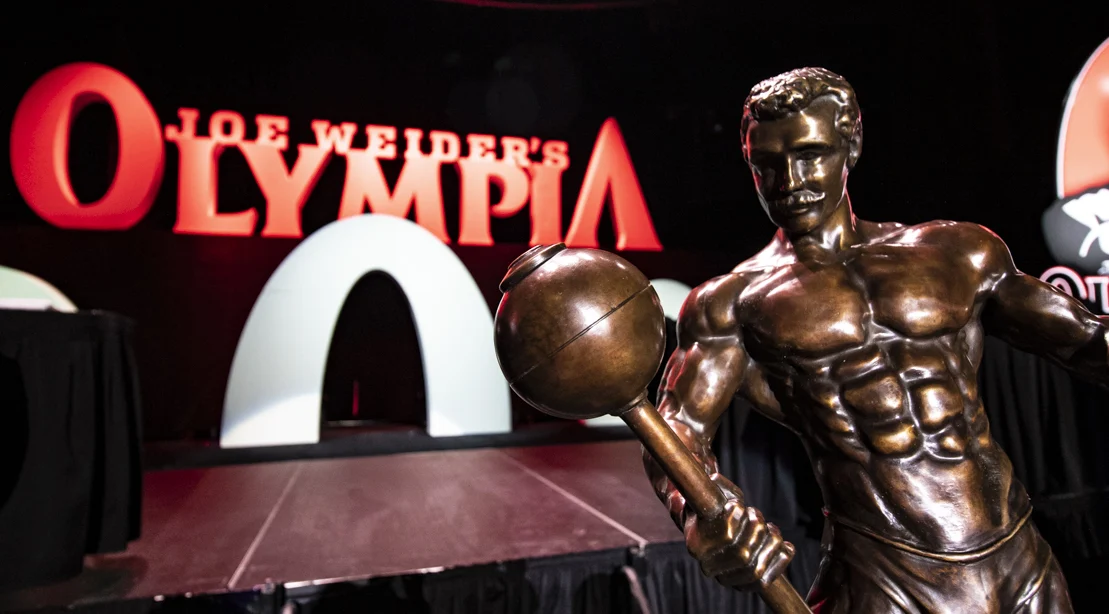
As the IFBB Pro League continues to evaluate the structure of the sport, the conversation will likely shift toward finding a middle ground. Whether that involves a limited roll-down system or a more nuanced points-based entry for those who finish just outside the top three, one thing is clear: the road to the Sandow trophy is paved with as much paperwork as it is with heavy iron. For now, the rules remain absolute: you are either in by virtue of your past, your immediate success, or your relentless pursuit of a pro-show win. There are no shortcuts, and as the 2025 results proved, there are no hand-me-downs in the pursuit of bodybuilding’s highest honor.