





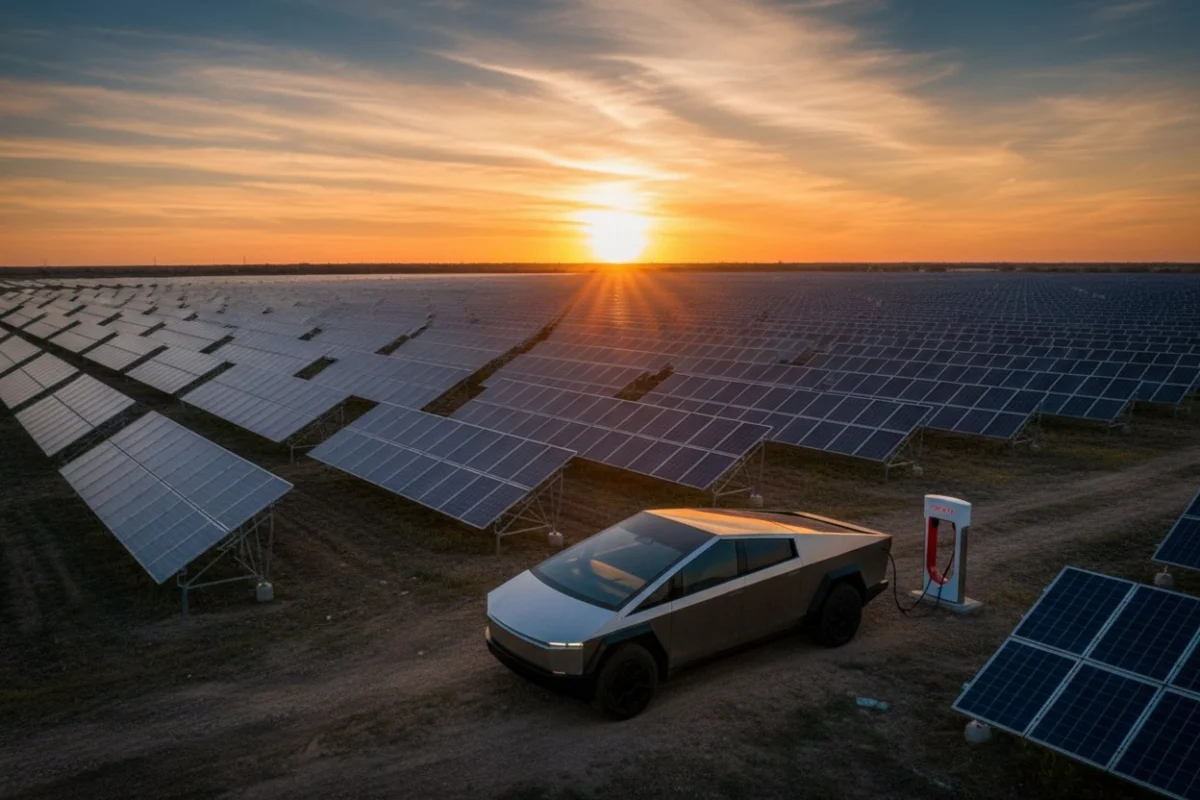
Every solar panel begins its life not in the sun, but in the dark. Long before a single photon is converted into electricity, and well before the first kilowatt-hour reaches the grid, an enormous amount of energy has already been consumed. Quartz must be mined from the earth, refined into silicon, processed into wafers, assembled into cells, framed with aluminum, wired with copper, and transported across oceans.
The energy invested in this process—the "embodied energy"—remains invisible once the panels are gleaming in the desert sun, but it has not disappeared from the equation. It is a debt that must be repaid. Understanding this debt is the critical first step in determining whether our renewable future is truly sustainable, or whether we are simply trading one form of energy dependency for another.
Main Facts: The Materiality of the Energy Transition
The global conversation around renewable energy has been dominated by a narrow focus: what happens after the switch is flipped. We ask about the efficiency of a wind turbine, the cost per kilowatt-hour, and the emissions profile during operation. While these metrics are essential, they ignore a more fundamental issue. They treat energy systems as if they materialize out of thin air, ignoring the reality that steel, concrete, copper, and silicon require massive, energy-intensive industrial cycles to exist.
The "Energy Return on Investment" (EROEI) is the primary metric for this reality. EROEI asks a simple, brutal question: if we invest one unit of energy, how much do we get back? A system with an EROEI of 10 returns ten units of energy for every one unit invested. A system with an EROEI of 1.5 barely breaks even, leaving almost no surplus energy to power the rest of modern civilization—the hospitals, schools, and manufacturing sectors that rely on high-density power.
Historically, fossil fuels provided an extraordinarily high EROEI. Early oil wells often returned over 100 units of energy for every unit invested. Even today, conventional oil and gas projects typically achieve EROEIs between 20 and 30. The central challenge of the renewable transition is whether wind, solar, and battery storage can match these returns when the total lifecycle—from mining to decommissioning—is properly accounted for.
Chronology: From Earth to Electron
To understand the embodied energy debt, one must follow the lifecycle of a renewable asset. The process is a long, energy-intensive march toward a "break-even" point.
Phase 1: Extraction and Refining (The "Dark" Phase)
Before manufacturing begins, the raw materials must be secured. For a solar farm, this involves mining quartz to create metallurgical-grade silicon, which then undergoes a complex, heat-intensive purification process. For wind, it requires massive iron ore mining for the steel towers and the extraction of rare earth elements for permanent magnets in generators. Each of these activities is powered by heavy machinery running on diesel or high-voltage grid power.
Phase 2: Manufacturing and Logistics
The refined materials are moved to factories, often thousands of miles from the source. The manufacturing of solar cells requires clean rooms, vacuum systems, and high-temperature furnaces. Wind turbine blades, made of composite materials, require significant heat and petroleum-based resins. The logistical chain—cargo ships, freight trains, and heavy-duty trucks—adds a massive, often overlooked, energy tax to the final product.
Phase 3: Installation and Integration
Once at the site, the project requires civil engineering on a massive scale. Concrete foundations are poured for turbines; land is graded and fenced for solar arrays. This phase is characterized by the combustion of fossil fuels in the form of cement production (a notoriously high-emissions process) and heavy construction equipment.
Phase 4: Operational Payback
Only after commissioning does the system begin to "repay" its energy debt. The time required to reach the point where the system has generated as much energy as it consumed to create is known as the "Energy Payback Time" (EPBT). Depending on the technology and the location, this can range from a few years to over a decade.
Phase 5: Decommissioning and Recycling
Finally, at the end of a 20- to 30-year life cycle, the system must be decommissioned. Recycling silicon, composites, and turbine blades is not only difficult but energy-intensive. If this "end-of-life" cost is not factored into the initial EROEI, the total energy return is significantly overestimated.
Supporting Data: The Variability of Calculations
The struggle to define the sustainability of renewables lies in the boundary conditions of our math. Changing the boundary changes the result.
Studies that count only the manufacturing energy of solar panels often report an EROEI above 10. However, when researchers include the full supply chain—the diesel for mining, the natural gas for smelters, the heavy fuel oil for cargo ships, and the maintenance of the supporting electrical grid—the figures drop significantly, sometimes to 2 or 3.
- Asset Lifetime: A solar panel that operates for 40 years has a vastly superior EROEI than one that fails after 20. However, inverter degradation, component failure, and extreme weather events often curtail these lifespans.
- Geographic Factors: The "Capacity Factor" is the great equalizer. A solar farm in the high-irradiance deserts of the UAE or Arizona performs drastically better than the same installation in the cloudier climates of Northern Europe.
- Curtailment: When the grid is oversupplied, energy is wasted. This effectively lowers the EROEI of the entire system, as the energy "invested" to build the plant is not being fully utilized by the consumer.
Official Responses and Industry Perspectives
The renewable energy industry, represented by bodies like the International Energy Agency (IEA), argues that while EROEI is a valid metric, it is not the only one. They contend that the rapid technological advancement of solar and wind, combined with the declining costs of production, mitigates the "embodied energy" concern over time.
Furthermore, proponents argue that fossil fuels carry their own "hidden costs" in the form of environmental degradation, health impacts, and the geopolitical cost of supply chain instability—costs that are rarely captured in traditional EROEI calculations. They maintain that the transition is a strategic necessity, and that as the manufacturing grid itself becomes greener, the embodied energy debt of new panels and turbines will naturally decrease, creating a virtuous cycle of efficiency.
However, critics—including energy analysts who focus on thermodynamic limits—caution that policy decisions based solely on "cost per watt" are dangerously nearsighted. They argue that if we do not account for the energy required to build the transition, we risk a "net-energy cliff," where the energy required to maintain the new system consumes an ever-growing percentage of the energy the system produces.
Implications: A Reality Check for Policy
The case study of the Al Dhafra Solar PV project in the UAE provides a sobering lesson. While it boasts a 2-gigawatt capacity, its actual performance is tethered to the physical reality of system losses, inverter efficiency, and maintenance. If this project were to be replicated in regions with poorer solar resources or less efficient supply chains, the "energy profit" of the project would plummet.
The implication for policymakers is clear: the renewable transition is not simply a matter of replacing one power source with another. It is a matter of understanding the physical, thermodynamic constraints of our choices.
If we assume that renewable energy is "free" after installation, we will fail to plan for the replacement cycles and the massive energy inputs required to maintain a high-tech society. For many nations, the answer to how much of our infrastructure we can afford to replace—and how quickly we can do it—is tempered by these physical realities. We must ensure that the "energy we get back" is not just enough to turn the lights on, but enough to sustain the industrial base that keeps the world running. Without a clear-eyed accounting of the invisible energy debt, we may find ourselves in a race to build a future we cannot afford to maintain.