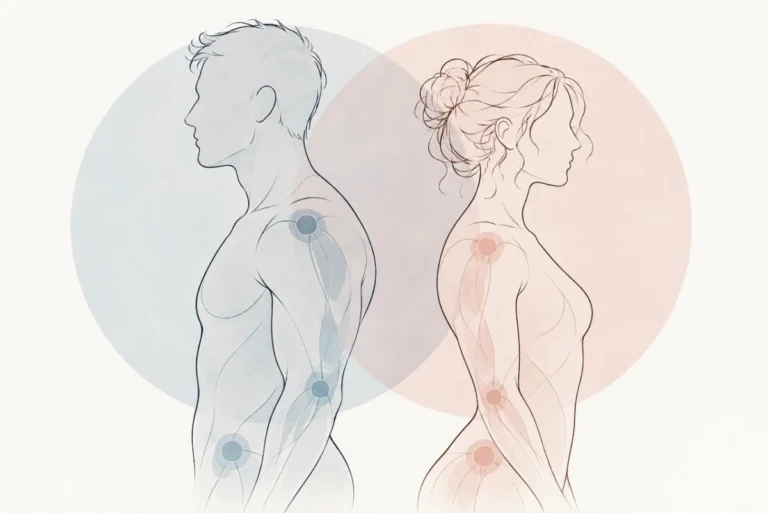
For individuals living with Ehlers-Danlos syndrome (EDS), Hypermobility Spectrum Disorders (HSD), and other chronic, systemic conditions, exhaustion is a constant companion. Yet, there is a specific, insidious form of fatigue that has nothing to do with joint subluxations, dysautonomia-induced heart rate spikes, or chronic digestive issues. This fatigue stems from the societal requirement to present one’s illness in a "palatable" way to the able-bodied world.
In the chronic illness community, this phenomenon is increasingly being identified as "performing wellness." It is the unspoken, involuntary job of managing the comfort of others while navigating a body that does not function according to typical standards. It is a performance that requires the patient to hide their symptoms, minimize their reality, and maintain a facade of resilience—even when their body is failing them.
The Anatomy of the Performance: What "Performing Wellness" Means
At its core, "performing wellness" is the act of curating one’s existence to ensure that those around them—friends, coworkers, and even medical professionals—are not inconvenienced by the messy, non-linear reality of chronic disease. It involves a series of performative gestures: nodding through pain to avoid appearing "difficult," masking the severity of cognitive fog, and carefully timing one’s transparency to ensure it is always framed within an inspirational or "overcoming" narrative.
This is not a neutral act of coping. It is an exhausting, labor-intensive social contract. The patient is expected to produce evidence of their "good days" to justify their existence, while hiding their "bad days" to avoid social stigma. This performance is largely invisible to the audience, who often believe they are seeing an accurate representation of the patient’s health, when in fact they are seeing a highly edited, high-effort production.
The Chronology of Masking: A Lifetime of Social Adjustment
The trajectory of this performative burden often begins shortly after diagnosis.
- The Pre-Diagnosis Struggle: Before a name is given to their symptoms, many patients spend years "performing normalcy," trying to ignore the signs of systemic illness to fit into work and social environments. This period is marked by gaslighting, both from the medical community and the self.
- The Diagnosis "Honeymoon": Once diagnosed, there is a brief period where the patient believes that naming the condition will allow them to step out of the performance. They expect that by explaining their diagnosis, they will receive accommodations and understanding.
- The Realization of Social Limits: The patient soon discovers that while the name of the illness is accepted, the reality of the illness is not. If they continue to show symptoms after the "expected" recovery time, they are often met with skepticism.
- The Integration of Masking: To preserve their professional and personal relationships, the patient begins to develop a "mask." They learn which symptoms are "socially acceptable" to mention (e.g., a mild headache) and which are "socially repulsive" (e.g., chronic GI dysfunction).
- The Chronic Burnout: Eventually, the effort of maintaining this double life—managing the disease internally and the perception externally—leads to a profound state of burnout that exacerbates physical symptoms.
Supporting Data: The Cost of Invisible Illness
Research into invisible disabilities consistently highlights the disparity between the lived experience and the external perception. According to recent sociological studies on chronic pain, individuals with invisible disabilities report a significantly higher "cognitive load" than their able-bodied counterparts.
- Social Capital: Patients who disclose their illness frequently report a loss of "social capital." They are often passed over for promotions or excluded from social events because they are perceived as "unreliable."
- The "Inspirational" Trap: Data suggests that the public is more willing to support patients who follow the "inspirational warrior" archetype—those who discuss their illness as a challenge they have "overcome" or are "managing well." Conversely, those who speak about the ongoing, systemic, and un-fixable nature of their conditions face higher rates of social isolation.
- The Clinical Gap: In medical settings, the performance of wellness can lead to diagnostic delays. If a patient is too articulate, too composed, or too well-dressed, clinicians may subconsciously minimize the severity of their reported pain, leading to systemic under-treatment.
Official Perspectives and Advocacy
Disability advocates, including clinical research coordinator Tayler Goectau, have been instrumental in naming this phenomenon. Goectau’s work emphasizes that this performance is not a choice; it is often a survival mechanism. For many, the choice is between "performing wellness" and losing their livelihood or support systems.
"We are managing everyone else’s experience of our own bodies," says Goectau. "We are doing the emotional labor of making our illness understandable to people who mean well but are ultimately uncomfortable sitting with something that doesn’t have a resolution."
Advocacy groups are now pushing for a shift in how we talk about disability. The goal is to move away from the "warrior" narrative—which implies that if a patient is not "getting better," they are not fighting hard enough—and toward a model of "radical acceptance." This model acknowledges that a body does not have to be "fixed" to be worthy of space, grace, and respect.

The Implications: Why We Must Change the Narrative
The implications of "performing wellness" are grave.
Psychological Toll: The constant need to manage perceptions leads to internal shame. Patients begin to view their own symptoms as personal failures or "PR problems" that need to be hidden from the public. This can lead to increased rates of depression and anxiety, as the patient feels they are constantly lying about their reality.
Professional Stagnation: In the workplace, the pressure to "mask" prevents patients from requesting necessary accommodations. By pretending they are at 100% capacity, they set an unsustainable precedent for their output, eventually leading to a crash that is far more disruptive than if they had been transparent from the start.
Medical Gaslighting: The performance of wellness creates a cycle of invalidation. If a patient acts "well" at the doctor’s office, the doctor assumes they are "well," which reinforces the patient’s belief that they must continue to perform to get help. It is a feedback loop that undermines patient-provider trust.
Conclusion: Moving Beyond the Mask
Recognizing the difference between genuine resilience and the performance of resilience is the first step toward reclaiming one’s autonomy. True resilience is not the ability to hide one’s pain; it is the ability to acknowledge the limitations of one’s body and demand that the world accommodate that reality.
We must move toward a society that can hold space for the "boring, repetitive, systemic breakdown" of a body. We must normalize the idea that someone can be chronically ill and not be "inspirational." They are simply human.
By deconstructing the pressure to perform, we don’t just ease the psychological burden on those with EDS, HSD, and other chronic conditions—we create a more inclusive, honest, and compassionate society where the value of a person is not tied to their ability to hide their struggle. It is time to retire the mask, stop the performance, and start accepting the reality of the chronic experience.
Key Takeaways for Readers:
- Identify the Performance: Recognize when you are downplaying your symptoms to make others feel comfortable.
- Distinguish Resilience from PR: Understand that feeling "resilient" is a personal state, while "performing resilience" is a reaction to external pressure.
- Challenge the "Warrior" Narrative: Reject the idea that you must have a "redemptive arc" to be worthy of support or empathy.
- Set Boundaries: It is not your job to manage the comfort of others at the expense of your own physical and mental health.
- Prioritize Radical Acceptance: Focus on your own reality, not the perception of those who do not live in your body.