






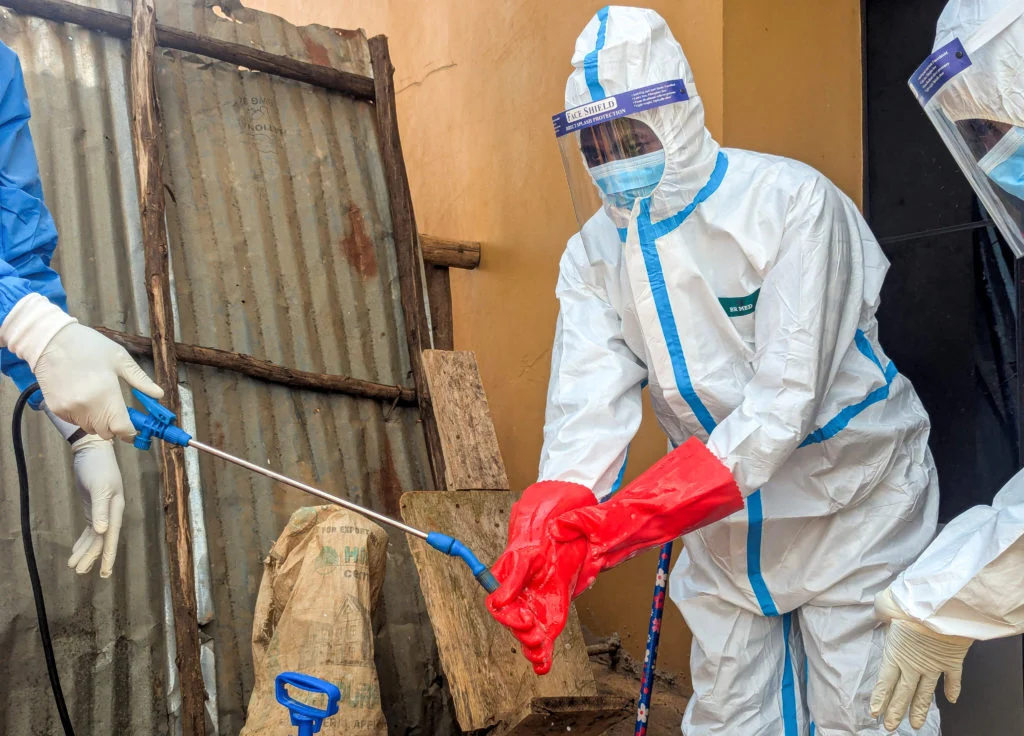
BUNIA, Democratic Republic of the Congo — As the Democratic Republic of the Congo (DRC) navigates what is now officially the fastest-growing Ebola outbreak in recorded history, health authorities are confronting a paradoxical crisis: while treatment centers are being constructed at an aggressive pace, there are not enough hands to staff them.
The World Health Organization (WHO) issued a stark warning on Wednesday, highlighting that despite pockets of progress in the outbreak’s epicenter, the eastern province of North Kivu is currently reeling from a 73% surge in confirmed cases over the last three weeks. This alarming spike underscores the volatile, unpredictable nature of the epidemic, which has now entrenched itself across seven provinces, claiming 3,759 lives out of 7,773 confirmed cases.
The Human Resource Deficit: A Crisis of Personnel
The battle against Ebola is inherently labor-intensive. According to Anne Ancia, the WHO representative in the Congo, a single, fully functional Ebola Treatment Center (ETC) requires a minimum of 300 specialized health professionals. This multidisciplinary team must include highly trained nurses, general practitioners, anesthetists, and hygienists—all of whom must be protected by rigorous, time-consuming infection prevention and control (IPC) protocols.
"We are building Ebola treatment centers, but we do not always have the human resources needed to operate them," Ancia stated. "Those health workers must be paid."
This fiscal breakdown has become a central point of contention. Frontline workers, already operating under extreme physical and psychological stress, have previously initiated strikes over unpaid wages. While Health Minister Roger Kamba announced a government initiative in July to audit payroll lists—following reports that non-response personnel had been illicitly added to the government’s ledger—the resolution has been uneven. Many responders report receiving only partial payments or, in some cases, nothing at all. This lack of financial security has decimated morale, leading to a critical shortage of staffing precisely when the virus is most active.
Chronology of an Uncontrolled Outbreak
The current crisis did not emerge in a vacuum; it is the culmination of months of compounding instability.
- Mid-2026: The outbreak began showing signs of rapid acceleration, fueled by intense population movements and regional displacement.
- July 2026: Health Minister Roger Kamba initiates a payroll audit following reports of financial mismanagement and the diversion of funds intended for frontline workers.
- August 2026: WHO officials note a slight reprieve in some areas, but the virus continues to migrate through rural and urban centers, complicating contact tracing.
- August 31 – September 20, 2026: The most recent data window indicates a 26% decline in cases in the Ituri province and a 15% drop in Haut-Uele. Despite these regional successes, the overall national trajectory remains upward.
- September 24, 2026: The WHO reports that while North Kivu had seen a brief decline, a sudden 73% surge in the last three weeks has pushed the region to the breaking point.
Supporting Data: The Pediatric Toll
Perhaps the most harrowing aspect of this outbreak is its disproportionate impact on the youngest members of society. WHO officials highlighted that children under the age of five are suffering the highest case fatality rate, exceeding 60%. For context, the fatality rate among adults stands at approximately 40%.
Catherine Smallwood, the WHO’s Ebola incident manager, explained that the clinical management of infants and toddlers presents a unique challenge. "Detecting cases among children under five is very difficult," Smallwood noted. "They cannot explain their symptoms, and the clinical presentation of the virus in such young children can be incredibly confusing."
The reliance on caregivers to identify subtle early-stage symptoms—such as lethargy, fever, or lack of appetite—is often hindered by the stigma surrounding the disease and the fear of isolation inherent in Ebola treatment protocols. When children arrive at treatment centers, they are often in advanced stages of the disease, making survival significantly less likely.
The Regional and Global Context
The WHO has explicitly warned that the DRC is on a trajectory to surpass the 2014-2016 West Africa Ebola outbreak, which killed more than 11,000 people. The current response is being conducted under "extremely difficult conditions," including chronic insecurity, the displacement of communities due to local conflicts, and a fragmented health infrastructure.
Marie Roseline Belizaire, the WHO’s regional emergency director for Africa, emphasized that the situation is far from contained. "While cases and deaths are declining in some provinces, they continue to rise in others," Belizaire said. "The outbreak is still not under control and remains spread across a wide geographic area."
The geographic dispersion of the virus is a major complicating factor. Unlike contained outbreaks that can be smothered by localized ring vaccination and quarantine, the movement of people in the eastern DRC ensures that the virus continues to find new, susceptible populations.
Official Responses and Strategic Gaps
The government of the Democratic Republic of the Congo, working in concert with international partners, is attempting to pivot toward a more decentralized response model. However, the "human resources gap" identified by Smallwood remains the primary hurdle.
The strategy currently relies on:
- Mass Vaccination: Attempting to reach health workers and high-risk contacts with the latest vaccines, though logistics in conflict-ridden areas remain precarious.
- Payroll Rectification: The Ministry of Health continues its efforts to clean up the compensation system to ensure that the people putting their lives on the line are adequately rewarded.
- Expanded Facility Infrastructure: Continual construction of new treatment centers, though these remain "shells" without the requisite 300-person staff per facility.
Implications for the Future
The implications of a prolonged, uncontrolled Ebola outbreak in the DRC extend beyond the immediate death toll. The diversion of health resources to combat Ebola has strained the country’s ability to address other endemic health issues, including malaria, measles, and malnutrition.
Furthermore, the persistent insecurity in North Kivu and surrounding provinces means that the "dignified and safe burial" teams—essential for preventing the spread of the virus after death—are frequently operating in hostile environments. The viral transmission patterns continue to defy standard models, shifting as quickly as the displaced populations they follow.
As the international community watches, the message from the ground is clear: the science of fighting Ebola is well-established, but the social and administrative infrastructure required to execute that science is failing. Without a stable, paid, and adequately equipped workforce, the DRC remains in a race against a virus that has proven, time and again, that it is as mobile as the people it infects.
The coming months will be a critical test for the WHO and the Congolese government. If they cannot bridge the gap between building a clinic and staffing one, the trajectory of this outbreak will likely continue its grim ascent toward becoming the deadliest chapter in the history of the disease.