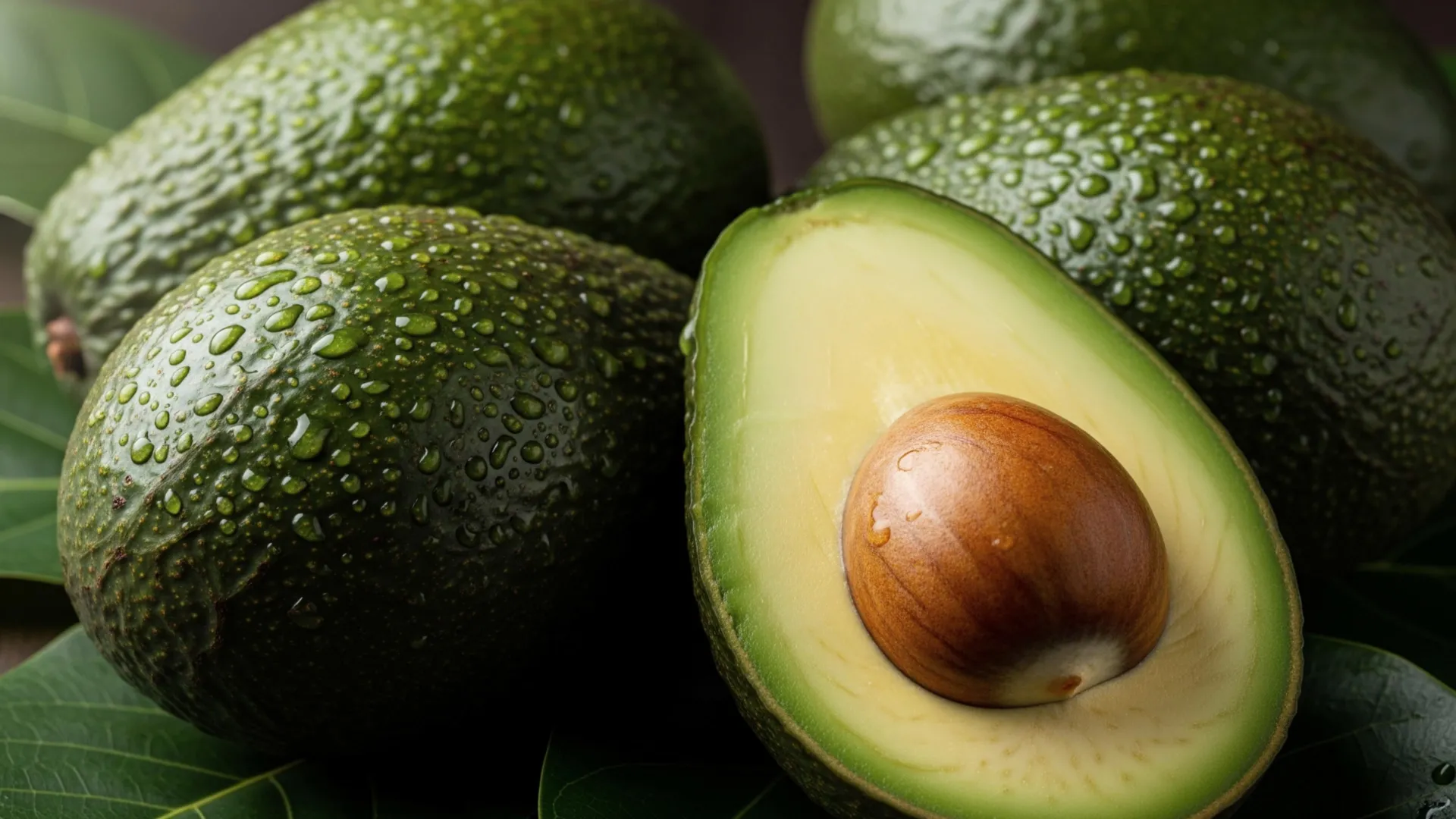
For decades, nutritional science has preached the virtues of comprehensive lifestyle overhauls—demanding that patients abandon long-held eating habits in favor of strict, often difficult-to-maintain regimens. However, a groundbreaking study from the Penn State Department of Nutritional Sciences suggests that significant cardiovascular benefits may not require a total dietary transformation. According to new research published in the Journal of Clinical Lipidology, the addition of just one avocado per day to an existing diet can modestly reduce the risk of heart disease in adults with obesity.
This research, conducted through the rigorous Habitual Diet and Avocado Trial (HAT), offers a compelling case for "incremental nutrition"—the idea that small, manageable changes can yield measurable improvements in physiological markers of health.
Main Facts: Decoding the "Bad" Cholesterol
The core of the study centers on the relationship between diet and low-density lipoprotein (LDL) particles. While many people are familiar with "LDL cholesterol" as the "bad" cholesterol found on a standard lipid panel, the researchers emphasize a critical, often misunderstood distinction: the difference between cholesterol concentration and particle concentration.
LDL cholesterol itself cannot circulate freely through the bloodstream; it requires protein "vessels" to transport it. These vessels are known as LDL particles. The study found that daily avocado consumption led to a measurable decrease in the concentration of these particles.
Why does this matter? Smaller, more numerous LDL particles are particularly adept at infiltrating the walls of the arteries. Once inside, they contribute to the development of plaque, a process known as atherosclerosis. As plaque accumulates, blood vessels lose their flexibility and narrow, forcing the heart to work significantly harder to pump blood through the body. By reducing the number of these "bad" carriers, the daily avocado habit may serve as a protective buffer against the silent, underlying mechanics of heart disease.
Chronology: The Evolution of the Habitual Diet and Avocado Trial
The journey to these findings began years ago with controlled clinical trials. In earlier, highly regulated experiments, Penn State researchers established that avocado consumption could indeed lower LDL cholesterol and particle levels. However, those studies were conducted in a laboratory-like environment where every morsel of food consumed by participants was strictly monitored and controlled by researchers.
While the data from those earlier trials were promising, they left a lingering question: Do these benefits hold up in the messy, unpredictable landscape of real-world eating?
To answer this, the team launched the Habitual Diet and Avocado Trial (HAT). The study spanned six months and tracked 786 participants, all of whom were adults aged 25 or older. To qualify for the study, men were required to have a waist circumference of more than 40 inches, and women were required to have a circumference exceeding 35 inches—a threshold indicative of abdominal obesity.
The trial was designed to mimic real life. Participants were split into two groups:
- The Control Group: Asked to maintain their usual diets and physical activity routines.
- The Intervention Group: Asked to maintain their usual routines but with one mandatory addition: one avocado per day.
By comparing blood samples taken at the start and the conclusion of the six-month period, the researchers were able to isolate the impact of the avocado on the lipid profiles of the participants, irrespective of the other dietary choices they made throughout the day.
Supporting Data: The Math Behind the Heart Risk
The results of the HAT study provide a quantitative look at how dietary additions influence cardiovascular markers. Among the group that consumed an avocado daily, LDL particle concentrations dropped by 49 nanomoles per liter.
While researchers characterize this as a "modest" improvement—estimating an approximate 4% reduction in heart disease risk—the consistency of the finding is what makes the data significant. The benefit was observed across a diverse demographic, regardless of the participants’ sex, race, ethnicity, age, or baseline body mass index (BMI).
It is important to note what the avocado did not do. Previous analyses from this same trial revealed that adding an avocado did not result in weight loss or a reduction in waist circumference. For those who view dietary changes solely through the lens of weight management, this may seem like a setback. However, the researchers argue that the reduction in cardiovascular risk markers is an independent health win that occurs regardless of whether the scale moves.
Official Responses: Insights from the Research Team
The study’s authors emphasize that this research is not a "magic bullet" for heart health, but rather a strategic entry point for dietary improvement.
"If people want to improve the quality of their diet, making one small change might be a more feasible strategy than attempting to change their entire diet," said Janhavi Damani, a postdoctoral scholar at Penn State and the first author of the study.
Damani explains the mechanics of the heart risk using a simple analogy: "Imagine two people with the same high levels of LDL cholesterol. Person A carries their cholesterol in fewer, larger LDL particles, and Person B carries their cholesterol in more, smaller LDL particles. Person B’s heart disease risk would be higher because their overall particle count is higher, even though a test of their LDL cholesterol would look identical."
Dr. Kristina Petersen, an associate professor of nutritional sciences and the senior author of the study, highlighted the importance of the "real-world" aspect of the findings. "Penn State researchers demonstrated several years ago that avocado consumption could reduce LDL cholesterol and levels of LDL particles," Petersen noted. "But in that study, the researchers controlled participants’ entire diets. This study demonstrated benefits in the real world, where people’s diets are much less predictable. In the course of people’s normal lives, avocado consumption still contributes to a healthier diet."
Implications: A Sustainable Path Forward
The implications of the study are twofold: they challenge the "all-or-nothing" approach to nutrition and provide a practical tool for populations at risk for metabolic syndrome.
1. The Power of Micro-Habits
The psychological barrier to diet change is often the perceived difficulty of the task. Telling a patient to overhaul their entire eating pattern is a recipe for non-compliance. By validating that a single daily intervention can have a positive physiological impact, the research empowers individuals to take a manageable step toward health.
2. Tailored Advice
While the study results are promising, the researchers are quick to urge caution. Nutrition is deeply personal, and a dietary addition should not be considered a replacement for medical treatment, especially for those with existing heart conditions. The study authors explicitly advise that individuals consult with a registered dietitian or a physician before making significant dietary changes. A professional can help integrate the avocado into the diet in a way that fits an individual’s specific caloric needs and health goals.
3. Future Cardiovascular Health
The 4% reduction in heart disease risk, while modest compared to the 14–29% risk reduction seen in total dietary overhauls, represents a meaningful step in the right direction. When viewed through the lens of population health, a 4% decrease in cardiovascular events across a high-risk demographic could translate to thousands of lives impacted.
As research continues, the focus will likely shift to why the avocado is so effective. Is it the monounsaturated fats? The fiber content? The specific cocktail of phytonutrients? For now, the evidence is clear: the humble avocado, when incorporated into a daily routine, provides a simple, evidence-based pathway to better cardiovascular health.
Study Contributors:
- Lead Researcher: Janhavi Damani, Penn State.
- Senior Author: Kristina Petersen, Penn State.
- Additional Contributors: Penny Kris-Etherton (Penn State), Nirupa Matthan (Tufts University), Zhaoping Li (UCLA), Joan Sabaté (Loma Linda University), and David Reboussin (Wake Forest University).
- Funding: The Avocado Nutrition Center provided support for this research.