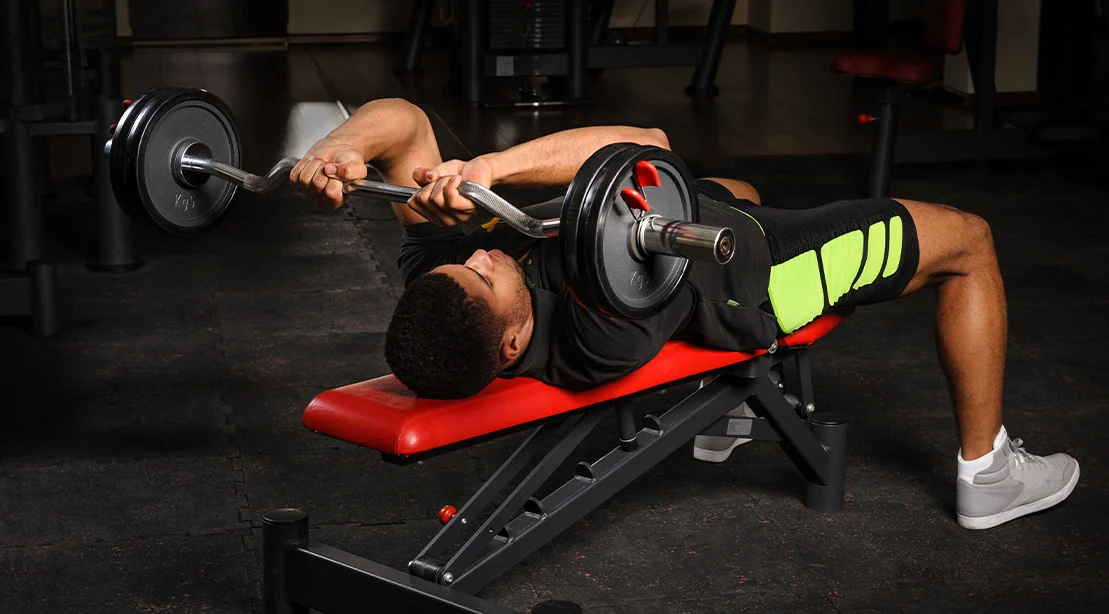
If you are a serious lifter looking to break through a plateau in your bench press or seeking to develop the coveted "horseshoe" triceps, you have likely encountered the JM press. Named after legendary powerlifter JM Blakley, this movement has become a staple in strength-training circles, revered for its unique ability to bridge the gap between a close-grip bench press and a skull crusher. However, the JM press is frequently misunderstood, poorly executed, and occasionally blamed for elbow discomfort.
To reap the immense benefits of this lift, one must treat it with the technical precision of a surgeon. This comprehensive guide breaks down the science, the methodology, and the execution of the JM press to ensure your training yields results without the risk of injury.
The Core Concept: What Makes the JM Press Unique?
At its heart, the JM press is a hybrid movement. Traditional triceps extensions, such as skull crushers, isolate the elbow joint but often limit the amount of weight a lifter can use due to mechanical disadvantage. Conversely, the close-grip bench press allows for significant load but distributes stress across the chest and shoulders.
The JM press occupies the "sweet spot." By requiring a specific elbow path and a unique touch point, it forces the triceps to manage the load in a stretched, high-tension position. When performed correctly, it develops explosive lockout strength, which is the primary driver of a massive bench press.
The Biomechanics of the Lift
The effectiveness of the JM press stems from the "hinge" mechanics. By keeping the elbows pointed forward and the bar path slightly angled, the triceps are forced to work through a range of motion that maximizes muscle fiber recruitment. Unlike the bench press, where the bar moves vertically, the JM press requires a diagonal trajectory that keeps the load focused squarely on the long and lateral heads of the triceps.
A Chronological Breakdown of the Perfect Set-Up
Mastering the JM press is not about raw force; it is about "setting the stage." If your foundation is flawed, the movement will fail. Follow this chronological sequence to ensure every repetition counts.
Phase 1: The Foundation (Steps 1–3)
- Body Position: Lie on the bench with your eyes directly under the bar. Your upper back should feel "heavy" and locked into the padding. A stable scapular base is non-negotiable.
- Foot Position: Your feet are your anchors. Plant them firmly and think about driving the floor away from you. While the JM press is not a leg-drive-heavy lift, that stability prevents the core from leaking energy.
- Grip Width: This is the most common point of failure. A grip that is too wide turns the movement into a standard bench press, while one that is too narrow creates excessive wrist strain. Find a width that allows for natural elbow tracking—usually just inside shoulder-width.
Phase 2: Tension and Execution (Steps 4–7)
- Upper-Body Tension: Think of squeezing "oranges in your armpits." This engages your lats, providing a stable platform for your triceps to work against.
- Breath and Brace: Inhale deeply into your abdomen to create intra-abdominal pressure before the bar leaves the rack.
- Elbow Hinging: As you descend, your elbows should point toward your feet. This is the "hybrid" secret. You are not pulling the bar to your forehead; you are guiding it toward the base of your throat.
- The Bar Path: The bar should travel in a diagonal line. If it hits your chest too low, you are bench pressing; if it lands on your forehead, you are performing a skull crusher that will likely irritate your elbows.
Supporting Data and Technical Nuance
The JM press is often criticized for "hurting the elbows." However, research into joint mechanics suggests that the pain is almost always a result of poor technical execution rather than the movement itself.
Why Technique Matters
In studies of triceps hypertrophy, the long head of the triceps is shown to respond best to exercises that involve a stretch under load. Because the JM press allows for heavier loading than a cable pushdown, it creates a superior hypertrophic stimulus. However, this also increases the shear force on the ulnar collateral ligament if the bar path deviates.
Key Technical Checklist:
- Controlled Eccentric: Never let the bar "drop." The eccentric phase should be deliberate.
- The Touch Point: The bar should land at the junction of the upper chest and the throat.
- Constant Tension: Do not allow the elbows to flare or "swim" during the transition from the eccentric to the concentric phase.
Addressing Common Pitfalls
Even intermediate lifters often fall into bad habits. Here is how to diagnose and correct them.
1. The "Skull Crusher" Migration
- The Symptom: Your elbows drift backward, and the bar moves behind your head.
- The Fix: Force your elbows to stay forward throughout the entire movement. Imagine a wall in front of your elbows that they are not allowed to push past.
2. The "Bench Press" Creep
- The Symptom: The bar drops vertically to your mid-chest.
- The Fix: Consciously shift the bar toward your neck as you lower it. This diagonal path is the hallmark of a true JM press.
3. Elbow Flaring
- The Symptom: Your elbows bow outward at the bottom of the rep.
- The Fix: This often happens when the weight is too heavy. Drop the weight by 10–15% and focus on keeping the elbows tucked in, pointing toward your feet.
Implications for Your Training Program
Integrating the JM press into your routine requires careful programming. Because it is a high-intensity, technical lift, it is best placed early in your "arm day" or as a secondary movement on "push day" following your main bench press work.
Incorporating the Lift
- Frequency: 1–2 times per week.
- Rep Ranges: The JM press shines in the 6–10 rep range. It is not an ideal movement for high-rep "pump" training (where cables excel) nor for 1-rep max testing (where the risk of technical breakdown is too high).
- Progressive Overload: Increase the weight in small, 2.5-pound increments. Because the exercise relies on leverage, small jumps are often more effective than large ones.
Final Thoughts: The Path to Growth
The JM press is a transformative tool for those willing to master its nuances. It demands that you check your ego at the door, prioritize control over poundage, and respect the biomechanical requirements of your elbows.
If you commit to the checklist—maintaining a stable base, keeping your elbows tucked, and perfecting that diagonal bar path—you will find that the JM press delivers a level of triceps development and bench press power that few other exercises can match. Stop struggling with inefficient movements and start training with the precision that champions use. Your triceps—and your bench press total—will thank you for the extra effort.