



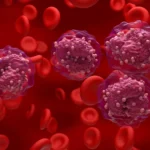








CHICAGO — For years, the pharmaceutical industry has viewed Lipoprotein(a)—or Lp(a)—as the “last frontier” in the battle against cardiovascular disease. A genetically determined, sticky particle composed of cholesterol and protein, Lp(a) affects approximately one in five people worldwide, predisposing them to heart attacks, strokes, and peripheral artery disease. Because levels of Lp(a) are largely set by genetics and remain largely unresponsive to traditional statins or lifestyle interventions, the discovery of therapies capable of silencing the gene responsible for its production was hailed as a potential revolution.
However, the medical community was dealt a sobering reality check this week. Following the release of top-line results earlier this year, the full, peer-reviewed data from the HORIZON trial—sponsored by Novartis—was presented Saturday at the American Heart Association’s (AHA) Scientific Sessions. The results, published simultaneously in the New England Journal of Medicine, reveal that while the experimental drug pelacarsen successfully slashed Lp(a) levels as intended, it failed to translate that biological success into a reduction of clinical cardiovascular events.
The failure of the HORIZON trial does not merely represent a setback for a single drug; it forces a fundamental reassessment of the current scientific consensus regarding the pathophysiology of cardiovascular risk.
The Mechanism: Why Lp(a) Was Considered a "Smoking Gun"
To understand the gravity of the HORIZON trial, one must first understand the biological villain. Lipoprotein(a) is often described as an "LDL cholesterol on steroids." It is structurally similar to low-density lipoprotein (LDL), but it carries an extra protein known as apolipoprotein(a). This addition makes the particle both more prone to oxidation and more likely to promote blood clots, or thrombosis.
For decades, observational studies and Mendelian randomization data have consistently shown that high levels of Lp(a) are an independent risk factor for atherosclerotic cardiovascular disease (ASCVD). Unlike "bad" cholesterol, which can be lowered through diet and exercise, Lp(a) levels are determined by the LPA gene. Patients with elevated levels have been trapped in a high-risk category with no specific medical recourse.

When researchers developed antisense oligonucleotides (ASOs)—drugs like pelacarsen designed to interfere with the mRNA responsible for producing Lp(a) in the liver—the promise was simple: lower the particle count, and lower the risk of death. The HORIZON trial was designed to prove this hypothesis once and for all in a massive, global, five-year study.
Chronology of a Scientific Setback
The trajectory of pelacarsen from laboratory success to clinical disappointment has been a multi-year saga.
- 2018–2019: Early Promise: Phase 2 trials demonstrated that pelacarsen could lower Lp(a) levels by up to 80% or more, with an excellent safety profile. The medical community was galvanized, with major pharmaceutical players entering an "arms race" to bring an Lp(a)-lowering agent to market.
- 2020: Launch of HORIZON: Novartis initiated the Phase 3 HORIZON trial, a monumental effort involving thousands of patients with established cardiovascular disease and elevated Lp(a) levels. The goal was to track participants over five years to observe the impact on MACE (Major Adverse Cardiovascular Events).
- September 2026: The "Top-Line" Shock: Novartis announced that the trial had failed its primary endpoint. While the drug achieved the expected biological goal—the robust reduction of Lp(a)—it did not demonstrate a statistically significant difference in the occurrence of heart attacks, strokes, or cardiovascular death compared to the placebo group.
- November 2026: The AHA Reveal: The full data set was presented at the AHA Scientific Sessions. Experts were looking for nuances: Did specific subgroups benefit? Was the duration of the trial insufficient? The data showed a consistent biological effect across all demographics, but a complete absence of clinical benefit.
Supporting Data: The Disconnect Between Biology and Outcome
The HORIZON trial data is arguably one of the most perplexing datasets in modern cardiology. The primary outcome measure—a composite of cardiovascular death, myocardial infarction, stroke, and urgent coronary revascularization—showed no significant divergence between the treatment and placebo arms.
According to the published findings, the reduction in Lp(a) was sustained throughout the study. Patients receiving the drug saw their levels drop precipitously, often reaching levels that would be considered "low risk" by standard clinical metrics. Yet, the incidence of heart attacks and strokes remained essentially identical in the treatment arm as it did in the placebo arm.
This creates a "biological paradox." If Lp(a) is indeed a causal factor in cardiovascular disease, why does reducing it not prevent the events it is supposed to trigger?

Several hypotheses have been floated by researchers:
- The "Legacy Effect": Some argue that the cardiovascular damage in the study participants—all of whom had established disease—was already too far advanced to be reversed by lowering Lp(a).
- The Timing Hypothesis: Perhaps intervention must occur much earlier in life, before the atherosclerotic plaques have stabilized or calcified.
- The Particle Function: It is possible that the specific inflammatory or thrombotic pathways facilitated by Lp(a) are only relevant during the initiation phase of plaque formation, not the progression phase.
Official Responses and Industry Outlook
The industry reaction has been one of cautious retrenchment. Novartis, in their official statements, expressed disappointment but emphasized the scientific necessity of the study. "While we did not meet the primary endpoint, the HORIZON trial has provided an unprecedented amount of data on the role of Lp(a) in cardiovascular health," a spokesperson stated. "We remain committed to analyzing this data to understand the underlying drivers of cardiovascular risk."
Prominent cardiologists, many of whom served as investigators for the study, have struck a more somber tone. "We have spent a decade convinced that if we lowered Lp(a), the events would follow," said one lead investigator during the AHA press conference. "We were wrong. We need to go back to the drawing board to understand what these particles are doing, or if our current understanding of their ‘causality’ is incomplete."
Stock prices for companies with similar assets in their pipelines—such as Amgen and Ionis—saw fluctuations following the announcement, reflecting investor anxiety that the entire class of Lp(a) inhibitors may face significant regulatory and commercial headwinds.
Implications: Where Does Cardiology Go From Here?
The failure of the HORIZON trial sends ripples through the landscape of preventive cardiology. The implications are three-fold:

1. The Need for Better Clinical Endpoints
The medical community must reconsider how it designs cardiovascular trials. If biological markers like Lp(a) do not correlate with clinical outcomes, researchers must identify what does. This may mean shifting focus toward earlier identification of risk, perhaps through advanced imaging like coronary artery calcium (CAC) scoring, rather than relying solely on blood biomarkers.
2. A Shift in Funding and R&D
Venture capital and internal pharmaceutical budgets are finite. With the "low-hanging fruit" of Lp(a) showing such disappointing clinical results, R&D dollars may shift toward other targets, such as inflammation (the "residual risk" beyond cholesterol) or metabolic pathways that have yet to be fully explored.
3. Patient Care and Management
For clinicians, the HORIZON results provide a clear message: do not promise patients that lowering Lp(a) will definitively prevent a future heart attack. The standard of care remains focused on aggressive management of LDL-C, blood pressure, and blood glucose. Lp(a) remains a risk factor, but it is no longer the "magic bullet" that doctors were hoping to fire.
Ultimately, the HORIZON trial is a reminder that in medicine, the simplest hypothesis is not always the correct one. The human cardiovascular system is a complex, redundant, and highly adaptive machine. While Lp(a) remains a significant biological marker, its role in the complex theater of heart disease is clearly more nuanced than a simple cause-and-effect relationship. As the industry moves forward, the focus must shift from the particle itself to the broader systemic processes that govern cardiovascular health. The mystery of Lipoprotein(a) remains unsolved, and for now, the frontier remains as challenging and elusive as ever.