
For decades, the fitness industry has been obsessed with metrics like VO2 max, bench press weight, and body fat percentage. While these are certainly valuable indicators of physical health, they often overlook a more fundamental aspect of human movement: stability. As we cross the threshold into our 60s, our ability to navigate the world safely and confidently isn’t dictated by how much we can lift, but by how well we can balance.
For personal trainers working with the aging population, the single-leg stance is the gold-standard diagnostic tool. It is a quiet, unassuming test that reveals the complex interplay between our ankles, hips, and core. When this system is firing correctly, life feels effortless—walking becomes a fluid motion, turns are sharp and safe, and reaction times remain crisp. When it falters, however, the risks of falls and injuries skyrocket.
The Science of Stability: A Snapshot of Neuromuscular Control
At its core, the ability to stand on one leg is a sophisticated display of neuromuscular control. It is not merely a test of leg strength; it is a real-time assessment of how the brain communicates with the stabilizers in your lower body.
When you lift one foot, your brain must instantly calculate the center of gravity and signal the muscles in your ankle, hip, and core to make micro-adjustments. If these muscles are underused, the body resorts to "overcorrecting"—a phenomenon that leads to the telltale wobbling many people experience.
The encouraging news is that these neuromuscular pathways are remarkably plastic. Unlike bone density or muscle mass, which can be slower to build, balance is a skill that responds rapidly to consistent, targeted training. By challenging the body’s equilibrium, you are essentially "rewiring" your nervous system to be more responsive, efficient, and resilient.
How to Conduct the Assessment: A Standardized Approach
To obtain an accurate snapshot of your stability, consistency in the testing environment is paramount. Small variations in posture, gaze, or footwear can skew results, making the test a measure of luck rather than true physiological ability.
The Standardized Protocol
- Safety First: Position yourself next to a sturdy chair or a kitchen countertop. While the goal is to balance independently, having a support structure nearby is essential for those who are just beginning their stability journey.
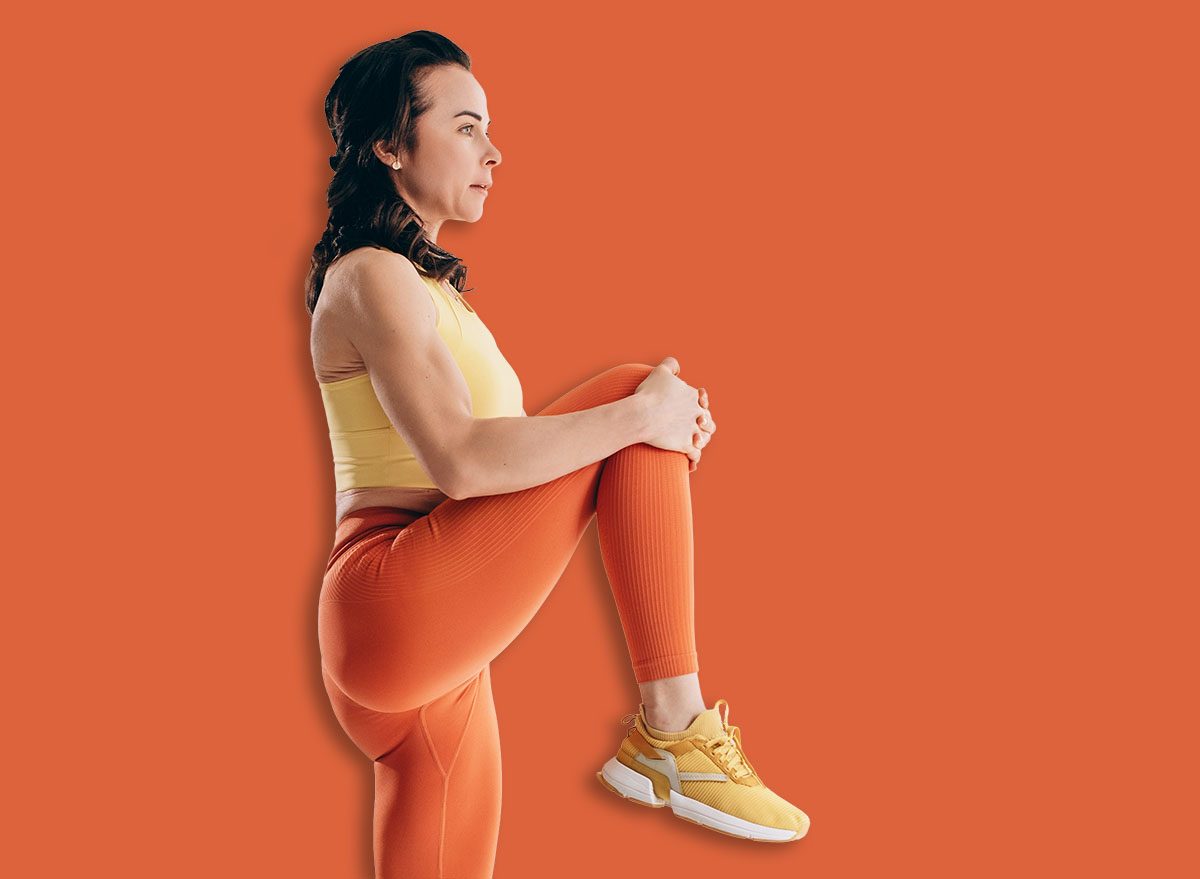
- The Stance: Start in a neutral, standing position with your feet hip-width apart. Shift your weight fully onto your preferred "standing" leg.
- The Lift: Gently lift the opposite foot off the ground. Ensure the standing knee is "soft"—do not lock the joint, as this engages the muscles rather than relying on skeletal tension.
- The Focus: Maintain an upright posture and fix your gaze on a stationary point at eye level. This minimizes visual distraction and helps you find your center.
- The Timing: Start your timer the moment your foot leaves the floor. Hold the position until you either touch the floor with your lifted foot or are forced to grab the chair for support.
- Asymmetry Check: Repeat the process on the opposite leg. Often, we find that one side is significantly stronger than the other. Identifying this imbalance is the first step toward corrective training.
Interpreting Your Results: Where Do You Stand?
Once you have completed the test, the numbers provide a clear picture of your current functional stability. These ranges are categorized to help you identify whether your current level of balance supports an active lifestyle or requires immediate attention.
5 to 10 Seconds: The Stability Foundation
If your hold time falls in this range, it serves as a wake-up call. While you are currently functional, your system is likely relying on rapid, erratic corrections to keep you upright. In a real-world scenario—such as stepping off a curb or navigating an uneven sidewalk—this lack of fluid control puts you at a higher risk for a stumble. The good news? Your body is primed for improvement. Targeted training at this stage can yield massive gains in a short period.
10 to 20 Seconds: The Functional Baseline
This range represents the "average" for many active adults over 60. You are likely confident on flat, predictable surfaces, but you may notice a lack of security when multitasking—such as carrying a bag, talking while walking, or turning your head to look behind you. You have a solid foundation, but there is significant room to elevate your stability to ensure long-term independence.
20 to 40+ Seconds: The Elite Tier
Individuals in this bracket demonstrate exceptional neuromuscular control. Their hips are stable, their ankles are responsive, and their core provides a rock-solid platform for movement. People in this category generally move with high levels of confidence, recover quickly from minor trips, and have the physical insurance policy required to remain active well into their 80s and 90s.
The Path to Improvement: Progressive Stability Training
Improving your balance is not about performing complex acrobatics; it is about deliberate, consistent practice. The goal is to train the stabilizers—the smaller, often ignored muscles—to communicate better with the brain.
Phase 1: Supported Stability
Begin by performing the test with a light hand on a chair. The goal here is not to "beat" the timer, but to practice proper alignment. Focus on keeping your hips level and breathing steadily. Practice this for 30 seconds on each leg, three times a day.
Phase 2: Removing the Training Wheels
Once you can stand for 30 seconds with minimal support, start reducing your dependence on the chair. Hover your fingers over the surface rather than gripping it. If you begin to lose your balance, a quick tap of the chair will save you. Over time, you will find you need that tap less and less.
Phase 3: Dynamic Challenges
Stability is rarely needed in a static environment. To truly prepare for life, you must add movement to your balance. Try:

- Head Turns: While standing on one leg, slowly turn your head from left to right. This forces your brain to recalibrate your balance while your vision is shifting.
- Reaching: Extend your arms in different directions while holding your balance. This shifts your center of gravity, forcing your core to work harder to keep you upright.
- The "Crowded Room" Simulation: Practice balancing while intentionally moving your arms or holding a light object. This mimics the cognitive load of navigating a grocery store or a busy sidewalk.
The Broader Implications: Independence and Longevity
The implications of these results extend far beyond the gym. Statistics consistently show that falls are the leading cause of injury-related death and hospitalization among seniors. By viewing the single-leg stand as a "vital sign," we shift the focus from reactive healthcare—treating a fall after it happens—to proactive wellness.
When you invest time in your balance, you are investing in your autonomy. The ability to stand on one leg correlates directly with the ability to maintain a gait that is stable, efficient, and sustainable. It allows you to continue traveling, hiking, playing with grandchildren, and engaging in the activities that define a high quality of life.
Expert Perspective: Why Consistency Beats Intensity
According to professional trainers like Tyler Read, the most common mistake made by adults over 60 is viewing balance as a "workout" to be performed once a week. "Balance is a skill," Read emphasizes. "It is closer to learning to play an instrument or a new language than it is to building bicep size. You need short, frequent, and consistent bouts of practice to rewire the nervous system."
By incorporating just five minutes of balance work into your daily routine—perhaps while waiting for the coffee to brew or brushing your teeth—you create a "constant feedback loop" for your brain. This prevents the degradation of balance that often accompanies a sedentary lifestyle.
Conclusion: Take the First Step Today
The single-leg balance test is an eye-opening exercise for anyone over the age of 60. It strips away the ego associated with traditional fitness and brings us back to the basics of human movement. Whether you hold your balance for five seconds or fifty, the most important takeaway is that your current score is not your destiny.
Through the combination of consistent practice, mindful movement, and an understanding of how your stabilizers work, you can significantly enhance your stability. The world is a dynamic, unpredictable place—by training your body to be equally dynamic and responsive, you ensure that you remain a confident, active participant in your own life for years to come. Start today, stay consistent, and watch as your stability becomes the quiet, powerful force behind your daily success.