In an era dominated by high-octane podcasts, biohacking influencers, and the promise of radical life extension, the pursuit of longevity has become a high-stakes, high-cost industry. We are constantly told that to live into our 90s or 100s, we must embrace complex protocols: cold plunges, precise supplement stacks, wearable-tracked fasting windows, and expensive diagnostic imaging.

But for the average person, this "optimization culture" creates a paralyzing barrier. When health is framed as a 24/7 job, the goal of living longer can ironically lead to a life that feels shorter, more stressful, and less enjoyable. The reality, backed by massive datasets and decades of coaching experience, is far more encouraging: You do not need to be perfect to live a long, vibrant life. In fact, the pursuit of "optimal" often yields diminishing returns, while the "basics" remain the most potent medicine available.

The Myth of Optimization: Why More Isn’t Always Better
The current zeitgeist suggests that basic health behaviors are merely a starting point—a "floor" that must be built upon with cutting-edge science. Influential figures like Dr. Peter Attia and biohacker Bryan Johnson have brought this mindset into the mainstream. While their dedication is impressive, their protocols are often unsustainable for the average person with a career, family, and social life.

The central issue is a misunderstanding of the "dose-response" curve. Whether it is exercise, nutrition, or stress management, health interventions follow a law of diminishing returns. The leap from sedentary to active is massive; the leap from highly active to "theoretically optimal" is often marginal in terms of actual mortality risk reduction.

Key Myths Debunked
- "The basics aren’t enough": Research consistently shows that foundational habits—regular movement, nutrient-dense food, adequate sleep, and social connection—account for the vast majority of health outcomes. The failure in public health is not a lack of "hacks," but a lack of consistency in these basics.
- "More is better": Data confirms a U-shaped curve for exercise and social engagement. Excessive efforts can lead to overtraining, elevated cortisol, injury, and the social isolation that comes from treating health like a religion.
- "Cutting-edge strategies are proven": Much of the "longevity" market relies on animal studies, observational data, or short-term, small-scale human trials. These fringe methods often lack the safety profile of time-tested habits.
The Pillars of Longevity: A Chronology of Impact
To understand what truly works, we must look at the hierarchy of human health behaviors. These are not fads; they are evidence-based practices that build the foundation of a long healthspan.

1. The Power of Movement
Physical activity is the closest thing we have to a "fountain of youth." Studies of Harvard alumni and large-scale meta-analyses show that any physical activity reduces all-cause mortality, regardless of genetic predispositions or smoking status.

- The Sweet Spot: The most significant mortality risk reduction occurs when accumulating 7.5 to 15 MET-hours of activity per week.
- The Strategy: Pair cardiovascular activity (walking, running, swimming) with resistance training. Resistance training is particularly critical as we age, as it protects bone density and prevents the falls that are a leading cause of mortality in older adults.
2. Nutritional Foundations
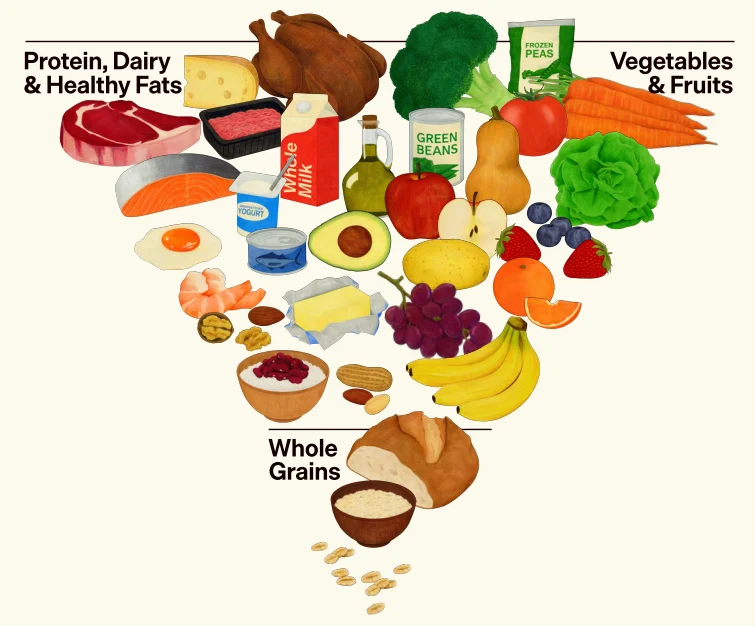
You don’t need to count every macro to eat well. The most effective approach focuses on the "minimally processed" continuum.

- Whole Foods: Diets rich in whole or minimally processed foods are associated with lower rates of heart disease, type 2 diabetes, and depression.
- The Produce Target: Five servings of fruits and vegetables daily is the "plateau point." Research on 1.8 million people shows that beyond five servings, the reduction in mortality risk begins to taper off.
- Protein Priorities: As we age, protein becomes the most critical macronutrient to prevent sarcopenia (muscle loss). A minimum of 1.2g of protein per kg of body weight is a target for most, with higher amounts (1.6g to 2.2g) recommended for those engaged in intense training.
3. The Bedrock of Sleep and Stress
Sleep is not a luxury; it is a physiological necessity. Men and women who achieve consistent quality sleep live significantly longer than those who don’t.

- Sleep: 7 to 9 hours is the gold standard. Chronic sleep deprivation is as dangerous as smoking or inactivity.
- Stress Management: Chronic stress elevates inflammation and cortisol, driving cardiovascular disease. However, the goal is not to eliminate stress, but to find a "sweet spot"—a level of challenge that keeps you engaged without pushing you into a state of burnout or hopelessness.
4. The Social Imperative
Perhaps the most overlooked factor in longevity is social connection. The Harvard Study of Adult Development—a project spanning over 87 years—has consistently identified strong relationships as the single greatest predictor of life satisfaction and longevity. The mortality risk of social isolation is comparable to smoking 15 cigarettes per day.

Supporting Data: The Cost of "Optimization"
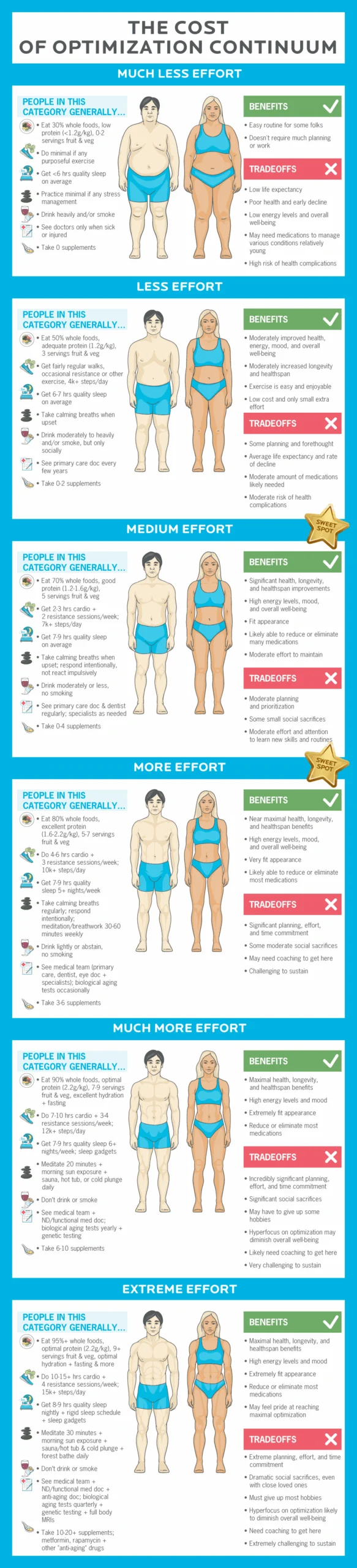
The financial and temporal costs of an "optimizer" lifestyle are astronomical. When we tally the time spent on specialized diagnostic tests (like full-body MRIs, continuous glucose monitors, or advanced blood panels), specific supplement protocols, and time-intensive recovery modalities, we find a massive disparity.

| Category | "Healthy" Person (Time/Week) | "Optimizer" (Time/Week) |
|---|---|---|
| Exercise | 3–5 hours | 10–15+ hours |
| Nutrition Prep | 5–7 hours | 10–15+ hours |
| Self-Care/Recovery | 1–2 hours | 5–10+ hours |
While the "Optimizer" might gain a fractional percentage in potential longevity, they spend roughly 3 to 4 times the resources. For the vast majority, this is not a sustainable trade-off.

Official Perspectives and Implications
Public health institutions, including the WHO and the CDC, emphasize that the greatest health burden is not a lack of biohacking, but a lack of compliance with foundational lifestyle habits. The "Extreme Exercise Hypothesis" warns that, like any medicine, exercise can be overdosed. Over-training without proper recovery can lead to cardiac issues such as atrial fibrillation and myocardial fibrosis.

The implication is clear: Deep Health is holistic. It includes physical, mental, emotional, existential, and social domains. When one domain (like physical optimization) is prioritized to the detriment of others (like social or mental well-being), the individual is no longer "healthy"—they are merely "optimized."

Conclusion: How to Build Your Own Path
If you want to live a long, healthy, and fulfilling life, the path forward is simple but rarely easy:

- Audit the Basics: Are you hitting your protein targets? Are you moving your body daily? Are you sleeping 7+ hours? Are you cultivating deep friendships?
- Define Your Purpose: Longevity for the sake of living is hollow. A sense of purpose—whether through family, work, or community—has been shown to improve health outcomes independent of other factors.
- Tune Out the Noise: Do not let the "optimization culture" convince you that your efforts are inadequate. If you are doing the basics with 80% consistency, you are already in the top tier of health outcomes.
The most effective health plan is the one you can actually stick to for the next forty years. By focusing on the fundamentals, you gain the most precious resource of all: the time and energy to enjoy the long life you are working to build.