








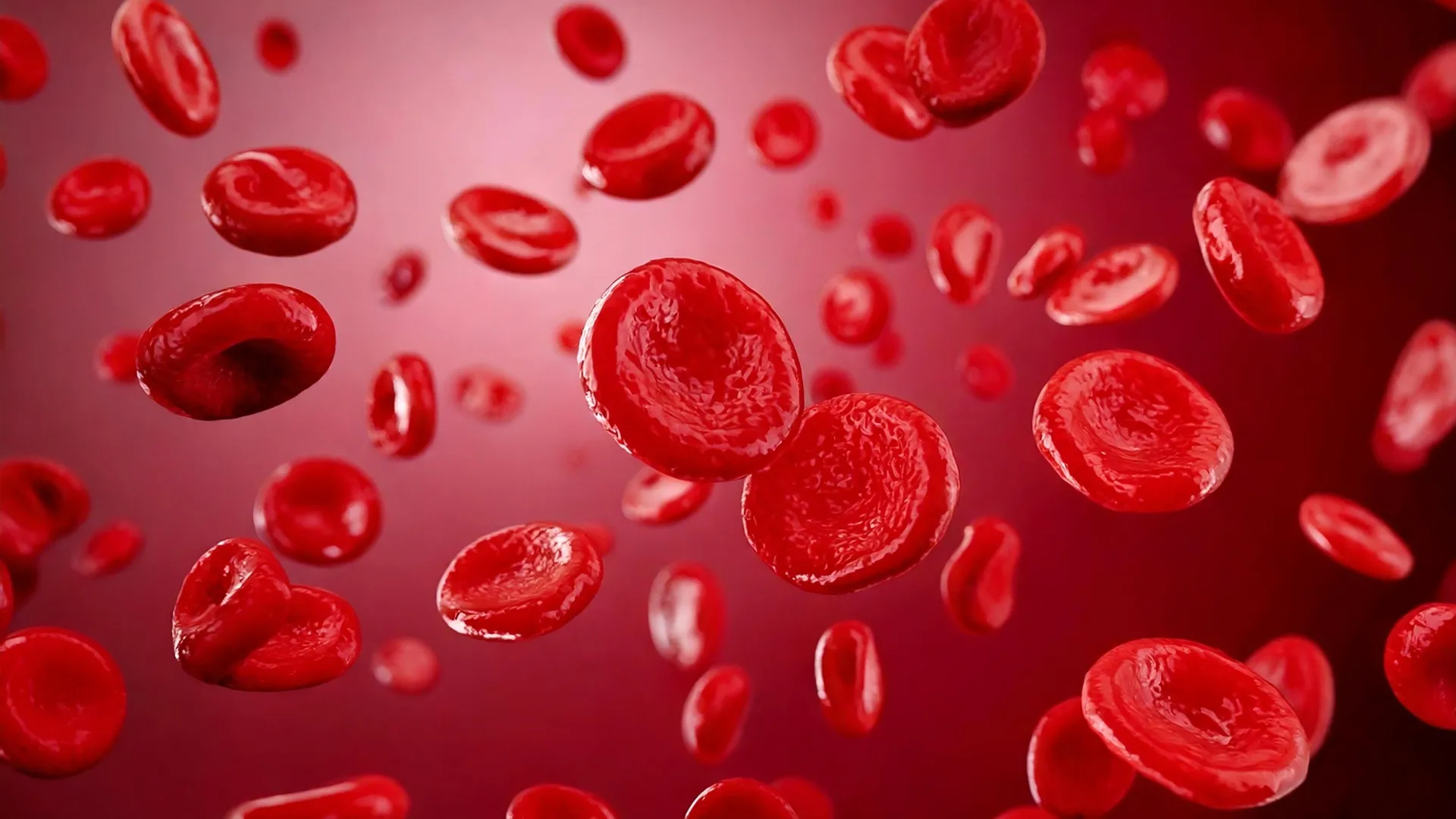
For over half a century, hematologists have operated under the assumption that the human blood landscape—while complex—was largely charted. Beyond the familiar ABO and Rh systems, which dictate the safety of routine transfusions, exists a vast, intricate map of antigens. Yet, one particular marker remained an outlier: the AnWj antigen. Discovered in 1972, this elusive protein marker was present on the red blood cells of more than 99.9% of the human population, leaving a tiny, unexplained minority without it.
After five decades of scientific frustration, a collaborative team from NHS Blood and Transplant (NHSBT) and the University of Bristol has finally closed the case. By identifying the MAL gene as the genetic architect of this marker, researchers have not only established the 47th official human blood group system but have also provided a life-saving toolkit for clinicians managing patients with rare, transfusion-dependent conditions.
A Half-Century Puzzle: The AnWj Backstory
The story of the AnWj antigen began in 1972, when the marker was first identified in the laboratory. While most people are born with this antigen on the surface of their red blood cells, a rare few are "AnWj negative." For these individuals, the lack of this marker is not merely a biological curiosity; it is a clinical hurdle.
If an AnWj-negative individual develops antibodies against the antigen—often due to prior exposure through blood transfusion or pregnancy—their immune system can identify any subsequent AnWj-positive blood as a foreign threat. This leads to hemolytic transfusion reactions, where the body’s defenses aggressively destroy the donor cells, potentially causing severe systemic distress or organ failure.
For fifty years, the scientific community hit a wall: they could identify the presence or absence of the antigen through serological testing, but they had no idea which gene produced it or which protein served as its carrier. This lack of genetic context meant that finding compatible blood for these patients was an arduous process of trial and error, often requiring international searches through rare donor registries.
The Breakthrough: Decoding the Genetic Blueprint
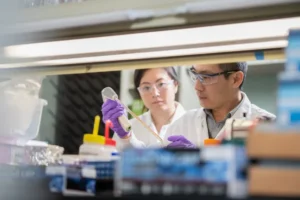
The breakthrough came through the application of modern genomic technology, specifically whole-exome sequencing. This technique allows researchers to scrutinize the protein-coding portions of an individual’s DNA, enabling them to compare the genomes of rare AnWj-negative individuals against the general population to isolate unique variants.
The research team, led by experts at the International Blood Group Reference Laboratory (IBGRL), focused on a cohort that included members of an Arab Israeli family and a woman who was the very first person identified as AnWj-negative in the 1970s. The analysis pointed toward the MAL gene—a gene previously under-researched in the context of hematology.
The findings were definitive: the inherited form of the AnWj-negative phenotype was caused by homozygous deletions in the MAL gene. Because the deletion occurred in both copies of the gene (one from each parent), the body failed to produce the Mal protein, a small membrane-bound protein. Without the protein, the AnWj antigen could not be expressed on the surface of the red blood cell.
To confirm this, the team performed rigorous "cause-and-effect" experiments. By introducing a normal MAL gene into laboratory-grown cells, the researchers successfully induced the expression of the AnWj antigen. Conversely, cells lacking the gene remained unresponsive. This proved that Mal is both necessary and sufficient for the expression of the AnWj antigen, officially crowning it as the defining marker of the new ISBT 047 blood group system.
A Rapidly Expanding Map: Official Recognition
The International Society of Blood Transfusion (ISBT) formally ratified the MAL system in its 2026 terminology report. This is no mere administrative update; it represents a major milestone in human genetics. By linking the AnWj antigen to a specific genetic source, the researchers satisfied the strict criteria required for a blood group system, elevating it from a "serological curiosity" to a medically defined genetic trait.
The timing of this discovery coincides with a period of unprecedented expansion in blood group knowledge. Alongside MAL, the 2026 report ratified three other systems: ER, CD36, and ATP11C. Furthermore, by September 2026, the ISBT announced the identification of the "JAMA" blood group system, bringing the total number of recognized systems to 49. These developments underscore the fact that our understanding of human blood is still in its infancy, with many more hidden markers likely waiting to be uncovered.
Clinical Implications: Transforming Patient Care
The ability to genotype for the MAL gene is a game-changer for transfusion medicine. Historically, identifying an AnWj-negative patient relied on reactive testing—meaning they had to have a reaction to blood before clinicians knew they were missing the marker.
With the new genetic test, doctors can now:
- Proactively Screen Donors: Blood services can incorporate MAL genotyping into their existing platforms, identifying rare donors before they are needed for emergencies.
- Precision Diagnostics: Clinicians can distinguish between inherited AnWj-deficiency (a genetic condition) and acquired loss of the antigen (often caused by underlying hematological disorders or cancers).
- Risk Mitigation: By screening patients prior to transfusion, hospitals can avoid the use of incompatible blood entirely, preventing hemolytic reactions before they start.
Recent clinical cases from 2026 highlight why this is so critical. In one instance, a 75-year-old patient suffering from severe anemia and an anti-AnWj autoantibody required an emergency transfusion. Because the doctors did not have access to rare, genetically compatible blood, they were forced to take a significant risk by administering unmatched blood. While the patient survived, the case served as a stark reminder of the limitations of current transfusion protocols.
In another instance, a patient with B-cell lymphoma and an anti-AnWj antibody faced red blood cell destruction after receiving incompatible blood. Doctors were forced to use experimental treatments, such as sutimlimab, to block the immune response. These cases reinforce that while some patients lose the antigen due to illness, those with the rare inherited deficiency require a permanent, high-precision solution—a solution that the MAL discovery now makes possible.
Expert Perspectives: A Culmination of Decades of Effort
For those at the front lines of the research, the identification of the MAL gene is the result of a lifelong professional pursuit.
Louise Tilley, Senior Research Scientist at IBGRL, reflected on the journey: "The genetic background of AnWj has been a mystery for more than 50 years, and one which I personally have been trying to resolve for almost 20 years of my career. It represents a huge achievement, and the culmination of a long team effort, to finally establish this new blood group system and be able to offer the best care to rare, but important, patients."
Dr. Ash Toye, Director of the NIHR Blood and Transplant Research Unit at the University of Bristol, emphasized the role of gene editing in this breakthrough. "It’s really exciting we were able to use our ability to manipulate gene expression in developing blood cells to help confirm the identity of the AnWj blood group. This development will help identify these rare donors and help patients in the future."
The researchers noted that the small, elusive nature of the Mal protein made it an incredibly difficult target. It is a protein involved in membrane organization and cellular transport—functions that do not typically "flag" a protein as a blood group antigen. It was only by combining genomic sequencing, cellular manipulation, and decades of serological data that the team could connect the dots.
Looking Toward the Future
The discovery of the MAL blood group system is a testament to the power of international collaboration and the persistence of the scientific method. It serves as a reminder that even in an era of advanced medicine, there are still fundamental aspects of human biology that remain hidden in plain sight.
As diagnostic technology continues to improve, the ability to map the "genetic atlas" of blood will only become more refined. For the small number of people who are AnWj-negative, the MAL breakthrough offers more than just scientific recognition; it offers peace of mind and the assurance that their unique blood profile is now documented, understood, and, most importantly, safely manageable.
As we look toward the 50th, 60th, and 70th blood group systems, the MAL discovery stands as a landmark achievement—a bridge between 50 years of unanswered questions and a new, more precise future for transfusion medicine.