The 2026 American Association for Cancer Research (AACR) Annual Meeting, held in San Diego from April 17–22, served as a definitive pivot point for modern medicine. As the global research community converged on the California coast, a clear consensus emerged: the "siloed" era of cancer research is over. In its place, a multidisciplinary paradigm is rising, where breakthroughs in biological understanding, computational technology, and regulatory policy are being synthesized into a single, cohesive strategy for patient care.
Main Facts: A Paradigm Shift in Disease Understanding
At its core, the 2026 meeting signaled that cancer is no longer viewed as a rogue tumor cell to be excised or poisoned. Instead, it is being treated as a systemic failure within a complex, dynamic ecosystem. The tumor microenvironment—a chaotic interplay of immune cells, metabolic processes, local tissue structures, and the human microbiome—has become the primary theater of operation.
Perhaps the most provocative discovery discussed was the role of the nervous system in cancer progression. Researchers presented evidence that nerves are not passive bystanders; they actively participate in tumor development. Nerve signaling can modulate immune responses, effectively "silencing" the body’s natural defenses and contributing to treatment resistance. This revelation has opened a new frontier: targeting the neuro-immune axis to "re-awaken" the body’s anti-tumor response.
Chronology of the 2026 AACR Scientific Trajectory
The six-day conference followed a distinct narrative arc, moving from foundational biological discoveries to the logistical challenges of modern healthcare.
- April 17–18: The Biology of the Ecosystem. The opening sessions focused on "Cancer as a System." Key presentations highlighted how metabolic shifts and microbiome interactions dictate the success or failure of existing immunotherapies.
- April 19: The Immunotherapy Renaissance. Discussions shifted to precision. Experts dissected why immune cells, despite being present in the tumor, often enter a "dysfunctional" or "exhausted" state. The focus here was on reversibility—turning off the tumor’s "off-switch" for the immune system.
- April 20: The Technological Leap. Mid-conference, the focus pivoted to the digital and mechanical tools enabling these discoveries. From single-cell spatial transcriptomics to AI-driven drug discovery, the conversation centered on the speed of innovation.
- April 21: Clinical Applications and Prevention. A breakthrough session on oral precancer, led by MD Anderson researchers, demonstrated that immunotherapy could be used as a preventative, rather than just a reactive, measure.
- April 22: Policy and the Path Forward. The meeting concluded with a sobering but necessary focus on the "Infrastructure Gap," addressing why even the most miraculous discoveries often stall before reaching the bedside.
Supporting Data: The Quantitative Pulse of Cancer Research
The sheer scale of the current research landscape is staggering. CRI Research Scientist Dr. Fahad Benthani presented a comprehensive audit of over 24,000 global immunotherapy trials. This data revealed that the field is moving away from "monotherapies" and toward increasingly complex combination strategies.
Key Performance Indicators (KPIs) in Oncology
- Preventative Efficacy: In trials for oral precancer, the direct injection of nivolumab (Opdivo®) resulted in a 60% average reduction in lesion size.
- Durability: Over 80% of treated lesions remained cancer-free one year post-intervention, suggesting a long-term prophylactic benefit.
- The "Undruggable" Frontier: New data from Revolution Medicines showcased successful targeting of KRAS mutations—historically considered impossible to hit—in pancreatic and lung cancer models, providing hope for patients with historically poor prognoses.
Official Responses and Expert Perspectives
The AACR leadership and the broader CRI network emphasized that the current challenge is not a lack of scientific ingenuity, but a bottleneck in translation.
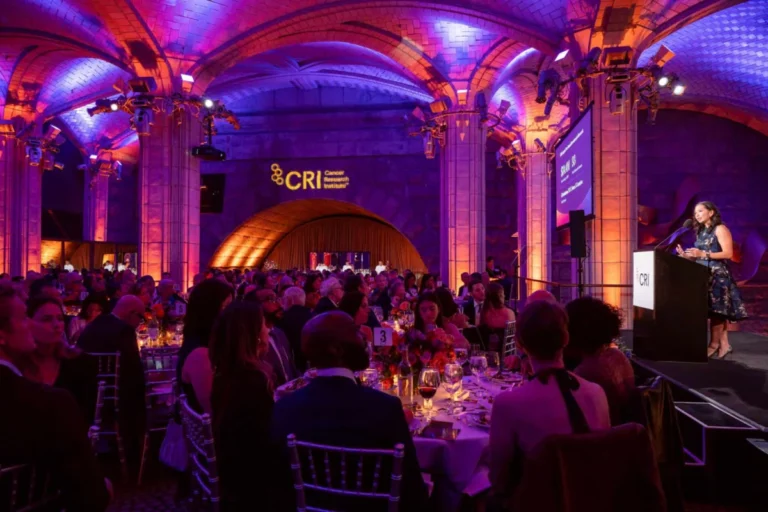
Dr. Cynthia Neben, Director of Strategic Programs at the Cancer Research Institute (CRI), addressed the Researcher Town Hall with a stark assessment of the clinical trial landscape. "We are seeing a paradox," Dr. Neben noted. "We have the most sophisticated molecular understanding of cancer in human history, yet our clinical trial infrastructure remains siloed, slow, and inaccessible to the average patient."
Her research, presented via a dedicated poster session, mapped the vast disparity between laboratory success and patient enrollment. The message from the podiums was clear: the scientific community must now advocate for "regulatory agility" alongside biological innovation. Without streamlined trial designs and global data-sharing, the rapid pace of lab discovery will inevitably hit a wall of bureaucratic inertia.
The Technological Catalyst: AI and Spatial Biology
Technology was the invisible backbone of the 2026 conference. The integration of Artificial Intelligence (AI) into the research pipeline is no longer experimental—it is foundational. AI is currently being deployed to:
- Optimize Trial Design: Predicting patient populations most likely to respond to specific immune-modulating agents.
- Drug Discovery: Identifying novel small molecules that can bypass the "undruggable" mutations found in aggressive solid tumors.
- Spatial Mapping: Using platforms like 10x Genomics, researchers can now view tumors in 3D, observing the exact spatial orientation of an immune cell as it attempts to infiltrate a tumor, allowing for "precision strikes" in drug development.
Implications for Patients, Researchers, and Global Health
The implications of the 2026 AACR meeting are profound. For patients, the transition toward "precision immunotherapy" means fewer "one-size-fits-all" treatments and more personalized, predictive medicine. The success in early-stage lesion treatment (such as the MD Anderson study) suggests a future where cancer is managed as a chronic, or even preventable, condition rather than a catastrophic diagnosis.
For researchers, the future is explicitly collaborative. The "lone wolf" era of the individual laboratory is being replaced by large-scale, data-rich consortiums that bridge biology with computational science.
The Policy Challenge
The most significant hurdle identified at AACR 2026 is the uncertainty surrounding federal funding. As global competition for research dominance intensifies, the United States and other leading nations face a critical decision: treat cancer research as a primary national security priority or risk a stagnation in progress.
Conclusion: Bridging the "Valley of Death"
The path from the laboratory bench to the patient’s bedside—often referred to in medical circles as the "Valley of Death"—was the central focus of the 2026 meeting. The consensus is that we have the "what" (the biological discoveries) and the "how" (the technological tools). The missing piece remains the "when"—the urgency required to translate these findings into practice.
As the conference delegates departed San Diego, the mood was one of tempered optimism. The science is moving faster than ever, but the real-world impact will be determined by our ability to integrate these advances into the clinical workflow. By connecting the dots between the nerve-tumor interface, AI-driven diagnostics, and accessible clinical trials, the oncology community is building a framework that could fundamentally alter the human experience with cancer.
The future of cancer care is no longer a distant possibility; it is being written in the data, the algorithms, and the policy discussions of 2026. The mandate is clear: move from discovery to implementation, and ensure that the fruits of this scientific revolution are accessible to every patient, regardless of geography or economic status.