










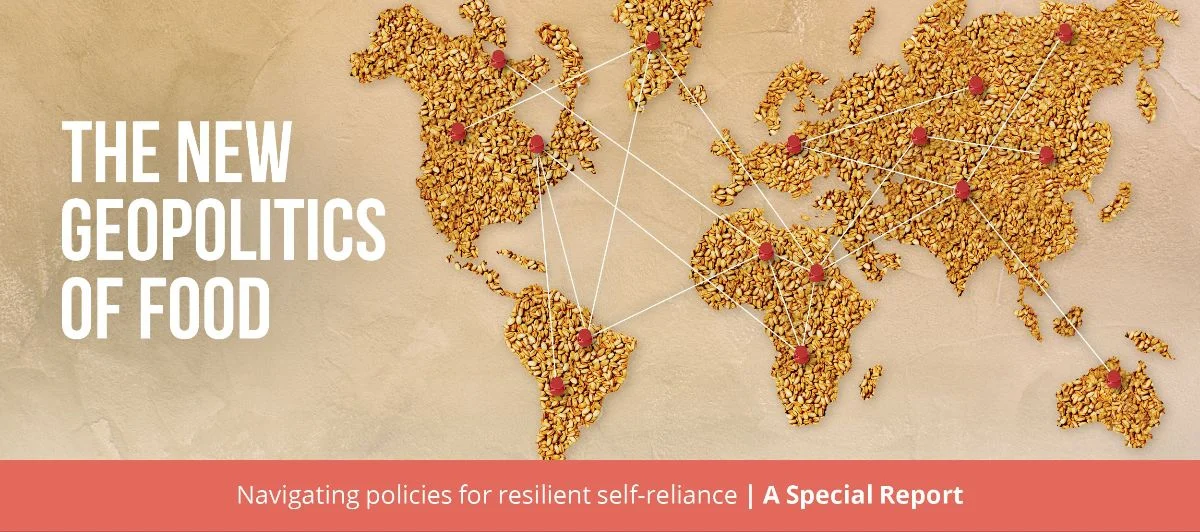
In an era defined by overlapping crises—from the echoes of geopolitical conflict to the escalating volatility of the climate—the global food system stands at a precarious crossroads. A landmark report from the International Panel of Experts on Sustainable Food Systems (IPES-Food), titled The New Geopolitics of Food, has issued a stark warning: the era of globalization as the primary guarantor of food security is effectively over.
The report meticulously details how the confluence of wars, protectionist trade disputes, severe climate shocks, and a crumbling framework of international cooperation is systematically driving up food prices and deepening the hunger crisis for millions. As global supply chains buckle under the weight of these pressures, the report argues for a paradigm shift: a transition toward "resilient self-reliance."
Main Facts: A System in Flux
The IPES-Food report identifies a fundamental shift in how food moves across borders. For decades, the global food trade was built on the premise of "just-in-time" efficiency, where countries relied on international markets to fill domestic deficits. Today, that model is failing.
The Drivers of Instability
- Weaponization of Food: The report notes that food is increasingly being used as a geopolitical lever. Trade disputes and sanctions are creating bottlenecks that disproportionately affect import-dependent nations.
- Climate Shocks: Unpredictable weather patterns—droughts, floods, and heatwaves—are disrupting the "breadbaskets" of the world, making agricultural output increasingly erratic.
- Erosion of Cooperation: As international institutions struggle to enforce norms, individual nations are turning inward, leading to a surge in export bans and protectionist policies that exacerbate global price spikes.
The core thesis is clear: dependence on volatile global markets is no longer a viable strategy for sovereign stability. Governments must now prioritize domestic and regional food systems to insulate their populations from the vagaries of international political friction.
Chronology: The Road to the Current Crisis
To understand the current state of food security, one must trace the timeline of the last five years, which have acted as a stress test for the global supply chain.
- 2019–2020: The Pandemic Shock: COVID-19 exposed the fragility of global supply chains. As borders closed and labor mobility plummeted, the world realized how quickly trade could be interrupted.
- 2021: The Climate Trigger: A series of extreme weather events in major exporting nations caused the first significant post-pandemic spike in grain prices.
- 2022: The Geopolitical Catalyst: The conflict in Ukraine sent shockwaves through global markets, particularly in wheat, corn, and fertilizer supplies. This served as a "wake-up call" for nations heavily reliant on Black Sea imports.
- 2023–2024: The Era of Protectionism: Following the shocks of the previous years, many nations implemented export restrictions to keep domestic prices low, further destabilizing global price indices and deepening the crisis for food-importing developing nations.
Supporting Data: Mapping the Fragility
The data presented by IPES-Food paints a somber picture of the current landscape.
The Price-Volatility Correlation
Global food prices have seen a dramatic increase in volatility. Between 2020 and 2023, the FAO Food Price Index experienced levels of fluctuation unseen since the 2008 financial crisis. This volatility is not merely a statistical anomaly; it is a direct result of "just-in-case" hoarding by powerful nations and the logistical failure to bridge the gap between supply and demand.
Dependency Ratios
The report highlights that nearly 80% of countries are now net food importers. In regions like Sub-Saharan Africa and the Middle East, the reliance on foreign staples (such as wheat from Russia or Ukraine) exceeds 60% of total consumption. When these external supply lines are disrupted, the result is immediate food inflation, civil unrest, and humanitarian crises.
The "Resilience Gap"
The report identifies a "resilience gap"—the difference between a nation’s current ability to withstand a two-month supply disruption and its actual requirement for stability. Data suggests that countries with diversified, localized agricultural networks show 30% less price volatility during trade shocks compared to those with highly centralized, import-reliant systems.
Official Responses and Strategic Shifts
Governments are beginning to react, though the efficacy of these responses remains a subject of intense debate.
The Push for Self-Reliance
Several governments, particularly in the Global South, have begun re-evaluating their agricultural subsidies. Instead of focusing solely on cash crops for export (the traditional model encouraged by international financial institutions), there is a pivot toward "resilient self-reliance." This involves:
- Investment in Smallholder Farming: Providing local farmers with the infrastructure and capital to compete with industrial imports.
- Regional Trade Blocs: Creating regional grain reserves to buffer against global shocks.
- Diversification of Crops: Reducing the reliance on a few global staples (wheat, rice, maize) in favor of indigenous, climate-resilient crops like sorghum, millet, and cassava.
International Skepticism
While some nations embrace this shift, traditional trade advocates remain wary. Critics argue that moving toward self-reliance risks "de-globalization," which could reduce the overall efficiency of food production and lead to higher long-term prices for consumers. However, IPES-Food counters that the "efficiency" of the current system is a mirage, as it fails to account for the massive external costs of supply chain collapses.
Implications: The Future of Global Food Security
The implications of the New Geopolitics of Food are profound, suggesting a fundamental restructuring of how states relate to one another.
A Decentralized Future
The future of food security will likely be decentralized. We are moving away from a world where one or two "breadbasket" nations feed the globe, toward a mosaic of regional food hubs. While this may be more costly in the short term, it provides a crucial layer of security that the current, hyper-efficient global market lacks.
The Role of Technology
"Resilient self-reliance" does not mean a return to pre-industrial agriculture. Instead, it implies the strategic use of technology—precision farming, climate-resilient crop varieties, and decentralized logistics—to optimize local yields. Governments are being urged to treat food systems as critical national security infrastructure, equivalent to energy grids or cybersecurity.
The Human Cost
At the center of this geopolitical debate remains the human cost. Hunger is no longer a problem restricted to regions of conflict; it is a systemic failure affecting urban centers in developed nations and rural populations in the Global South alike. The IPES-Food report serves as a mandate for policymakers: to protect the vulnerable, the current paradigm must be dismantled and rebuilt on the pillars of stability, local empowerment, and environmental stewardship.
Conclusion
As the global landscape continues to fragment, the reliance on long, fragile, and politically sensitive supply chains is a luxury the world can no longer afford. The "New Geopolitics of Food" is not merely a theoretical framework; it is an urgent blueprint for survival. By strengthening domestic food systems and fostering regional cooperation, governments can move beyond the reactive measures of the past and begin to build a food system that is capable of weathering the inevitable storms of the 21st century.
The path forward requires courage—the courage to challenge entrenched trade ideologies and the foresight to invest in the resilience of local communities. The cost of inaction, as demonstrated by the current crisis, is measured not just in prices, but in lives.
Resources and Further Reading:
- IPES-Food Official Report: The New Geopolitics of Food (2024)
- FAO State of Food Security and Nutrition in the World (2023)
- Global Food Policy Report (IFPRI)
- Climate-Smart Agriculture: Regional Case Studies