











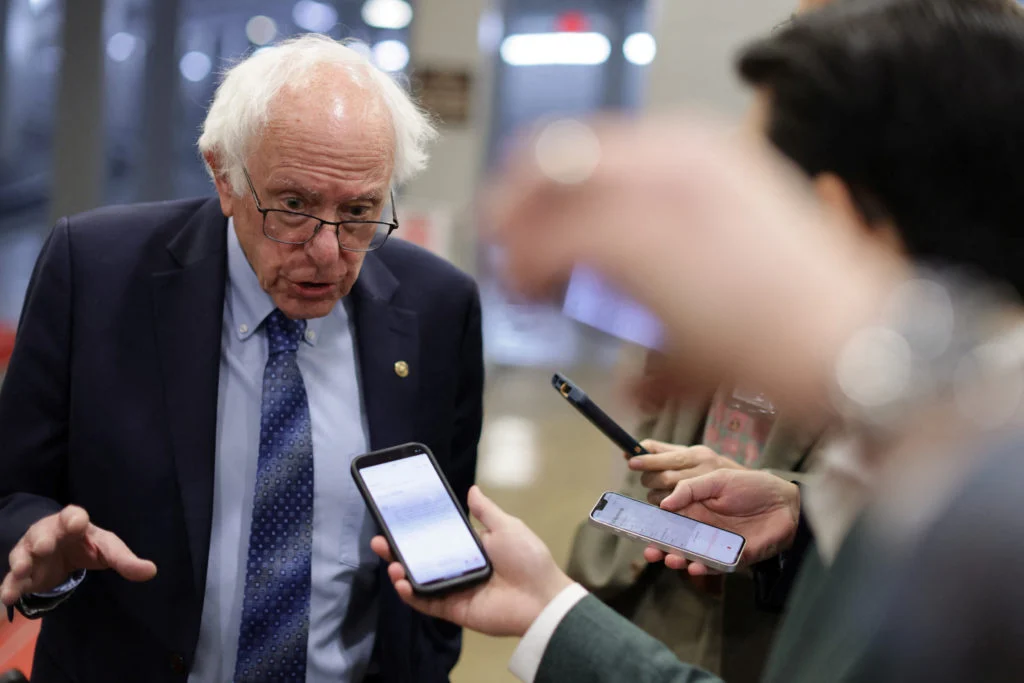
WASHINGTON — As the calendar turns toward a new congressional session, Senator Bernie Sanders, the independent from Vermont who caucuses with Democrats, is poised to assume the chairmanship of the influential Senate Health, Education, Labor and Pensions (HELP) Committee. In this role, Sanders is preparing to launch a legislative offensive that aims to fundamentally restructure the American social contract, placing universal healthcare and a populist economic agenda at the center of the national discourse.
His strategy, detailed in exclusive insights provided to the Associated Press, represents more than just a policy wish list; it is a calculated attempt to test the limits of Democratic unity and to force a national reckoning on the role of government in the lives of working-class families.
The Core Proposal: A Four-Year Transition to Universal Healthcare
At the heart of Sanders’ agenda is his long-sought goal of "Medicare for All." Unlike previous iterations that were often viewed as aspirational, this plan includes a concrete, four-year legislative roadmap intended to move the nation toward a single-payer system.
The strategy envisions a phased expansion of Medicare eligibility, designed to slowly integrate the private insurance market into a federally managed system. In the first year, the eligibility age for Medicare would drop from 65 to 55, while simultaneously expanding benefits to cover dental, vision, and hearing services—areas currently underserved by the traditional Medicare program. Furthermore, the plan guarantees comprehensive healthcare coverage for all children through age 18.
The transition would accelerate in subsequent years:
- Year 2: Eligibility age lowered to 45.
- Year 3: Eligibility age lowered to 35.
- Year 4: Universal coverage extended to every American, effectively phasing out most private insurance.
"Transforming a system which represents 18% of the GDP of America—you don’t do that overnight," Sanders said in an interview. "This is no longer a utopian vision. This is where the American people are. The election was a crying out for fundamental change in the way the government does business."
Chronology of a Progressive Pivot
The evolution of Sanders’ influence has been a decade-long trajectory, moving from the fringes of the Democratic Party to the center of its legislative strategy.
- 2015–2016: Sanders’ first presidential bid shifts the Overton window on healthcare, forcing "Medicare for All" into the mainstream of Democratic debate.
- 2021–2023: As Chair of the Senate Budget Committee, Sanders helps shepherd major spending priorities through the chamber, refining his ability to leverage reconciliation processes.
- 2023–2025: During his tenure as ranking member and chair of the HELP Committee, Sanders focuses on pragmatic wins, collaborating with Republican counterparts to lower prescription drug costs and strengthen primary care access.
- Late 2024: Following a general election that granted Democrats control of Congress but highlighted internal ideological friction, Sanders declares the time for "very significant changes" has arrived.
- January 2025 and Beyond: Sanders prepares to formalize his HELP Committee agenda, utilizing the 56-44 Democratic majority to push legislative benchmarks.
Supporting Data and Economic Challenges
The ambition of Sanders’ plan is matched only by the scale of the economic hurdles it faces. With the national deficit currently hovering at $2 trillion—roughly 6.2% of GDP—the fiscal feasibility of such a transformation remains the primary point of contention.
Data from the Congressional Budget Office (CBO) regarding previous iterations of Medicare expansion underscores the budgetary impact. A 2022 CBO estimate suggested that simply lowering the Medicare eligibility age to 60 would increase federal budget deficits by $155 billion over a five-year window (2026–2031).
Sanders, however, argues that these costs must be viewed through a lens of redistribution rather than pure expenditure. His financing model involves:
- Transitioning costs: Moving away from private insurance premiums toward a structured payroll contribution system.
- Corporate/Wealth taxes: Implementing new levies on Wall Street transactions, large corporations, and the nation’s wealthiest households.
- Administrative savings: Reducing the massive overhead costs currently associated with private insurance billing and profit margins.
Official Responses and Political Implications
The legislative path forward is fraught with political complexity. While House Democratic leader Hakeem Jeffries has signaled a willingness to expand healthcare access—explicitly supporting the inclusion of dental, vision, and hearing coverage—the party remains divided on the speed of a total transition to single-payer.
Jeffries noted that returning to the pre-election status quo is "not acceptable," aligning the House leadership closer to the first phase of Sanders’ plan. "Jeffries basically supported the first year of Medicare for All," Sanders noted, viewing this as a strategic opening.
However, the reality of a split government persists. Any legislation passed by Congress must secure the signature of President Donald Trump. While the prospect of a Republican president signing a Democratic-led healthcare overhaul seems remote, Sanders remains characteristically defiant.
"Donald Trump may be crazy, but he is not stupid," Sanders remarked. "He’s a smart guy, and he’s a very good politician." Sanders is betting that if he can craft a policy that appeals to the populist economic sensibilities of Trump’s base—specifically regarding prescription drug costs and healthcare affordability—the political pressure could prove insurmountable even for a Republican executive.
Beyond Healthcare: Labor and Technology
Sanders’ agenda extends well beyond the healthcare sector, reflecting a broader attempt to reshape the American labor market and address emerging technological threats.
Raising the Floor: The $20 Minimum Wage
Sanders is spearheading a push to raise the federal minimum wage from $7.25 to $20 an hour. Proponents argue that the current wage, which has remained stagnant since 2009, has failed to keep pace with inflation and productivity. The plan includes a four-year phase-in period to mitigate shocks to small businesses, though business advocacy groups have already expressed significant concerns regarding potential inflationary impacts and workforce reductions.
Strengthening Unions: The PRO Act
Parallel to the wage push is a commitment to advancing the Protecting the Right to Organize (PRO) Act. This legislation would significantly strengthen the ability of workers to form unions and engage in collective bargaining, a cornerstone of Sanders’ broader strategy to empower the working class.
The AI Frontier
Perhaps the most novel aspect of Sanders’ new platform is his focus on Artificial Intelligence. He is calling for:
- A moratorium on new AI data centers to assess environmental and energy impacts.
- A pause in advanced AI development to ensure safety protocols are established.
- A ban on artificial superintelligence to prevent existential risks to the labor market and human safety.
Conclusion: A Test of Democratic Will
As the new Congress prepares to convene, Bernie Sanders is setting the stage for a high-stakes legislative session. By linking healthcare reform, labor rights, and technological regulation, he is challenging the Democratic Party to move beyond incrementalism.
Whether these proposals remain symbolic gestures or evolve into law depends on the party’s ability to leverage its 56-seat majority and navigate the volatile landscape of a Trump presidency. For Sanders, the goal is clear: to ensure that the legislative record of the next two years reflects the economic struggles of the working families he has spent a lifetime representing. The coming months will determine if this ambitious agenda is the beginning of a new era of populist policy or a final stand for a vision that remains, for now, at the edge of the possible.