












PARIS — A growing movement in France is challenging the long-standing status quo of crowd control, as activists and opposition lawmakers demand an immediate moratorium on the use of tear gas during public demonstrations. The push comes following an outpouring of testimonies from women who claim that exposure to the chemical irritant during recent anti-government protests—centered on the cost of living and education funding—has triggered severe menstrual irregularities, debilitating pelvic pain, and other reproductive health disruptions.
While French authorities remain steadfast in their defense of the chemical’s necessity, the anecdotal evidence is fueling a national debate regarding the adequacy of safety standards and the historical oversight of how chemical crowd-control agents interact with the female biological system.
The Core Conflict: Safety vs. Order
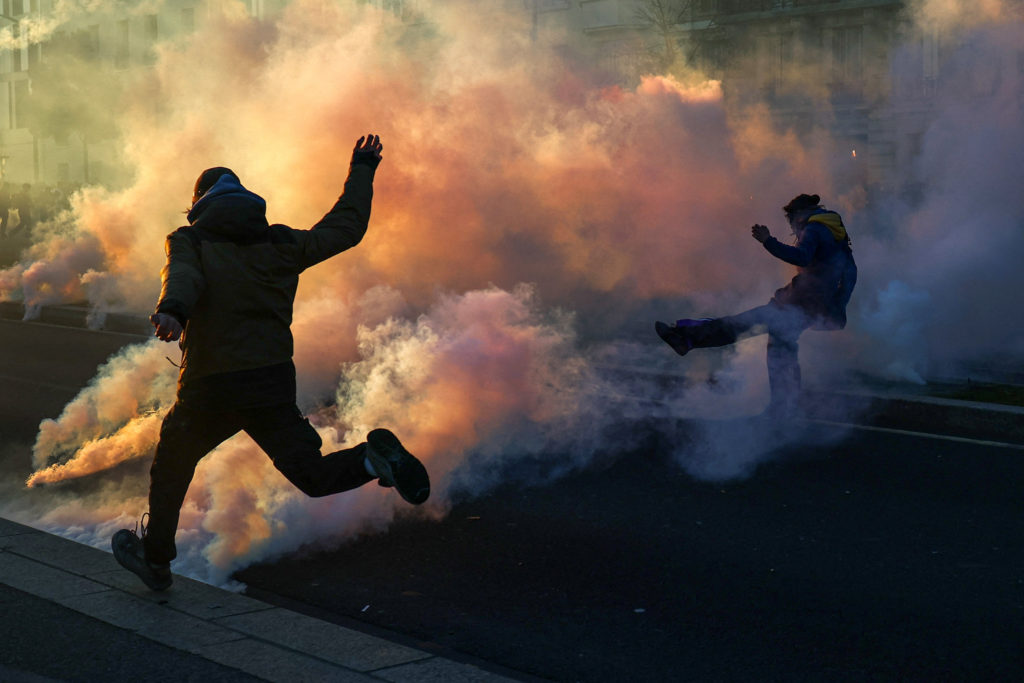
At the heart of the controversy is the use of CS (2-chlorobenzalmalononitrile) gas, a crystalline powder dispensed by police to neutralize and disperse crowds. When fired, the substance irritates the eyes, skin, and respiratory tract. While the French Interior Ministry categorizes CS as a "less-lethal" alternative to more aggressive physical interventions, the recent wave of protests has brought thousands of demonstrators—including students, journalists, and bystanders—into direct, sustained contact with the chemical.
The advocacy group "Lacrymos de Sang" ("Tears of Blood"), spearheaded by former journalist Eva-Luna Tholance, has documented more than 10,000 complaints. These accounts describe a range of alarming symptoms, from intense, abnormal uterine cramping to prolonged, heavy bleeding, and in some cases, the onset of menstrual cycles in women who are postmenopausal or utilizing hormonal contraception.
A Chronology of Escalating Tensions
The current crisis did not emerge in a vacuum; it is the culmination of years of social unrest and the increased tactical deployment of anti-riot equipment.
- 2020–2021: During the height of protests against proposed security legislation, photographers and activists like Chloé Baroux began documenting what they believed were the first signs of physiological changes linked to protest environments. At the time, these reports were largely dismissed as outliers.
- October 17, 2026: A significant escalation in protests across Paris saw riot police utilize heavy canisters of tear gas to break up rioting and looting. It was during this period that widespread reports from female protesters surfaced, citing immediate, acute pain following exposure.
- Late 2026: "Lacrymos de Sang" was officially founded. The group began systematically collecting questionnaires from participants, creating a digital repository of health complaints that had previously gone unrecorded by official state bodies.
- November 2026: Following a massive nationwide strike, opposition lawmakers formally demanded that the Interior Ministry conduct an independent study into the health impacts of CS, citing the potential for long-term gynecological damage.
- Present Day: Interior Minister Laurent Nuñez has rejected these calls, maintaining that the use of tear gas is essential for maintaining public order and protecting officers from direct physical confrontation.
Supporting Data and the Scientific Gap
One of the primary arguments made by medical researchers and activists is that the history of tear gas research is fundamentally flawed. Much of the foundational data regarding the toxicity and health impact of CS gas was conducted in the mid-20th century, primarily using healthy, young male military recruits as test subjects.
"There is a profound gender data gap," says Dr. Asha Hassan of the University of Minnesota Medical School, who led a notable study following the 2020 Black Lives Matter protests in the United States. "When you base safety standards on male physiological profiles, you are essentially blind to how these chemicals might interact with the endocrine and reproductive systems of women."
While the study led by Dr. Hassan identified a "potential relationship" between tear gas exposure and adverse reproductive health outcomes, it stopped short of proving a definitive causal link. The limitation, as Hassan notes, is that such studies rely on self-reported, retrospective data. Because there has been no clinical trial—for obvious ethical reasons—that exposes human subjects to high levels of CS gas to monitor their reproductive cycles, researchers are forced to rely on the very questionnaires that government officials are currently dismissing as unscientific.
Official Responses: The Interior Ministry’s Stance
The French government has adopted a posture of firm denial. In response to inquiries regarding the reports of menstrual irregularities, the Interior Ministry stated that there is no peer-reviewed scientific literature establishing a link between CS gas and reproductive health issues.
Furthermore, officials argue that the immediate effects of tear gas—tearing, coughing, and skin irritation—are well-documented and typically resolve within a few hours. When asked about the potential for long-term damage, the Ministry conceded that some lingering symptoms "cannot be ruled out," but emphasized that these have not been scientifically demonstrated.
The Ministry also claimed to have conducted internal assessments of tear gas safety in 2021 and 2022, particularly focusing on law enforcement personnel who are exposed to the chemical more frequently than the general public. However, the Ministry declined to provide the AP with copies of these reports, leaving the transparency of these findings in question. Major suppliers of the equipment, such as Alsetex and Nobel Sport, have remained silent on the matter, declining multiple requests for comment.
The Human Impact: Narratives from the Frontlines
For individuals like Mélina Galland, a 24-year-old independent photographer, the debate is not academic—it is personal. Despite taking precautions during the October 17 protests, including the use of high-grade masks, she experienced pain far exceeding her normal menstrual discomfort.
"I have never felt anything like it," Galland noted. "The pain was visceral, and it came exactly when the exposure to the gas was most intense."
These stories are echoed by thousands. The "Lacrymos de Sang" questionnaires detail a harrowing array of experiences:
- Heavy Bleeding: Reports of menstrual bleeding lasting for weeks rather than days.
- Endocrine Disruption: Women who are on hormonal birth control reporting breakthrough bleeding immediately following exposure.
- Postmenopausal Symptoms: Reports of bleeding in women who have not had a period for years, suggesting that the chemical may trigger an inflammatory or hormonal response in the pelvic region.
Implications for Public Policy and Civil Rights
The impasse between protesters and the state highlights a broader issue in modern governance: the regulation of "crowd-control" technology. As protesters become more sophisticated in their documentation and social media presence, the government’s traditional methods of dispersal are coming under intense scrutiny.
If a causal link between tear gas and reproductive health issues is eventually proven, the legal and ethical ramifications would be staggering. The use of such substances against peaceful protesters—including children, the elderly, and pregnant women—could be classified as a public health violation, potentially forcing a transition to alternative crowd-control methods that do not rely on chemical dispersal.
Furthermore, the lack of transparency from the Interior Ministry regarding their own safety studies is fueling distrust. In a democracy, the right to protest is protected, but if the cost of that protest is an involuntary, potentially harmful medical intervention, the state’s legitimacy is undermined.
The Path Forward
The demand for independent, gender-sensitive research is becoming louder. Medical professionals are calling for:
- Long-term epidemiological studies that track the health outcomes of individuals exposed to tear gas in real-world protest environments.
- Disclosure of internal police studies to allow for independent peer review.
- The establishment of a national registry for individuals who believe they have suffered health impacts from riot control agents.
Until such research is conducted, the debate remains polarized. The government views the gas as a necessary instrument of peace, while protesters increasingly view it as a weapon of systemic bodily harm. As long as the chemical clouds continue to settle over the streets of France, the question of what exactly those chemicals are doing to the bodies of the citizenry will remain a critical, and unresolved, chapter in the nation’s political life.