









In the high-stakes arena of professional bodybuilding, the journey to the Mr. Olympia stage is paved with relentless discipline, metabolic strain, and a constant quest for anatomical perfection. In 2026, the bodybuilding world witnessed the culmination of this pursuit when Nick “The Mutant” Walker ascended to the pinnacle of the sport, hoisting the coveted Sandow trophy. While his victory was the result of a multifaceted training regimen, a specific revelation from the champion has sparked a debate—and a potential paradigm shift—in leg-training methodology.
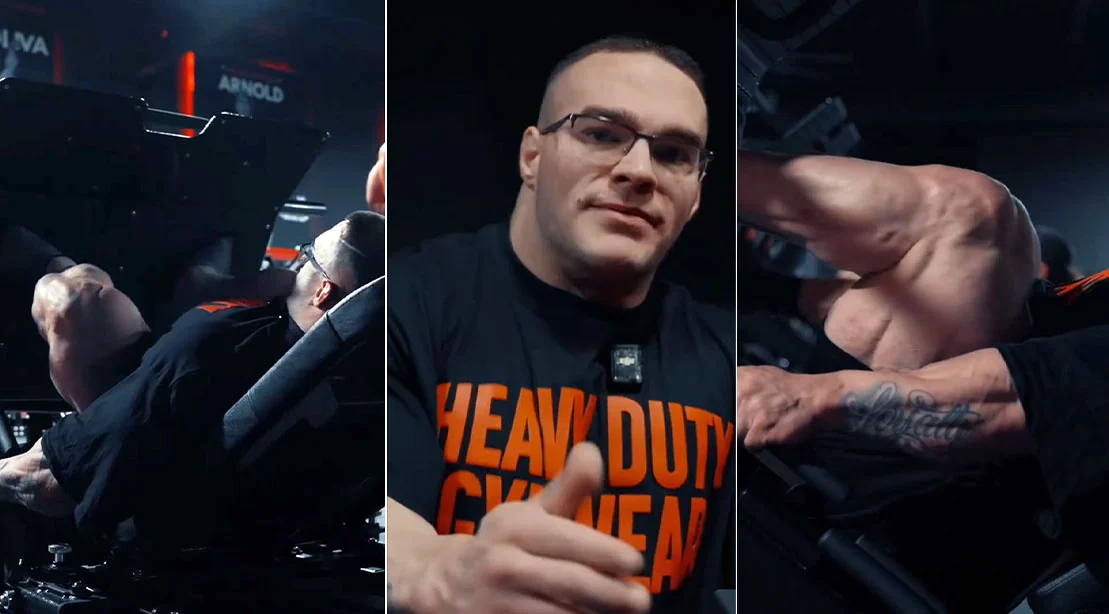
Walker recently took to social media to peel back the curtain on his "bread and butter" exercise: the leg press. By utilizing a unique, angled-foot stance, Walker argues he has unlocked the key to building his legendary outer quad sweep. For those looking to mirror the physique of a Mr. Olympia champion, understanding the mechanics behind this unconventional approach is essential.
Main Facts: The Anatomy of a Champion
Nick Walker’s 2026 Olympia victory was not merely a win; it was a statement of physical dominance. Judges and fans alike noted that his lower body had reached a level of detail and mass previously unseen. At the center of this transformation was a modified approach to the leg press, an exercise that is a staple in almost every gym, yet frequently performed with suboptimal biomechanics.
The core of Walker’s technique involves a wide-ish, toes-out stance. Unlike the traditional "feet hip-width apart, toes pointing forward" advice often found in collegiate strength manuals, Walker positions his feet to mimic the hands of a clock at ten-to-two. Crucially, his feet remain roughly aligned with his hip width, despite the aggressive angle of his toes. This setup, he contends, is the secret sauce behind the growth of his outer quadriceps—the vastus lateralis.
A Chronology of "The Mutant’s" Lower Body Development
To understand the significance of this shift, one must look at the timeline of Walker’s development. Throughout his rise in the IFBB Pro League, critics often pointed to his legs as an area that, while massive, lacked the specific "sweep" required to separate him from competitors like Samson Dauda or Derek Lunsford.
- 2023-2024 (The Foundation Phase): During this period, Walker relied on traditional leg press protocols. While he achieved significant hypertrophy, he noted a plateau in the development of the outer thigh.
- 2025 (The Experimental Phase): Leading up to the Pittsburgh Pro and his subsequent prep, Walker began experimenting with varying foot positions. He noticed that narrowing his stance—the conventional "wisdom" for targeting the outer sweep—actually caused him joint discomfort and failed to provide the desired muscle fiber recruitment.
- 2026 (The Olympia Prep): Walker solidified the "angled stance" technique. By incorporating a pause at the bottom of the movement and focusing on deliberate knee flexion, he maximized the stretch-mediated hypertrophy of the quadriceps. This change coincided with his most shredded and symmetrical lower body to date, ultimately leading to his Sandow win.
Supporting Data: The Mechanics of Knee Flexion
The debate surrounding foot position on the leg press usually centers on the tension distribution between the vastus lateralis (outer sweep), the vastus medialis (teardrop), and the adductor group.
Conventional biomechanics suggest that a narrow stance places more emphasis on the outer quadriceps. However, human anatomy is rarely binary. For an athlete with Walker’s unique limb lengths and hip structure, a narrow stance can often lead to premature lumbar flexion or "butt wink," which limits the range of motion and puts the athlete at risk of injury.
By angling the toes outward while keeping the feet within a hip-width range, Walker achieves three specific mechanical advantages:
- Increased Knee Flexion: The outward rotation of the femur allows for a deeper descent without impingement at the hip joint. This increased range of motion allows the quadriceps to lengthen further under load.
- Targeted Vastus Lateralis Recruitment: Because the femur is externally rotated, the vastus lateralis is placed in a position of mechanical advantage during the concentric (pushing) phase.
- Reduced Hip Dominance: By avoiding a super-wide "sumo" stance, Walker keeps the focus on the quads rather than shifting the burden to the adductors and glutes, which is the primary pitfall of wide-stance pressing.
Official Responses and the "Naysayer" Critique
Following the release of his training video to his two-million-plus followers, the bodybuilding community was polarized. Many traditionalists argued that Walker’s technique invited unwanted hamstring and adductor engagement.
Walker’s response was characteristically blunt: “Yes, there will be some hamstring involvement. Yes, there will be some adductor involvement, but that’s okay. Because I am getting what I need out of it.”
This response highlights a critical philosophy in professional bodybuilding: the hierarchy of results over dogmatic form. For a Mr. Olympia, the goal is not to perform a "textbook" lift, but to stimulate specific muscle groups to their absolute limit. If an athlete’s individual biomechanics dictate that a "non-standard" movement produces superior muscular hypertrophy, that movement becomes the correct one for that specific individual.
Implications for Modern Training
What does this mean for the average gym-goer? First, it suggests that the "one-size-fits-all" approach to leg training is outdated. An athlete’s femur length, pelvic tilt, and ankle mobility all dictate the ideal stance for a leg press.
Second, it validates the importance of the negative portion of the lift. Walker’s emphasis on "a hot second" pause in the deep stretch is where the true growth occurs. The stretch-mediated hypertrophy, combined with a controlled, explosive concentric movement, is a recipe for muscle fiber tearing and subsequent repair.
Implementation Guide: Adopting the "Mutant" Stance
For those wishing to test this variation, it is recommended to follow a structured approach:
- Barefoot or Flat-Soled Shoes: As Walker demonstrates, eliminating heel elevation allows for a more grounded connection to the platform, enhancing stability.
- The Clock Setup: Position your feet so your toes are at the 10 and 2 positions. Keep your feet roughly hip-width apart.
- Controlled Eccentric: Lower the weight over 3-4 seconds. Do not let the sled slam.
- The Pause: Hold the position at the maximum depth of the stretch for one full second.
- Explosive Concentric: Drive through the full foot, focusing on pushing the sled away with your quads rather than locking out your knees.
The Future of Leg Development
Nick Walker’s 2026 Mr. Olympia victory has set a new standard for leg development. By ignoring the noise and focusing on the specific biomechanical cues that trigger his growth, he has proven that innovation is just as important as intensity.
Whether or not the "Mutant" stance becomes the new industry standard remains to be seen. However, one thing is certain: for anyone looking to build a massive outer sweep, the traditional narrow-stance leg press is no longer the only path to glory. In the pursuit of perfection, Walker has reminded us that the best training method is the one that allows you to push the hardest, feel the most, and achieve the most significant physiological change.
As the industry moves toward 2027, athletes worldwide will undoubtedly be looking to their own leg days with a renewed sense of experimentation, aiming to replicate the "Mutant" level of development. If you are struggling to build your outer quads, consider taking a page out of the champion’s book: step onto the platform, find your angle, and embrace the grind.
To keep up with the latest training tips and updates from the reigning Mr. Olympia, follow Nick Walker on Instagram.