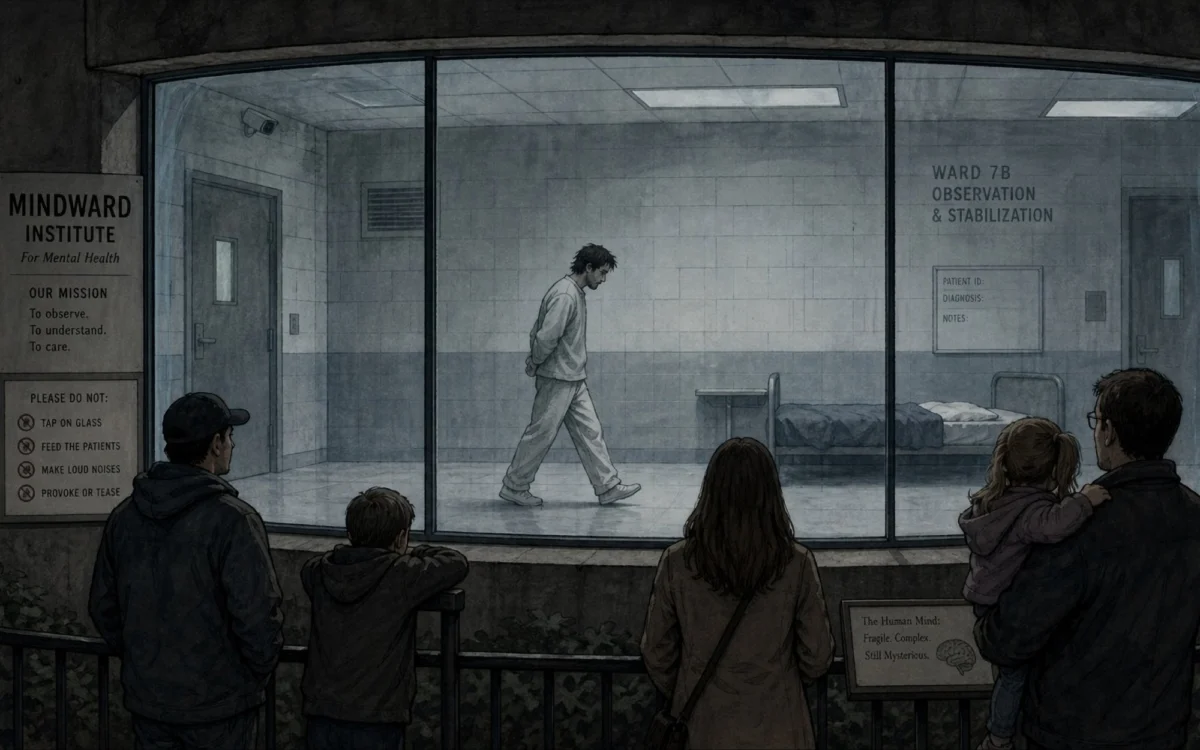
The promise of modern psychiatry is often framed as a beacon of hope for those navigating the darkest corridors of the human mind. However, for many who enter the system, the reality of "treatment" can become a secondary trauma more enduring than the initial crisis. This report examines the case of a 25-year-old man—now three decades removed from his experience—who voluntarily entered a prestigious psychiatric facility seeking refuge from anxiety, only to face a three-month ordeal of polypharmacy, dehumanization, and a profound loss of autonomy.
His story serves as a critical entry point into a broader discussion regarding diagnostic validity, the ethics of informed consent, and the phenomenon of iatrogenic harm—injury caused by the medical treatment itself.
Main Facts: The Intersection of Crisis and Clinical Failure
The core of this case involves a young man, high-functioning and creative, who experienced an acute psychological crisis triggered by a tumultuous relationship breakdown and a deep-seated fear of hereditary mental illness. Fearing he was following the path of his older sister, who had never recovered from a breakdown at a similar age, he sought help at an emergency department.
What followed was a 90-day admission to an acute psychiatric ward. Despite presenting with anxiety and insomnia rather than psychosis, the patient was subjected to:
- Heavy Polypharmacy: A "cocktail" of potent drugs, including Clozapine (an antipsychotic), Lithium (a mood stabilizer), and Lorazepam (a benzodiazepine).
- Systemic Dehumanization: A clinical environment characterized by a "wall of distrust," where patient accounts were dismissed and staff-patient hierarchies were enforced through mockery and apathy.
- Physical and Cognitive Impairment: Significant motor skill loss and "pacing" (likely akathisia) induced by medication, for which no informed consent or warning was provided.
- Erroneous Prognosis: A definitive clinical prediction that the patient had a 90% chance of re-hospitalization within two years—a prediction that has remained unfulfilled for over 30 years.
Chronology: From Voluntary Admission to Institutional Trauma
The Catalyst of Fear (Age 25)
At 25, the subject was a musician and athlete whose life was overshadowed by the "psychological cancer" he believed was inherited. Having witnessed his sister’s personality "extinguish" after her own breakdown, he interpreted his severe anxiety, insomnia, and decreased appetite as the first signs of an inevitable cognitive decline. In a state of "waking nightmare," he chose voluntary admission to a local hospital’s prestigious psychiatric unit to prevent self-harm.
The Admission and the "Wall of Distrust"
Upon entry, the patient encountered an immediate skepticism from the psychiatric staff. This "culture of cynicism" created an environment where the patient’s transparency was met with clinical distance. The "prestigious" reputation of the ward did not translate into therapeutic efficacy; instead, it manifested as an oppressive power divide. Patients were treated as "other," with staff occasionally mocking those in distress or ignoring safety concerns, such as unwanted sexual advances between patients in co-ed rooms.
The Three-Month "Staircase" of Medication
During his three-month stay, the patient’s treatment plan shifted from stabilization to what external consultants would later call "very bad medicine." He was placed on a regimen of Clozapine, despite never experiencing a psychotic episode. The physical effects were immediate: he lost the ability to throw a basketball 15 feet, a traumatic realization of his lost motor function that was never explained to him as a side effect.
The environment fostered "pacing"—a robotic, compulsive walking back and forth. This behavior, often a symptom of akathisia (a movement disorder associated with antipsychotic medication), was treated as a symptom of the "illness" rather than a reaction to the drugs.
Discharge and the Long Recovery
The patient was eventually discharged with a dire prognosis. It took an additional six months for a community psychiatrist to "wean" him off the hospital’s drug cocktail. Contrary to the hospital’s prediction of a 90% relapse rate, the patient never returned to a psychiatric ward. His recovery, however, was not from his original anxiety, but from the trauma of the "cure."
Supporting Data: The Clinical Context of Polypharmacy and Akathisia
The patient’s experience highlights several systemic issues within psychiatric practice that are backed by clinical literature.
1. The Risks of Off-Label Polypharmacy
The administration of Clozapine to a non-psychotic patient is a significant clinical outlier. Clozapine is typically reserved for treatment-resistant schizophrenia due to its severe side-effect profile, which includes agranulocytosis (a dangerous drop in white blood cell count) and significant motor impairment. The "cocktail" approach—combining antipsychotics, stabilizers, and sedatives—often lacks a rigorous evidentiary basis and can lead to "prescribing cascades," where new drugs are added to treat the side effects of previous ones.

2. Akathisia and Institutional Pacing
The "pacing" described by the patient is a hallmark of akathisia, a subjective feeling of inner restlessness that can be physically and mentally agonizing. Studies have shown that akathisia is frequently misdiagnosed as worsening agitation or psychosis, leading clinicians to increase the very dosage of the medication causing the distress. This creates a feedback loop of suffering that the patient described as "a kind of torture."
3. Diagnostic Reliability and the DSM
The patient’s frustration with the lack of a definitive diagnosis reflects a broader crisis in psychiatric nosology. The Diagnostic and Statistical Manual of Mental Disorders (DSM) relies on symptom clusters rather than biological markers. Research into "inter-rater reliability" has shown that different psychiatrists often provide different diagnoses for the same patient, leading to the "discordant diagnoses" mentioned in the narrative.
Official Responses: The Institutional Perspective vs. Modern Reform
While the specific hospital in this case has not provided a public statement (as the account remains anonymous), the practices described reflect a standard of care that was common in the late 20th century and persists in many acute wards today.
The Institutional Defense
Typically, psychiatric institutions defend high-dosage regimens and restrictive environments as necessary for "patient safety" and "stabilization" during acute crises. The use of antipsychotics for anxiety (off-label) is often justified as a means to "quiet" a highly agitated nervous system when standard anxiolytics fail.
The Shift in International Standards
In recent years, the World Health Organization (WHO) and the United Nations (UN) have issued reports calling for a revolution in mental health care. A 2017 UN report specifically criticized the "biomedical model" of psychiatry, noting that an over-reliance on medication and institutionalization often leads to human rights violations. The WHO’s QualityRights initiative now emphasizes "supported decision-making" and "informed consent," directly challenging the "we know best" attitude encountered by the patient in this case.
Implications: The Lasting Scars of Iatrogenic Harm
The implications of this case are three-fold, touching on ethics, recovery, and the future of mental health care.
The Failure of Informed Consent
The most "sickening" aspect for the patient was not the anxiety, but the lack of warning regarding medication side effects. Informed consent is a cornerstone of medical ethics, yet in psychiatric settings, it is often bypassed under the assumption that the patient lacks the "capacity" to understand. This case demonstrates that even a highly distressed patient retains the right to know how a drug will affect their physical body and motor skills.
The Self-Fulfilling Prophecy of Labeling
By giving the patient a dire prognosis and a heavy drug regimen, the institution created a "shadow of fear." For years, the patient lived under the assumption that he was "broken," a belief reinforced by the clinical labels applied to him. This highlights the danger of "diagnostic overshadowing," where every human emotion is viewed through the lens of a chronic pathology.
The Necessity of Alternative Models
The patient’s eventual recovery through a much milder intervention (a low dose of an antidepressant and time) suggests that his three-month institutionalization may have been entirely unnecessary. It lends weight to the movement for "crisis houses" and community-based peer support, which aim to provide safety without the dehumanizing elements of the acute psych ward.
Conclusion: A Word of Caution
The subject’s story concludes with a warning to others to "weigh the risks" of seeking help in traditional psychiatric institutions. His experience serves as a sobering reminder that in the field of mental health, the distance between "help" and "harm" can be perilously thin. As the patient noted, he left the institution significantly more harmed than when he entered, spending years unlearning the lessons of the ward and reclaiming the identity the system tried to medicate away.
Thirty years later, he stands as a living rebuttal to the 90% failure rate predicted by his doctors—a testament to human resilience in the face of "very bad medicine."