





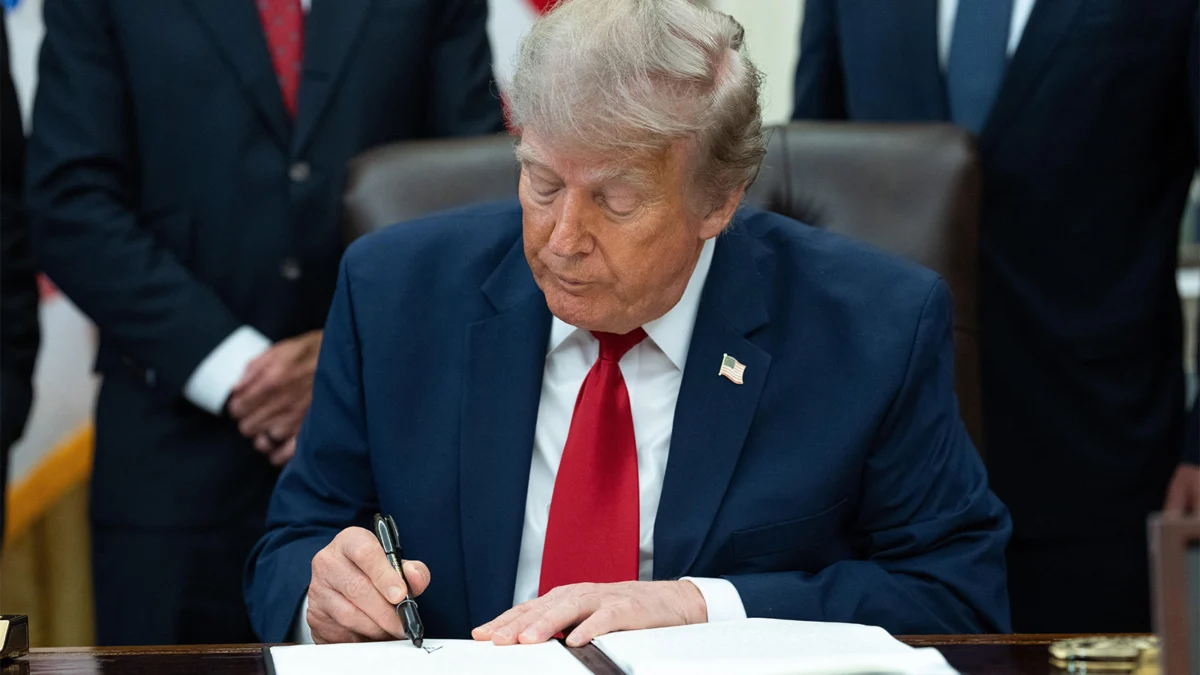
In a move that has sent shockwaves through the global public health community, President Trump signed a sweeping executive order on Monday fundamentally altering the federal government’s approach to childhood immunizations. The directive, framed by the White House as the "Gold Standard Childhood Vaccine Recommendations," seeks to decentralize the national immunization schedule, mandates the splitting of combination vaccines like the MMR (measles, mumps, and rubella) shot, and advocates for a "one-shot-per-visit" policy.
The order, signed in the Oval Office, represents the most aggressive federal intervention into pediatric healthcare policy in decades. By prioritizing "maximal parental choice," the administration is effectively challenging the long-standing consensus of the Centers for Disease Control and Prevention (CDC) and the American Academy of Pediatrics (AAP), setting the stage for a protracted legal and ideological battle over the future of American public health.
The Core Mandates: A Fundamental Shift in Protocol
The executive order outlines a three-tiered classification system for childhood vaccines, effectively downgrading the status of several immunizations that have been universal standards for generations. Central to the order is the directive to deconstruct combination vaccines—most notably the MMR shot.
Under current U.S. clinical standards, the MMR vaccine is administered as a single, combined injection. The administration’s new policy demands that these be separated into individual shots, arguing that this reduces the "biological load" on infants. However, a significant logistical hurdle remains: there is currently no supply chain infrastructure in the United States to provide separate, single-antigen measles, mumps, and rubella vaccines.
Furthermore, the order mandates that each vaccination occur at a separate medical visit. Proponents of the policy argue this approach mitigates potential side effects, but medical experts warn of a "logistical nightmare" that will inevitably lead to decreased coverage rates as parents struggle to navigate the increased time and financial burdens of a fragmented schedule.
A Timeline of Contention: How We Got Here
The path to this executive order has been marked by a series of legal and political maneuvers initiated by Health and Human Services (HHS) Secretary Robert F. Kennedy Jr. and his handpicked advisors.
- January 2026: The CDC attempted to reduce the number of universally recommended childhood vaccines from 17 to 11, bypassing traditional scientific advisory boards.
- March 2026: A federal judge blocked the CDC’s January move, ruling that the administration had likely violated federal administrative procedures in its restructuring of the Advisory Committee on Immunization Practices (ACIP).
- December 2026: Members of the administration’s reconstituted ACIP formally questioned the safety of aluminum adjuvants, a component of many vaccines, setting the stage for the current mandate to study alternatives.
- Monday: The President signed the executive order, signaling a full-throated endorsement of the administration’s "parental choice" doctrine, despite the previous judicial setbacks.
Scientific Consensus vs. Political Rhetoric
The cornerstone of the administration’s justification for this policy is a repeated, albeit debunked, assertion that the timing and volume of vaccinations are linked to rising rates of autism spectrum disorder (ASD). While President Trump utilized the Oval Office signing ceremony to lend credence to these theories, the scientific community remains steadfast.
"No environmental factor has been better studied as a potential cause of autism than vaccines," stated Dr. Alycia Halladay, chief science officer at the Autism Science Foundation. "That includes vaccine ingredients as well as the body’s response to the vaccines. All this research has determined that there is no link between autism and vaccines."
The data supports this conclusion. Decades of peer-reviewed, longitudinal studies involving millions of children across multiple continents have failed to identify any causal relationship between the vaccination schedule and neurodevelopmental disorders. Despite this, the administration has directed the HHS Task Force on Safer Childhood Vaccines to conduct new research into the timing and sequencing of core immunizations, effectively reopening a settled scientific debate.
Official Responses and Political Fallout
The reaction from the medical establishment was immediate and scathing. The American Academy of Pediatrics (AAP) condemned the order as "dangerous," warning that it ignores the resurgence of preventable diseases.
"The only purpose of this announcement is to sow confusion so that more people doubt the importance of vaccines," said AAP President Dr. Andrew Racine. "Delaying or skipping shots is risky, especially as measles continues to spread and children go back to school."
In a surprising display of intra-party friction, Senator Bill Cassidy (R-La.), a medical doctor, emerged as a vocal critic of the administration’s policy. "Vaccines DO NOT cause autism," Cassidy wrote on social media. "Breaking up vaccines will mean children have to get more shots to get the same protection, not fewer shots. It will increase hesitancy and make children less safe."
Cassidy’s opposition is particularly notable given his instrumental role in confirming Robert F. Kennedy Jr. to his cabinet post last year. His departure from the administration’s party line suggests a growing fracture within the GOP regarding the intersection of public health and populist ideology.
Implications for Public Health and Legal Authority
The executive order carries profound implications for the structure of American healthcare, particularly regarding state-level mandates. While the federal government recommends vaccine schedules, the authority to mandate immunizations for school entry lies exclusively with individual states.
The administration’s "fact sheet" accompanying the order explicitly advises states to align their laws with the new, fragmented schedule. More provocatively, the order directs the U.S. Attorney General to identify and challenge state laws that conflict with the administration’s definition of "parental authority" and "religious freedom." This suggests that the Department of Justice may soon intervene in legal disputes regarding vaccine exemptions, potentially prioritizing parental rights over the collective public health protections of state mandates.
Economic and Logistical Burdens
The American College of Physicians (ACP) has highlighted the unintended economic consequences of these changes. "If implemented, the changes could increase costs to patients and families, including additional copays, while also placing a greater burden on families needing to schedule multiple appointments," said ACP President Dr. Jan Carney. For low-income families, the requirement to visit a physician for every individual shot—rather than receiving a combined dose—poses a significant barrier to care, which experts fear will lead to a decline in vaccination rates.
The Flu Vaccine Downgrade
Perhaps most concerning to epidemiologists is the order’s recommendation to downgrade the flu vaccine. This directive comes at a time when the U.S. is reeling from the highest number of pediatric influenza-related deaths in 15 years. By de-prioritizing the flu shot, public health officials warn that the administration is ignoring the empirical reality of rising mortality rates among the nation’s youth.
Conclusion: A Nation Divided on Science
The executive order marks a radical pivot in the government’s relationship with medical science. By elevating "parental choice" above the standardized recommendations of the medical community, the administration is transforming immunization from a public health necessity into a personal, political choice.
As the Department of Justice prepares to review state-level mandates and the HHS task force begins its investigations into vaccine ingredients, the country faces a period of deep uncertainty. For parents, the challenge will be to navigate a fragmented health landscape, while for physicians, the struggle will be to maintain the integrity of clinical practice in an environment where the foundations of public health are increasingly under siege. The battle over the "Gold Standard" is not merely about needles and doses; it is a fundamental clash over the role of government in protecting the health of the American public.