




For decades, the national conversation surrounding cancer clusters and high incidence rates has been geographically predictable. Public health experts and journalists alike have long focused their lenses on the industrial "Cancer Alley" of the Deep South or the coal-heavy regions of Appalachia, where long-term smoking trends and industrial pollution provided clear, albeit tragic, explanations for public health disparities.
However, a new and unsettling trend has emerged, shifting the focus to the American heartland. Iowa, a state synonymous with rolling fields of corn and a tranquil rural lifestyle, has quietly become the epicenter of a national health crisis. Currently, Iowa holds the second-highest cancer incidence rate in the United States, standing as one of only three states nationwide where cancer rates continue to trend upward. This report investigates the intersection of environmental factors, agricultural intensity, and public policy in a state searching for answers.
A Human Toll: Stories from the Frontline
The statistics, while alarming, are underpinned by deeply personal tragedies. For 35-year-old Des Moines resident Becca Mataloni, the crisis became visceral in 2019. It began with an inexplicable, mechanical crackling noise every time she inhaled. "Kind of like dial-up Internet," she describes. By 2022, she was battling pneumonia, and in 2024, she faced a second bout. Subsequent medical imaging and a biopsy from a pulmonologist delivered a life-altering diagnosis: a cancerous tumor on her lung.
"It’s really devastating to get a cancer diagnosis in your 30s," Mataloni says. Her primary concern upon learning she would lose two-thirds of her lung was not just survival, but the ability to reclaim her quality of life.
In the rural stretches of Northern Iowa, the heartbreak is compounded by the sheer logistics of survival. Shelley Phelps lost her sister to breast cancer in 2015. Two years later, her husband, Michael, was diagnosed with stage four colon cancer. The family was forced to commute at least an hour for every treatment session, a common hurdle for rural Iowans. Michael passed away in 2020 at the age of 50. "I have always said that, if it wasn’t for my faith, I would not have gotten through this," Phelps reflects. "You’re always waiting for that next shoe to fall. Who’s going to be diagnosed next?"
Chronology: The Shift in Iowa’s Health Landscape
The epidemiological trajectory of Iowa is unique. For many years, the state’s cancer rates mirrored national averages, remaining stable and predictable. The turning point arrived around 2013. Since that year, rates began a steady, unexplained climb.
Medical experts note that this surge is not limited to a single type of malignancy. The rise is being driven by a broad spectrum of diseases, including prostate, breast, and lung cancers, as well as an uptick in melanoma. Perhaps most concerning to public health officials is that the rate of cancer among Iowa’s youth is currently near the top of the national rankings.
This sustained increase has forced the Iowa Cancer Registry, which has meticulously tracked the state’s data for over 50 years, into the spotlight. Mary Charlton, who leads the registry, spends much of her time traveling across Iowa’s 99 counties to address community meetings. Her message to a fearful public is one of cautious, scientific complexity. "As much as we would love to reduce it down to one thing and figure this out… that’s not how cancer works," Charlton explains. She emphasizes that while residents seek a single "smoking gun," cancer is a multifactorial disease where immune systems process environmental exposures differently across individuals.
Supporting Data: Dissecting the Risk Factors
While the exact causes remain a subject of intense investigation, researchers have identified several significant contributing factors.
Behavioral and Natural Risks
Public health data highlights that Iowa struggles with some of the highest binge-drinking rates in the nation. Furthermore, the state has not increased its cigarette tax in nearly two decades, a policy tool widely recognized as an effective deterrent against smoking. Additionally, Iowa is classified as a high-risk zone for radon—a naturally occurring radioactive gas that seeps into homes through the earth. Because radon is a potent carcinogen, its prevalence in Iowa’s housing stock is a critical, yet often overlooked, variable.
The "Elephant in the Room": Agriculture and Environment
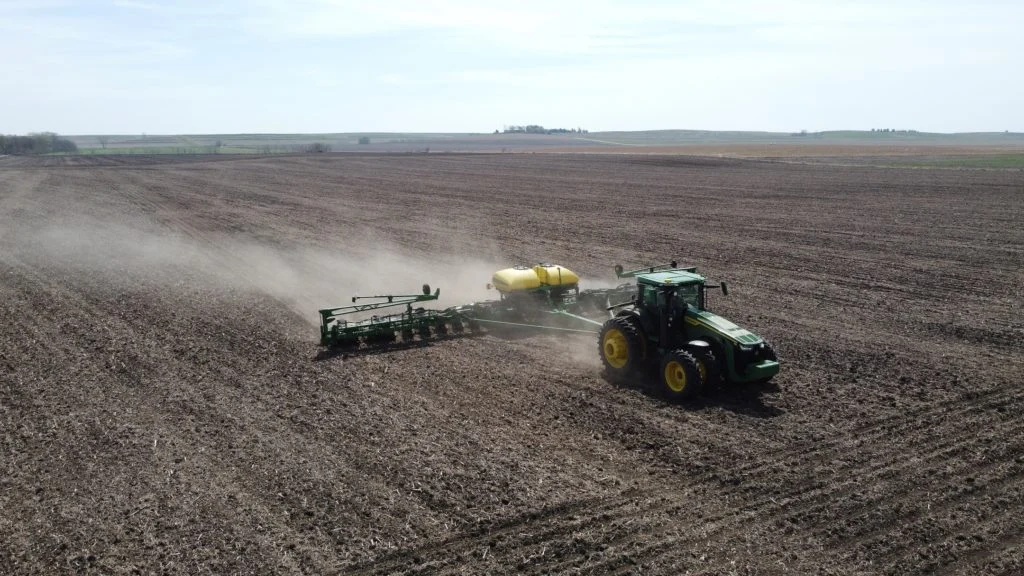
While behavioral factors are significant, some researchers believe the focus has been too narrow. Adam Shriver, director of wellness and nutrition policy at The Harkin Institute at Drake University, points to the state’s intensive agricultural footprint. With agriculture accounting for over 80 percent of the state’s land, Iowa is the nation’s leading producer of corn, eggs, and pork.
A report released by Shriver’s team in March established links between Iowa’s most common cancers and environmental factors, specifically pesticide use and nitrate run-off from fertilizers. The story of Dan Voss, a fifth-generation corn and soybean farmer, illustrates this tension. In 2012, his wife, Susan, was diagnosed with liver cancer. In 2024, Dan himself was diagnosed with non-Hodgkin’s lymphoma.
"In my case, could it be ag? Well, I think there’s a chance," Voss admits. "Can I say it is with 100 percent certainty? No. But the state needs to have a good, honest discussion about where we’re at."
Official Responses and Agricultural Friction
The agricultural sector, a pillar of Iowa’s economy, is finding itself at the center of the debate. Steve Kuiper, vice president of the Iowa Corn Growers Association, defends current practices, noting that all products undergo rigorous testing before entering the market. "Too many people are poking farmers in the chest and saying, ‘you’re polluting,’" Kuiper says. "Farmers are more than willing to make changes, but they need data to support that."
Despite the defensiveness, there is a burgeoning recognition that public health must be integrated into policy. The Iowa Corn Growers Association has recently joined a coalition of health organizations, suggesting a shift toward collaborative problem-solving.
Medical professionals like Dr. Daniel Kollmorgen, medical director of oncology at Mahaska Health, emphasize that the current system is failing on accessibility. "In a rural location, there can be delay from the onset of symptoms to the accessibility of diagnosis," he explains. Dr. Kollmorgen advocates for a multi-pronged approach: better cancer screening in rural areas, tighter regulation of agricultural chemicals, and more aggressive monitoring of water quality.
Implications: A Call to Action
The political implications of this crisis are becoming impossible to ignore. As Iowa heads into an election cycle, the "cancer crisis" has become a central talking point for candidates running for governor, U.S. Senate, and agriculture secretary.
The path forward is likely to be a "slow slog," as Mary Charlton puts it, requiring a delicate balance between economic interests and public safety. For the thousands of families like the Phelpses, the policy debate is secondary to the immediate need for support. Shelley Phelps, now part of a local foundation that has assisted over 700 residents with cancer-related expenses, notes that the demand for help grows every week.
Ultimately, the situation in Iowa serves as a sobering reminder that public health is not a static state of being. It is an evolving metric, influenced by the way we treat our land, the way we regulate our industries, and the way we support our most vulnerable citizens. Whether Iowa can reverse these trends will depend on its ability to move beyond finger-pointing and toward a comprehensive, data-driven strategy that treats the health of its citizens with the same urgency as the health of its harvest.