










For decades, the medical community and the general public alike have operated under a pervasive assumption: a stroke is a disease of the elderly—a health crisis reserved for the twilight years of life. However, a landmark study published on September 23, 2026, in Neurology, the official journal of the American Academy of Neurology, has dismantled this narrative.
The research, which meticulously tracked medical data over nearly three decades, reveals a startling reality: stroke rates among adults aged 20 to 54 have nearly doubled. As medical science improves our ability to save lives following a neurological event, the unintended consequence is a growing population of young survivors who must navigate the long-term, often debilitating, aftermath of a brain injury.
The Core Findings: A Three-Decade Shift
The study, led by Dr. Emily R. Fisher of the University of Cincinnati, analyzed longitudinal data from the Greater Cincinnati and Northern Kentucky regions between 1993 and 2020. By examining 2,076 cases of first-time strokes in patients aged 20 to 54, the research team identified a clear, upward trajectory in incidence rates.
In the 1993–1994 period, the stroke rate was 33.9 cases per 100,000 person-years. By 2020, that figure had surged to 62.2 cases per 100,000 person-years. This represents an approximate 83% increase in stroke frequency among young adults.
"While stroke has traditionally been considered a disease of older adults, our findings show that stroke is becoming increasingly common in younger adults," Dr. Fisher stated. "At the same time, more people are surviving these strokes, which means more younger adults may be living with the long-term effects of stroke."
Chronology of an Emerging Crisis
To understand the gravity of these findings, it is essential to look at the progression of the data. The researchers utilized "person-years"—a statistical metric that accounts for both the number of individuals in a study and the duration of their observation—to ensure accuracy across different eras.
- 1993–1994: The baseline period established a moderate incidence of stroke among the young, largely attributed to genetic factors or rare underlying conditions.
- The Turn of the Millennium: As lifestyle factors began to shift globally, the data began to show a slow, incremental creep in stroke cases within the study population.
- 2010–2020: The data accelerated significantly during this decade, suggesting that modern lifestyle, dietary, and environmental factors may be playing an increasingly large role in the vascular health of younger generations.
- 2020: The study concluded at the height of the COVID-19 pandemic, providing a final data point that showcased a near-doubling of the rates observed at the start of the study.
The Engine of the Increase: Ischemic Strokes
Not all strokes are the same. A stroke occurs when blood flow to the brain is interrupted, either by a blockage (ischemic) or a rupture (hemorrhagic). The study revealed that the rise in cases was not distributed equally across these types; instead, it was driven almost exclusively by ischemic strokes.
The Mechanism of Blockage
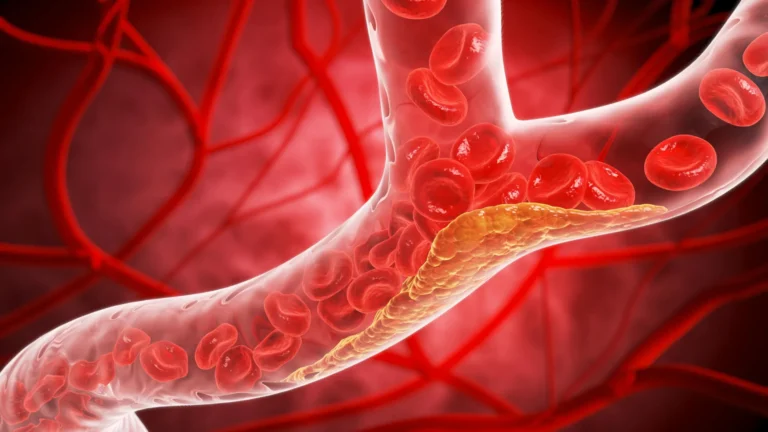
Ischemic strokes occur when a blood vessel supplying the brain is obstructed by a clot or plaque buildup. Without oxygen and essential nutrients, brain tissue begins to perish within minutes.
The researchers found that the rate of ischemic strokes in young adults rose from 23.8 per 100,000 person-years in 1993–1994 to 47.3 in 2020. Conversely, intracerebral hemorrhages (bleeding directly into the brain) and subarachnoid hemorrhages (bleeding in the space surrounding the brain) did not show a statistically significant increase. This indicates that the environmental and behavioral drivers of the current stroke epidemic are specifically damaging the circulatory system in a way that promotes clotting.
Risk Factors: The Changing Health Landscape
A significant portion of the research focused on identifying the "why." The investigators cataloged health conditions and behaviors prevalent in the young stroke patients, finding a convergence of classic risk factors—high blood pressure, diabetes, and atrial fibrillation—paired with shifting societal habits.
The Role of Substance Use
Perhaps the most eye-opening metric in the study involves the surge in documented substance use. In the early 1990s, only 4.6% of young adults who suffered a stroke had documented substance use. By 2020, that number had ballooned to 40.2%.
Researchers specifically noted a strong association between this rise and the increased use of marijuana. While the study stopped short of declaring a direct causal link—due to the lack of a control group of non-stroke patients—the correlation is significant enough to warrant immediate further investigation.
"We are seeing a convergence of factors," explains the research team. "High blood pressure and diabetes are appearing earlier in life, and when you layer that over an environment where substance use is increasing, you create a perfect storm for vascular events."
Survival Rates: A Double-Edged Sword
The news is not entirely bleak. The study highlights a notable improvement in survival outcomes for younger patients. After adjusting for variables such as age, sex, and race, the mortality rate within 30 days of a stroke dropped from 11.7% in 1993–1994 to 9.4% in 2020.
This success is a testament to advancements in emergency medicine, stroke unit specialization, and faster intervention times. However, Dr. Fisher cautions that "survival" is an incomplete metric.
"Surviving a stroke does not necessarily equate to a return to a healthy, productive life," she notes. Many survivors grapple with:
- Physical Limitations: Paralysis or muscle weakness that requires years of physical therapy.
- Cognitive Decline: Difficulties with memory, executive function, and information processing.
- Communication Barriers: Aphasia, or the loss of the ability to speak or understand language.
As more young adults survive these events, the long-term economic and psychological burden on individuals and the healthcare system is projected to increase substantially.
Official Responses and Future Implications
The medical community has responded to the study with a mix of concern and a call to action. The Greater Cincinnati/Northern Kentucky Stroke Study, which supported this research, emphasized that while these findings are localized, they likely mirror a national—and perhaps global—phenomenon.
The Call for Early Intervention
The primary takeaway for physicians is the need to pivot away from the "geriatric-only" mindset regarding cardiovascular health. Experts are now calling for:
- Earlier Screenings: Routine blood pressure and blood sugar checks should begin in the late teens and early twenties, rather than waiting for middle age.
- Public Health Awareness: Campaigns that specifically target the lifestyle choices of young adults, focusing on the connection between diet, substance use, and vascular integrity.
- Deeper Investigation: The researchers concede that because the study lacked a comparison group of healthy, non-stroke-affected adults, it is impossible to definitively isolate which risk factor is the "primary driver." Further national, multi-center studies are required to establish a direct causal chain.
Looking Ahead
The findings from the Neurology publication serve as a wake-up call. The demographic shift in stroke patients suggests that the "silent" damage of poor diet, sedentary behavior, and substance use is manifesting much sooner than previously anticipated.
"Our findings highlight the importance of identifying and managing stroke risk factors early in adulthood," Dr. Fisher concluded. "Additional research is needed to better understand what is driving these trends and how they can be reversed."
As we look to the future, the challenge will be twofold: continuing to refine the acute care that saves young lives while simultaneously developing preventive strategies that stop these strokes from occurring in the first place. For a generation that has long felt immune to the ailments of the elderly, the message is clear: the health of your brain tomorrow is being determined by the choices you make today.