








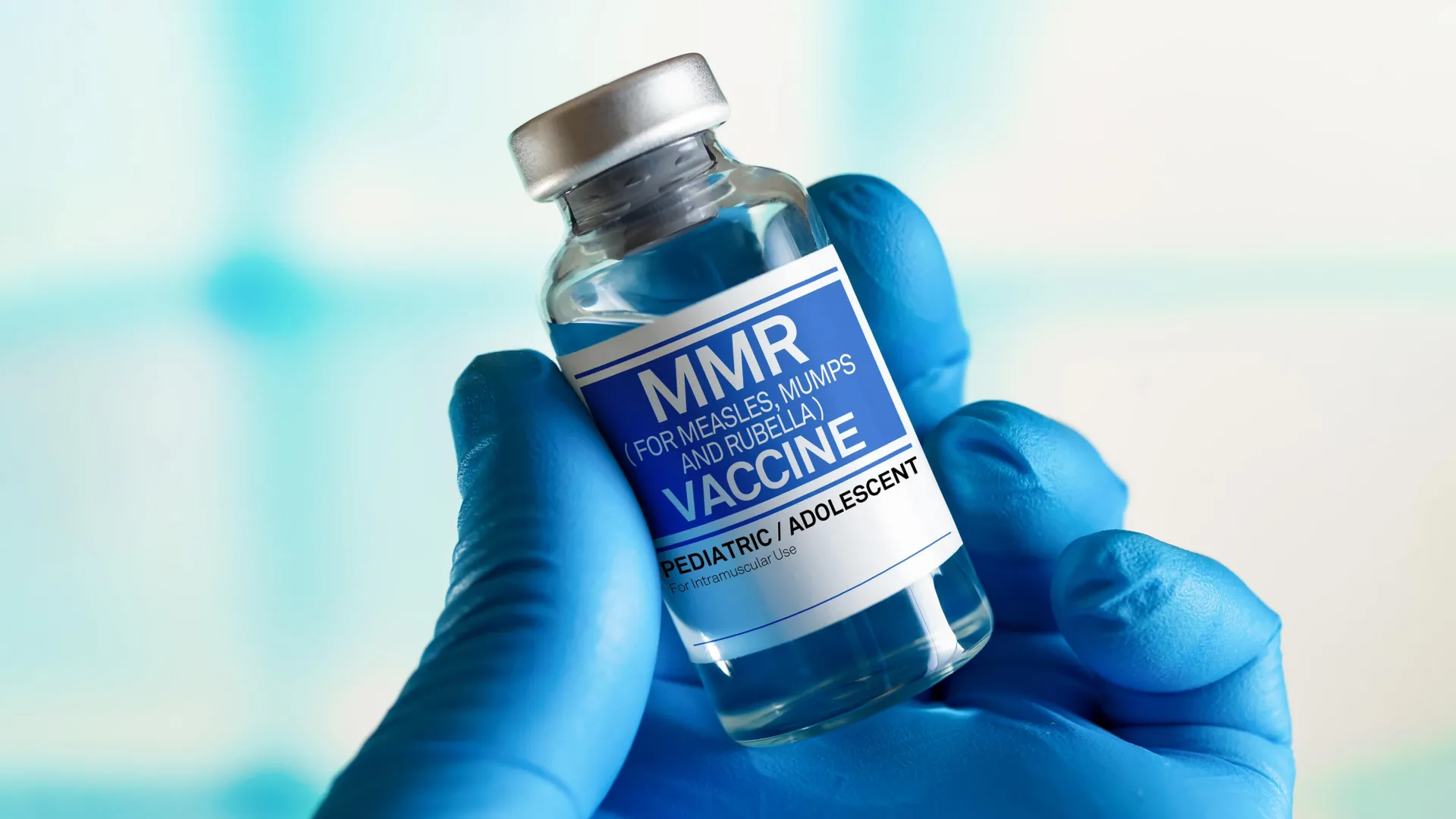
The United States has reached a somber milestone in its public health history. After more than 25 years of maintaining the status of a measles-free nation, the U.S. has officially lost its elimination designation. This development, confirmed by the Pan American Health Organization (PAHO) on November 17, 2026, marks a catastrophic reversal in the nation’s ability to control a highly contagious, preventable disease.
The loss of this status is not merely a bureaucratic designation; it is a direct consequence of a massive resurgence in cases that has strained public health infrastructure and threatened the lives of thousands. As the nation grapples with this crisis, new data from the Annenberg Public Policy Center (APPC) reveals a troubling reality: the surge in cases is fueled not just by logistical hurdles, but by a profound, pervasive misunderstanding of basic science, vaccine efficacy, and the severity of the virus itself.
A Chronology of the Decline
The United States first achieved measles elimination status in 2000, a landmark achievement that signaled the end of continuous, year-long transmission of the virus within American borders. For over two decades, the MMR (measles, mumps, and rubella) vaccine was viewed as one of the most effective tools in modern medicine, creating a "community immunity" shield that protected vulnerable populations who could not be vaccinated for medical reasons.
However, the erosion of this status did not happen overnight. The signs of instability became undeniable throughout 2025 and 2026. By November 12, 2026, the Centers for Disease Control and Prevention (CDC) reported 5,412 confirmed cases of measles. This figure is staggering, representing more than double the 2,290 cases reported during the entirety of 2025. This rapid acceleration pushed the country past the critical threshold required to maintain elimination status, forcing international health bodies to officially downgrade the U.S. standing.
The Persistence of Vaccine Myths
Despite decades of robust clinical research, the "autism-vaccine" myth continues to exert a powerful grip on the American public. The November 2026 Annenberg Science and Public Health (ASAPH) survey provides a grim snapshot of this confusion. While nearly two-thirds of Americans (64%) correctly reject the debunked claim that childhood vaccines cause autism, a persistent 17% believe the claim to be true, and an additional 19% admit to being entirely unsure.
These numbers are consistent with longitudinal data gathered by the APPC between September 2024 and August 2026, which showed a stubborn core of skepticism that refuses to budge despite ongoing educational campaigns. Perhaps most alarming is the public’s perception of autism prevalence among different populations: nearly half of all respondents (49%) stated that they believed vaccinated and unvaccinated children were "about as likely" to show signs of autism.
The Scientific Consensus
The medical community has been unequivocal in its rejection of these claims. In 2004, the National Academy of Medicine—then the Institute of Medicine—conducted a comprehensive review of the available epidemiological evidence and concluded that there is no causal relationship between the MMR vaccine and autism. This conclusion has been reaffirmed repeatedly, including by the World Health Organization’s Global Advisory Committee on Vaccine Safety as recently as 2025.
FactCheck.org, an initiative of the Annenberg Public Policy Center, has spent years systematically dismantling the misinformation that continues to link vaccines to developmental disorders. Yet, the persistent nature of these myths highlights a growing "knowledge gap" that transcends scientific evidence, suggesting that for many, vaccine hesitancy is rooted in social and psychological factors that are increasingly difficult to reach with facts alone.
Supporting Data: The Measles Knowledge Gap
The danger posed by measles is frequently misunderstood, with most Americans failing to grasp the potential for fatal complications. When surveyed on the lethality of the disease, 59% of respondents confessed they did not know how many children infected with measles are likely to die. A mere 9% correctly identified the statistic: approximately 1 in 1,000 infected children die from severe respiratory or neurological complications, such as encephalitis.
This knowledge deficit extends to the mechanics of protection. The CDC recommends a two-dose vaccination schedule—the first between 12 and 15 months and the second between ages 4 and 6. A single dose is approximately 93% effective, while the two-dose regimen increases that protection to 97%. However, the survey found that only 34% of Americans are aware of this two-dose requirement, with nearly half of the population (49%) expressing total uncertainty about how many doses are needed for full immunity.
The Role of Public Leadership
The survey also scrutinized public confidence in the leadership of U.S. Health and Human Services Secretary Robert F. Kennedy Jr. The findings reveal a deeply polarized public. Throughout the last two years of testing, 60% to 63% of respondents have consistently reported a lack of confidence in Kennedy’s health-related communications. Only 37% to 39% of the public view the information he provides as trustworthy.
This stagnation in public confidence suggests that health officials face an uphill battle in restoring faith in public health institutions. When a significant portion of the electorate distrusts the figures at the helm of the country’s health agenda, the task of re-establishing community immunity through vaccination becomes exponentially more difficult.
Implications: The High Cost of Declining Coverage
Kathleen Hall Jamieson, director of the Annenberg Public Policy Center’s Science of Science Communication Institute, warned that the current state of affairs was both predictable and avoidable.
"The announcement that the U.S. has lost its measles elimination status confirms what we already knew," Jamieson stated. "Those who refused the MMR vaccine for themselves or their children and those who misled them into doing so have produced the tragic effects that science predicted would occur when community immunity dropped below the threshold needed to protect those who are not able to be vaccinated or refused to be."
The implications of this loss are profound. A nation without measles elimination status is one where the virus can circulate freely, putting infants, immunocompromised individuals, and the elderly at constant risk. The healthcare system will now be forced to shift from a preventative posture to a reactive one, dealing with outbreaks rather than maintaining the status quo of a disease-free environment.
Methodology and Scope
The findings presented here are derived from a robust framework of data collection. The November 2026 data is based on a nationally representative survey of 1,028 U.S. adults conducted by SSRS. The data, collected between November 6 and November 8, 2026, carries a margin of sampling error of ± 3.5 percentage points at the 95% confidence level.
Furthermore, this analysis integrates findings from the ongoing ASAPH panel surveys—a long-term research project that has tracked public sentiment through more than 30 waves of questioning since April 2021. By utilizing both omnibus and longitudinal data, the APPC has created a comprehensive picture of how American attitudes toward public health have shifted, hardened, and ultimately contributed to the current crisis.
Looking Forward
The path back to measles elimination status will be arduous. It requires a fundamental shift in how the public perceives the risk of infection and the benefit of immunization. The data indicates that the challenge is twofold: first, the need to continue the dissemination of accurate scientific evidence; and second, the necessity of rebuilding the shattered bridge of trust between public health authorities and the citizens they serve.
As the nation moves forward, the loss of this status serves as a stark reminder of the fragility of modern health. The lessons of 2026 are clear: scientific literacy is not a passive requirement of citizenship, but an active, essential component of national security. Until the misinformation surrounding vaccines is addressed with the same rigor as the clinical virus itself, the U.S. may continue to struggle to keep these once-conquered diseases at bay. The return to elimination status will require not just needles in arms, but a collective recommitment to the evidence-based realities that have shielded human civilization from devastating epidemics for the better part of a century.