By Tom Norris
In the sterile confines of a typical examination room, a silent crisis occurs daily. A patient enters, having rehearsed their primary concerns in the car, only to leave twenty minutes later feeling unheard, dismissed, or misunderstood. Across from them, a clinician—burdened by an overflowing inbox, a delayed schedule, and the heavy weight of institutional efficiency—struggles to balance clinical rigor with the human element of care.
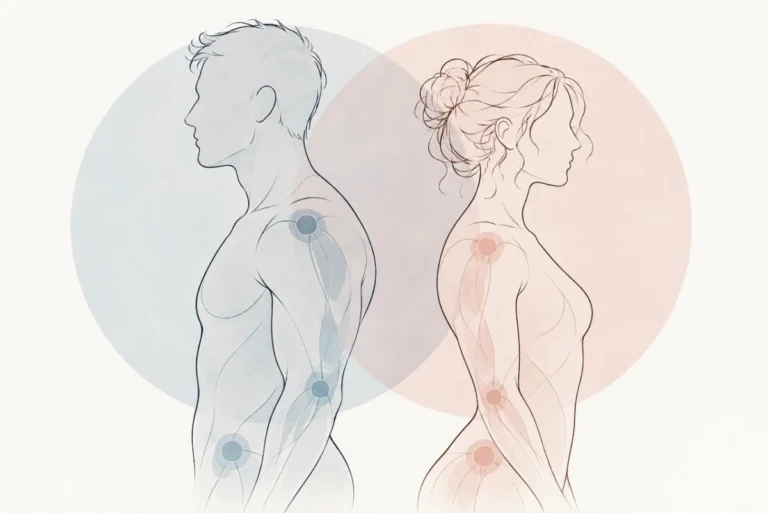
This is not a story of medical malpractice or overt conflict; it is a story of structural misalignment. It is the "quiet failure" of the modern clinical encounter, where the gap between what a patient needs to express and what the visit has space for becomes an unbridgeable canyon. As healthcare systems prioritize throughput, the fundamental human connection—the very bedrock of medicine—is increasingly at risk of erosion.
The Anatomy of a Disconnected Visit
The failure often begins before a single word is spoken. The patient arrives carrying the "lived experience" of their condition—the chronic ache that dictates their daily schedule, the fear of worsening symptoms, and, often, the traumatic history of being invalidated by previous providers. For them, the appointment is a high-stakes event, a moment of potential resolution.
Conversely, the clinician enters the room already behind. They are navigating a complex landscape of risk management, diagnostic puzzles, and the unforgiving pressure of the clock. They are not merely listening; they are processing data, ruling out pathologies, and updating electronic health records in real-time.
When these two worlds collide without a deliberate effort to synchronize, the result is a fragmented exchange. The patient answers questions but never voices their concerns; the clinician gathers data but fails to understand the patient’s reality. Both parties exit the room feeling that the encounter was unsatisfactory, yet neither can pinpoint exactly where the thread was lost.
A Chronology of the Clinical Gap
To understand how this disconnect manifests, one must look at the typical trajectory of a standard 15-minute appointment:
- The Arrival: The patient enters with a mental script, prioritized by urgency and emotional weight.
- The Initiation: The clinician, driven by the need to catch up, immediately pivots to clinical history-taking, often interrupting the patient’s initial narrative to fit symptoms into diagnostic categories.
- The Translation Error: The patient uses subjective language (e.g., "It hurts all the time"), while the clinician searches for objective, measurable patterns (e.g., "Is the pain episodic or constant?").
- The Divergence: The clinician’s focus on the biological often obscures the patient’s focus on the biographical. The patient stops sharing; the clinician assumes the lack of further detail means the issue is resolved or less severe than initially presented.
- The Departure: The clinician provides a plan based on the collected data, while the patient leaves with their original, unaddressed concerns still weighing on them.
The Semantics of Suffering: Why We Aren’t Speaking the Same Language
A primary driver of this failure is the linguistic divide. In medical training, precision is paramount. A clinician is taught that "all the time" is a vague descriptor that requires qualification to distinguish between neuropathic, inflammatory, or mechanical pain.
However, for the patient, "all the time" is not a medical descriptor—it is an existential one. It means the pain has permeated their social life, their ability to work, and their mental health. When a clinician hears this phrase and immediately pivots to a series of diagnostic questions, the patient feels their narrative is being stripped of its significance.
Bridging this gap requires a conscious pivot toward translation. A clinician who asks, "When you say ‘all the time,’ help me understand: is there ever a moment of relief?" validates the patient’s experience while simultaneously acquiring the clinical data they need. It is a dual-purpose question that respects the patient’s reality while sharpening the clinician’s diagnostic focus.
The Power Imbalance: A Structural Reality
It is a common platitude to call the patient-provider relationship a "partnership." In reality, it is a relationship of unequal power. The clinician holds the prescription pad, the referral authority, and the power to document the medical record—a document that follows the patient for years.
This power imbalance is not inherently malicious, but it is consequential. Empowerment for the patient does not mean becoming an "assertive advocate" in a way that feels confrontational. Rather, it means recognizing that the patient’s experience is clinical data. If the clinician does not have the patient’s subjective input, they are working with incomplete information.
What Patients Can Do to Reclaim the Visit
- Prioritize the Narrative: Start the visit with what matters most. Use the phrase, "This is what is affecting my life right now."
- Name the Fears: Explicitly state concerns about serious outcomes.
- Ask for Clarity: If the terminology is confusing, demand a different explanation.
- Document Beforehand: If the stress of the room makes speech difficult, bring a written summary to hand over.
What Clinicians Can Do to Share the Room
- The "Open-Loop" Start: Begin with, "What did you come in hoping we would figure out today?"
- Signposting: Narrate the clinical process. "I am asking these questions to rule out X, not to dismiss your pain."
- Admit the Unknown: Honesty about the limits of current knowledge builds far more trust than an overly confident guess.
Implications for Healthcare Systems
The implications of these failing interactions are profound. When a patient feels unheard, the likelihood of "non-adherence"—where the patient fails to follow the treatment plan—skyrockets. This leads to increased healthcare costs, unnecessary diagnostic testing, and, most tragically, the exacerbation of chronic conditions that could have been managed effectively with a more collaborative approach.
Furthermore, the "processing" model of medicine leads to clinician burnout. When a physician or nurse practitioner feels like a cog in a machine, forced to treat patients as data points rather than human beings, the moral injury of their profession deepens. They enter the field to heal, not to complete templates.
A Path Toward Restoration
Repairing the clinical encounter does not require unlimited time or a radical overhaul of the healthcare system. It requires a shift in mindset: the recognition that the room is a shared space.
"Checking" is the most effective tool in the clinical arsenal. Before a patient leaves, both parties should be able to articulate the plan in the same way. The clinician might say, "Let me make sure I understood: the primary issue is the sleep disturbance, and the pain is secondary. Is that correct?" This simple, 30-second verification prevents the catastrophic drift that occurs when the patient leaves with a plan they did not understand or agree to.
True progress in healthcare will not come solely from new drugs or advanced diagnostic technology. It will come from the quiet, human labor of sitting in a room and ensuring that two people—despite their different roles, different vocabularies, and different pressures—are finally, truly, on the same page.
The clinical visit is where care either begins or breaks down. If we can fix what happens in those twelve to fifteen minutes, we can restore the integrity of the entire medical system. It is time to treat the conversation itself as a vital sign—one that, if left unattended, can compromise the entire health of the patient-provider relationship.