For decades, the global food industry has been locked in a high-stakes balancing act: providing the sweet flavor profiles consumers crave while mitigating the metabolic and caloric fallout associated with refined sugar. The result has been the ubiquitous rise of non-nutritive sweeteners (NNS)—substances like aspartame, sucralose, and saccharin that pack a powerful punch of sweetness without the caloric density of sucrose.
While the U.S. Food and Drug Administration (FDA) maintains that these additives are safe for public consumption within established limits, the scientific and public health communities remain deeply divided. As consumers navigate grocery aisles filled with "diet," "zero-sugar," and "light" options, the question remains: Are these chemical substitutes a revolutionary tool for metabolic health, or are they a modern-day nutritional gamble?
Main Facts: The Regulatory Stance vs. Emerging Concerns
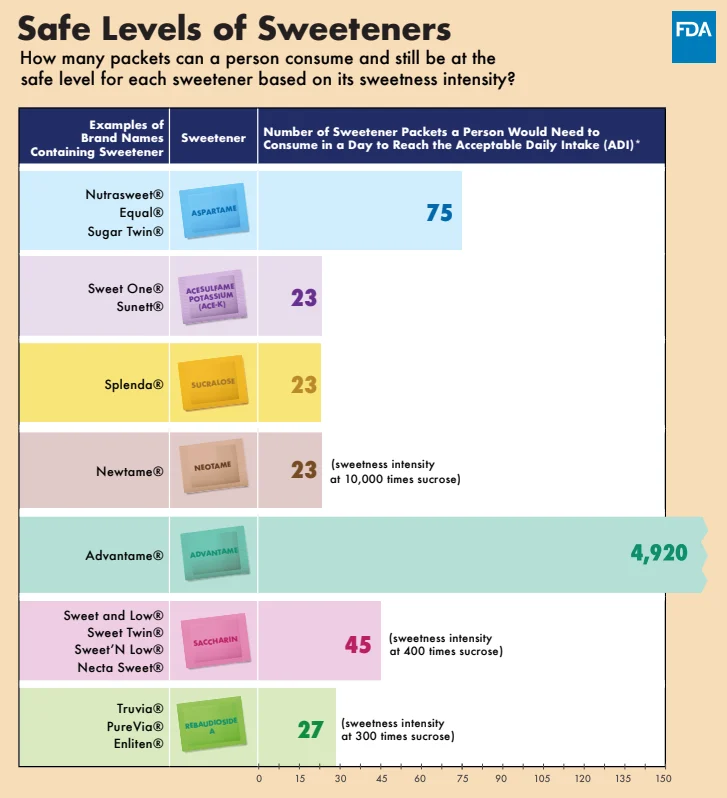
The FDA’s current position is categorical: artificial sweeteners, when used within their designated Acceptable Daily Intakes (ADIs), pose no significant risk to the general population. The ADI is calculated as the amount of a substance that can be ingested daily over a lifetime without appreciable health risk. These thresholds are set with a wide margin of safety, often 100 times lower than the levels at which any adverse effects were observed in animal studies.
However, the regulatory "all-clear" does not equate to a nutritional endorsement. The core of the modern debate centers on the difference between toxicity—the ability of a substance to cause direct harm—and metabolic disruption. Critics argue that even if a substance is not "toxic" in the traditional sense, its long-term physiological impact on gut microbiota, insulin sensitivity, and appetite regulation remains under-scrutinized.
Chronology: A History of Sweetened Science
The narrative of artificial sweeteners is a century-long saga of discovery, panic, and re-evaluation.
- 1879: Saccharin is discovered accidentally by researchers at Johns Hopkins University, marking the beginning of the synthetic sweetener era.
- 1950s–1960s: The rise of diet soda leads to the widespread adoption of cyclamate and saccharin.
- 1970: The FDA bans cyclamate following studies linking it to bladder cancer in rats—a decision that remains a flashpoint in regulatory history, as later human studies failed to replicate these results.
- 1981: Aspartame is approved by the FDA for use in dry foods, followed by soft drinks in 1983, launching a massive market expansion.
- 2000–2010: The "Sucralose Boom." With the introduction of Splenda, the market shifts toward sweeteners that can survive high-heat baking, making them a staple in home cooking.
- 2015–Present: The focus shifts toward the "Ultra-Processed Food" (UPF) framework. Researchers begin to categorize sweeteners not just as chemicals, but as markers of a diet dominated by industrialized, low-nutrient-density foods.
Supporting Data: The Complexity of Measurement
Why is the science on sweeteners so notoriously difficult to interpret? The answer lies in the nature of human consumption.
The Problem with Small Doses
Artificial sweeteners are intensely potent. Aspartame, for instance, is roughly 200 times sweeter than sugar. Because only minute quantities are required to achieve a desired flavor, tracking the exact intake of a consumer is a logistical nightmare. Unlike sugar, which is easily quantified by grams in a food label, sweeteners appear in everything from toothpaste to salad dressings, often in "trace" amounts that are difficult to track in clinical nutrition studies.
Confounding Variables
Many studies that associate sweeteners with obesity or diabetes suffer from "reverse causality." Individuals who are already overweight or metabolically compromised are more likely to switch to diet products. Distinguishing whether the sweetener caused the health issue or whether the individual was already trending toward poor health is a persistent challenge for epidemiologists.
Official Responses and The Regulatory Framework
Regulatory bodies like the FDA and the European Food Safety Authority (EFSA) base their approvals on rigorous toxicological profiles. They evaluate carcinogenic potential, neurotoxicity, and reproductive health impacts.
According to the FDA, "The science is clear: these substances are safe at current levels of use." However, "safe" in a regulatory sense implies the absence of immediate, observable pathology. Public health advocates argue that this definition is too narrow. They contend that the FDA must move beyond simple toxicity tests and begin evaluating the long-term impact of sweeteners on the human microbiome. Recent animal studies have suggested that some sweeteners may alter the balance of gut bacteria, potentially leading to glucose intolerance—the very condition they were designed to prevent.
Implications: A Personal and Public Health Perspective
For the average consumer, the dilemma is personal: if I want to avoid sugar, what is the trade-off?
The Argument for Avoidance
The primary concern regarding artificial sweeteners is that they are "markers" of ultra-processed foods. When a product relies on artificial sweeteners, it is almost certainly a product that has been engineered in a laboratory. By consuming these, one is often displacing whole, unprocessed foods—like fruit, nuts, or vegetables—that provide fiber, antioxidants, and essential nutrients.
Furthermore, some behavioral psychologists argue that the intense sweetness of these chemicals keeps the palate "addicted" to high-intensity flavors, making naturally sweet foods like berries or carrots seem dull by comparison. This may perpetuate a cycle of craving hyper-palatable foods.
The Case for Moderation
For those who cannot simply eliminate sweets—such as individuals with Type 1 or Type 2 diabetes who require strict blood glucose management—artificial sweeteners provide a necessary bridge. For these patients, the immediate danger of a blood sugar spike from natural sugar outweighs the theoretical, long-term risks associated with non-nutritive substitutes. In this context, sweeteners are not a luxury but a therapeutic tool.
Expert Recommendations
If the scientific community remains divided, how should the individual proceed?
- Prioritize Unprocessed Ingredients: The gold standard remains a diet centered on whole foods. If you crave sweetness, look to natural sources like whole fruit, which comes packaged with fiber to moderate the absorption of sugars.
- Audit Your Intake: Many consumers don’t realize how much they are consuming because sweeteners are hidden in seemingly "healthy" products like protein bars, yogurt, and electrolyte drinks. Read labels diligently.
- The "Low and Infrequent" Rule: If you choose to consume artificial sweeteners, do so as an occasional indulgence rather than a dietary staple. Replacing a daily habit of sugar-sweetened soda with a diet soda is a net positive, but replacing water with diet soda is a missed opportunity for better health.
- Listen to Your Body: Everyone metabolizes food differently. If you notice digestive issues, bloating, or increased cravings after consuming sweeteners, it may be a sign to cycle them out of your diet entirely.
Conclusion
The debate over artificial sweeteners serves as a microcosm of modern nutrition science: it is complex, heavily lobbied, and deeply personal. While the FDA provides the necessary legal guardrails to ensure these products do not cause immediate harm, it is the responsibility of the consumer to exercise discernment.
As the landscape of food technology evolves, we may see more research into natural alternatives like stevia or monk fruit, which are currently viewed with more optimism than their synthetic counterparts. However, the fundamental advice remains the same: the most effective way to avoid the risks of artificial sweeteners—and the potential pitfalls of refined sugar—is to step away from the processed food cycle altogether. By opting for a wide variety of minimally processed, whole foods, we reduce our reliance on the laboratory and return to the biology that has sustained humans for millennia.
Ultimately, the goal is not to find the "perfect" chemical substitute for sugar, but to reshape our relationship with sweetness itself. When we prioritize real, whole foods, the need for chemical intervention naturally fades, leaving us with a diet that is not only safer but significantly more nourishing.