











Executive Summary: A New Reality in the Persian Gulf
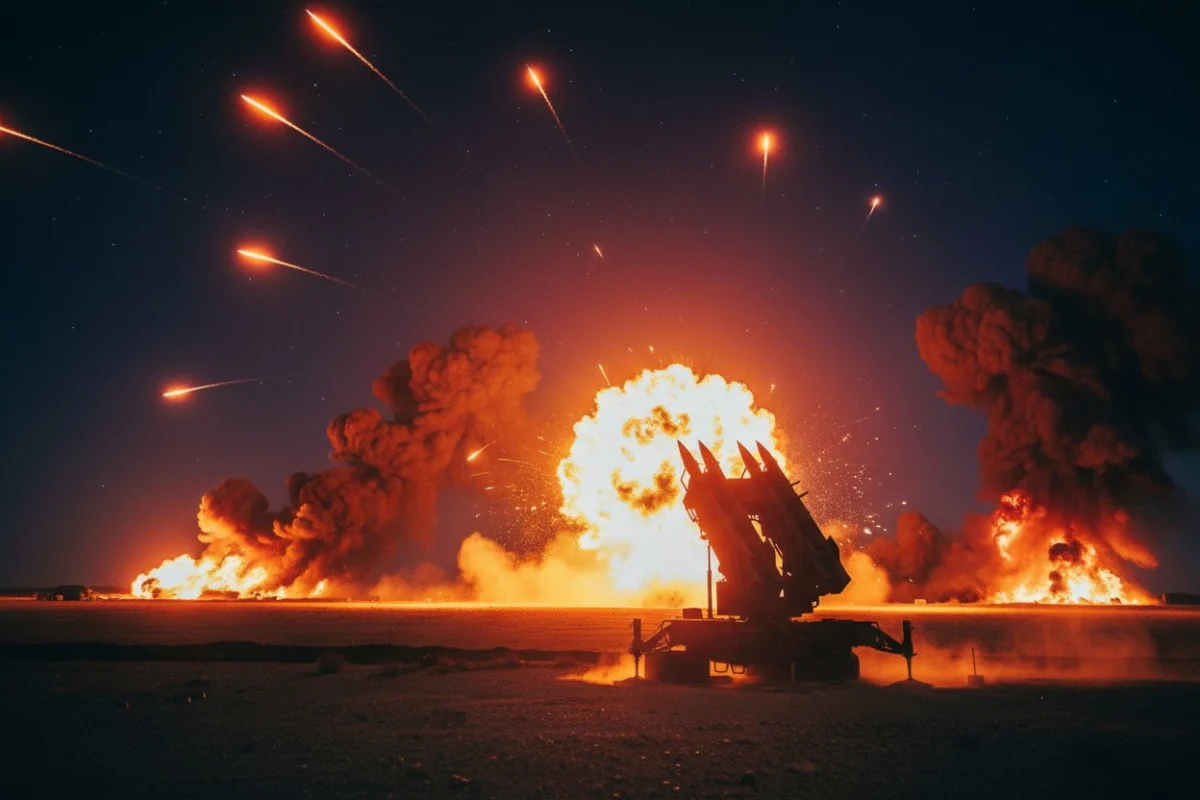
In a development that has sent shockwaves through global defense circles, the Islamic Revolutionary Guard Corps (IRGC) announced on Sunday that its combined Navy and Aerospace Force units successfully neutralized the Counter-Rocket, Artillery, and Mortar (C-RAM) early-warning radar system at the Ali Al Salem Air Base in Kuwait. This operation, identified by Tehran as the eighth wave of "Operation Nasr 2," marks a critical escalation in regional tensions. By systematically targeting the technological backbone of American force protection, the IRGC has delivered a calculated, kinetic message to Washington: the era of American military bases in the Middle East acting as unquestioned, untouchable sanctuaries has effectively ended.
Chronology of Escalation: The Nasr 2 Offensive
The strike on Ali Al Salem is not an isolated tactical anomaly but the latest iteration of a multi-phased regional campaign. Operation Nasr 2, as described by Iranian military spokespeople, is designed to systematically degrade the operational efficacy of the United States’ regional power-projection capabilities.
- The Build-up: Since the onset of recent hostilities, the IRGC has moved from asymmetric skirmishes to precision-guided strikes. The previous seven waves focused on testing perimeter defenses and logistical supply chains throughout the Levant and the Gulf.
- The Sunday Strike: Under the cover of low-altitude flight profiles designed to evade long-range detection, Iranian strike assets successfully engaged the C-RAM radar array. The destruction of this node has rendered the base’s automated defensive Gatling guns—the "Phalanx" systems—effectively blind, as they rely entirely on the data fed from the now-destroyed radar grid.
- Targeting Logic: Intelligence assessments suggest that the strike was not merely against hardware but was timed to coincide with high-traffic periods for US personnel. This tactical choice underscores a shift in Iranian doctrine: the intent is to impose a high cost on the physical presence of American service members, forcing a reassessment of troop concentrations in forward-deployed theaters.
Technical Breakdown: The Criticality of C-RAM
To understand the gravity of the strike, one must examine the role of the C-RAM. It is not a singular weapon, but a complex, integrated system-of-systems.
The Defensive Architecture
The C-RAM system is the frontline of protection for US personnel. Its operation relies on a three-tier process:
- Detection: A specialized radar system continuously scans the immediate airspace for high-velocity, low-altitude projectiles, such as mortars, rockets, or drones.
- Processing: A sophisticated command-and-control (C2) computer identifies the threat, calculates its ballistic trajectory, and predicts the exact point of impact in milliseconds.
- Neutralization: If the threat is determined to be heading for a protected zone, the C2 system cues an M61A1 Vulcan Gatling gun, which fires thousands of 20mm explosive rounds per minute to detonate the threat mid-air.
By destroying the radar array at Ali Al Salem, the IRGC has surgically removed the "eyes" of this defensive net. Without the radar, the Vulcan guns are useless, leaving the installation vulnerable to follow-on saturation attacks. This is a classic "anti-access/area-denial" (A2/AD) maneuver, designed to strip away the protective umbrella that has allowed the US to maintain a persistent presence in hostile territories for decades.
Implications for Regional Security and Host Nations
The successful neutralization of the Ali Al Salem radar array forces a brutal strategic reckoning for both the Pentagon and the governments hosting American forces.
The Vulnerability of Forward Deployment
The United States currently maintains a footprint of over 50,000 personnel across various Middle Eastern nations, including Iraq, Kuwait, and others. These installations house critical assets, such as the US Fifth Fleet and regional air wings. Iran’s latest operation demonstrates that no base, regardless of its defensive posture, can be considered immune to determined, precision-guided strikes.
The Dilemma for Kuwait and Regional Partners
Nations like Kuwait are now caught in an existential bind. By hosting American military infrastructure, they have become de facto participants in Washington’s regional policy. The IRGC has made it clear that any military action launched from host-nation soil will be met with direct retaliation. This creates a scenario where the host country’s sovereignty is effectively eroded; they assume the risks of conflict while having limited control over the military decisions made in the corridors of Washington.
The "Prophetic" Critique: Ron Paul and the Cost of Empire
As the smoke clears at Ali Al Salem, the debate over American foreign policy has shifted from the halls of Congress to the reality of the battlefield. The critique offered by former congressman and presidential candidate Ron Paul—long dismissed by the foreign policy establishment—is gaining renewed relevance.
The Bankruptcy of Interventionism
In 2011, during an appearance on CBS’s Face the Nation, Paul warned that the maintenance of 900 military bases across 130 countries was not a source of strength, but a strategic liability. "We’re bankrupt. We can’t afford it any longer," he argued, noting that this global overreach creates a "cycle of retaliation" that ultimately endangers American citizens rather than protecting them.
Paul’s argument, based on a non-interventionist "realist" framework, suggested that the United States should rely on superior domestic defense—such as a robust submarine fleet—rather than trying to police the globe from vulnerable land bases. The current events in Kuwait provide a grim empirical data point for his warnings. When a nation maintains a sprawling empire of bases, it essentially provides its adversaries with a target-rich environment.
The Path Not Taken
The cost of this interventionist policy is measured in more than just destroyed radars. It is measured in trillions of dollars diverted from domestic infrastructure, healthcare, and education—funds that, according to critics, could have ensured long-term national stability. By focusing on global hegemony, the US has arguably created a security environment that is more volatile, expensive, and deadly for its own service members.
Official Responses and Strategic Outlook
At the time of this report, the Pentagon has yet to provide a full accounting of the damages at Ali Al Salem, though official channels have acknowledged an "incident" involving the air defense systems. The silence from Washington reflects a difficult reality: how does the administration respond to an attack that exposes the vulnerability of their core defensive technology without escalating into an all-out war?
The IRGC, conversely, has been emboldened. The "eighth wave" of Operation Nasr 2 serves as a psychological and strategic benchmark. By proving that the C-RAM system—the pride of US force protection—can be incapacitated, Iran has effectively changed the rules of engagement.
Moving Forward: The Looming Crisis
The coming weeks will be critical. Washington faces two stark choices:
- Reinforcement: Attempt to "harden" existing bases with more advanced systems, which will only increase the costs and potentially trigger further, more aggressive responses from regional adversaries.
- Strategic Withdrawal: Acknowledge the shift in the regional balance of power and begin the process of drawing down forces—a path that would require a fundamental, and perhaps politically painful, pivot away from the interventionist doctrines of the last thirty years.
As the US stands at this crossroads, the warnings of the past have become the headlines of the present. The destruction of the C-RAM radar is a signal that the status quo is no longer sustainable. Whether Washington chooses to heed this warning or attempts to double down on a failing strategy will determine the trajectory of the Middle East for the next generation. The era of the unchallenged base is over; the era of consequences has arrived.
Sources and References:
- Sputnik Globe: Iran’s operations against US defensive arrays in the Gulf.
- Politico: Historical archives on non-interventionist foreign policy.
- Missile Defense Advocacy Alliance: Technical specifications and strategic role of C-RAM systems.