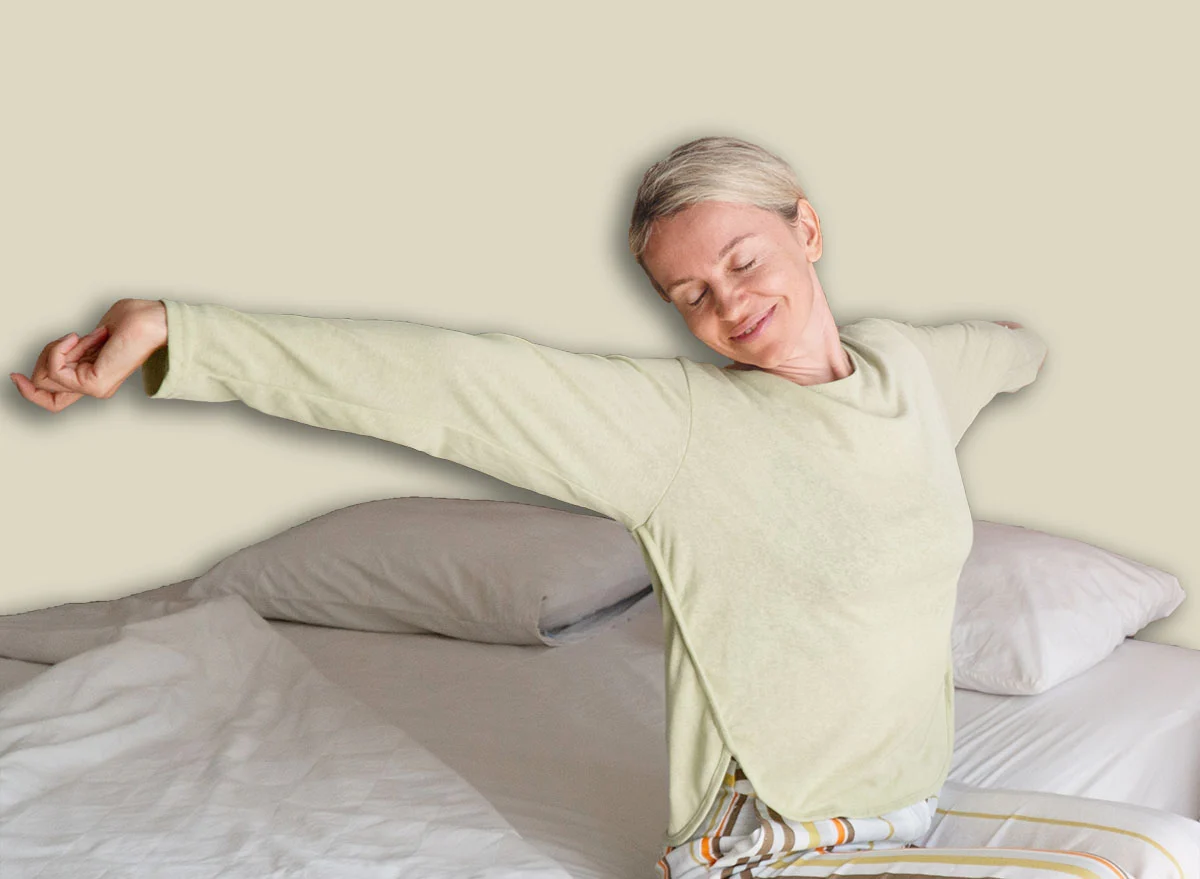
Do you end your day feeling as though you are literally carrying the weight of the world on your shoulders? For millions of individuals, particularly those over the age of 60, the sensation of "tight shoulders" is a constant, nagging reality. Whether driven by the sedentary nature of modern desk work, chronic poor posture, or the natural physiological shifts that accompany aging, shoulder tension can severely diminish one’s quality of life. While a professional massage offers a blissful, albeit temporary, respite, the recurring costs and logistical hurdles make it an unsustainable long-term strategy for many.
Fortunately, physical therapy experts suggest that the solution may not lie in a high-priced spa, but in a consistent, evidence-based nightly stretching routine. By dedicating just a few minutes before bed to targeted mobility work, you can begin to undo the day’s damage and reclaim your range of motion.
The Physiology of Tension: Why Shoulders Tighten
To address shoulder stiffness, one must first understand why it occurs. The shoulder complex is a marvel of human anatomy, designed for extreme mobility. However, that mobility comes at the cost of stability. As we age, the connective tissues—tendons, ligaments, and fascia—tend to become less elastic.
When coupled with "tech neck" (the forward-head posture common with smartphone and computer use) and reduced physical activity, the muscles surrounding the shoulder blade and neck become chronically shortened and overactive. This creates a cycle: the tighter the muscle, the more restricted the movement; the more restricted the movement, the less we use the joint, leading to further stiffness.
Expert Insights: What Stretching Can—and Cannot—Do
It is essential to manage expectations. Stretching is not a cure-all for every musculoskeletal ailment. We spoke with Rasika Bhide, DPT, MS, OCS, a Board-Certified Orthopedic Clinical Specialist, to clarify the role of therapeutic movement.
"Stretching can realistically improve muscle flexibility, connective tissue mobility, and joint mobility to some extent," Bhide explains. "This can alleviate the stiffness, tension, and discomfort that plague many of us after a long day. It can also make it easier to perform essential daily tasks, such as reaching overhead to grab a plate or dressing yourself without discomfort."
However, Bhide offers a vital caveat: "Stretching won’t restore joint mobility if the restriction is caused by arthritis, significant joint degeneration, or some other structural problem. A simple way to describe it to patients is: Stretching can make the tissues around the shoulder more mobile and comfortable, but it cannot always change a stiff joint itself. The goal is to enhance the movement that is available and reduce unnecessary tension."
The Four-Step Nightly Protocol
If you are cleared by your physician for light exercise, the following four movements are recommended by experts to be performed as a gentle "wind-down" ritual.
1. The Wall Pectoral Stretch
The pectoral muscles, located across the front of the chest, are often the primary culprits in the "slumped" posture that rounds the shoulders forward. When these muscles tighten, they pull the shoulders into a hunched position, creating a ripple effect of tension up the neck and down the back.
- The Technique: Stand facing a corner or a door frame. Place your forearms on the wall/frame with your elbows at shoulder height. Gently lean forward until you feel a comfortable, sustained stretch across your chest. Hold for 30–60 seconds.
- Why it works: By opening the front of the chest, you counteract the "hunched" posture, allowing the shoulders to naturally retreat into a more neutral, relaxed alignment.
2. The Upper Trapezius Stretch
The upper trapezius muscles run from the base of the skull down to the shoulders. These muscles are notorious for "holding" stress and reacting to prolonged periods of sitting.
- The Technique: Sit or stand comfortably. Gently tilt your head toward one shoulder (e.g., right ear to right shoulder) while keeping the opposite shoulder relaxed and dropped. To deepen the stretch, you can gently place the right hand on the side of your head for a very light, controlled pull—never force the motion. Hold for 30 seconds per side.
- Why it works: This stretch targets the specific fibers that become overactive due to forward-head posture, providing immediate neurological relief to the neck and upper back.
3. Supine Shoulder Flexion
When we talk about shoulder mobility, "flexion" refers to the ability to lift the arm overhead. Stiffness here is a major indicator of reduced shoulder health.
- The Technique: Lie flat on your back with your legs extended. Interlace your fingers and, keeping your elbows as straight as possible, slowly raise your arms over your head toward the floor behind you.
- Expert Caution: Dr. Owen Campbell, PT, owner of Simplify Motion in Phoenix, Arizona, emphasizes the importance of the "pain-free zone." He advises: "If your shoulders are stiff, stop when you start to feel pain and do less motion. Don’t push through pain. The objective is to gently encourage movement, not to force the joint into a range it is not ready for."
4. The "Open Book" Stretch
Many people fail to realize that shoulder stiffness is often a downstream effect of a stiff thoracic spine (the upper and middle back). If your spine is rigid, your shoulder blades cannot glide properly, leading to the sensation of a "locked" shoulder.
- The Technique: Lie on your side with your knees bent at a 90-degree angle. Extend both arms straight out in front of you, palms touching. Slowly lift your top arm and rotate your torso, aiming to touch the back of your hand to the floor on the opposite side. Follow your hand with your eyes to ensure full thoracic rotation.
- Why it works: This movement directly targets the thoracic spine, unlocking the "anchor" points of the shoulder blades. By improving spinal rotation, you immediately decrease the workload on the shoulder joint itself.
Implications for Long-Term Mobility
The transition to a proactive stretching routine represents a shift from "reactive" health care to "preventative" self-care. For the aging population, maintaining the ability to perform activities of daily living (ADLs)—like reaching for items on high shelves or washing one’s hair—is a primary determinant of independence.
The Role of Consistency
The experts agree that the efficacy of these stretches is cumulative. Doing these stretches once a week will yield negligible results. However, incorporating them into a 10-minute nightly routine creates a neurological and muscular "reset." By signaling to the nervous system that it is time to relax before sleep, you not only improve physical mobility but also enhance sleep quality by reducing the physical symptoms of stress.
When to See a Professional
While these four stretches are excellent for general maintenance, they are not a substitute for clinical intervention. If you experience sharp, shooting pain, numbness, tingling, or a "clicking" sensation that accompanies movement, you may be dealing with a rotator cuff tear, bursitis, or severe impingement.
In such cases, physical therapy is not just a suggestion; it is a necessity. A licensed physical therapist can conduct a comprehensive assessment to determine if your stiffness is muscular or structural, and they can customize a plan that ensures you remain active and mobile well into your later years.
Conclusion
Shoulder stiffness is an incredibly common challenge, but it is not an inevitable sentence to discomfort. By understanding the biomechanics of your own body, practicing patience with your progress, and adhering to a gentle, consistent nightly routine, you can mitigate the impact of gravity and aging.
Remember the mantra provided by Dr. Campbell: "Don’t push through pain." Your body has a language of its own; learn to listen to the difference between the "good" tension of a muscle being stretched and the "bad" pain of a joint being pushed too far. With this mindset, you can effectively manage your shoulder health and move through your days with significantly more ease and freedom.