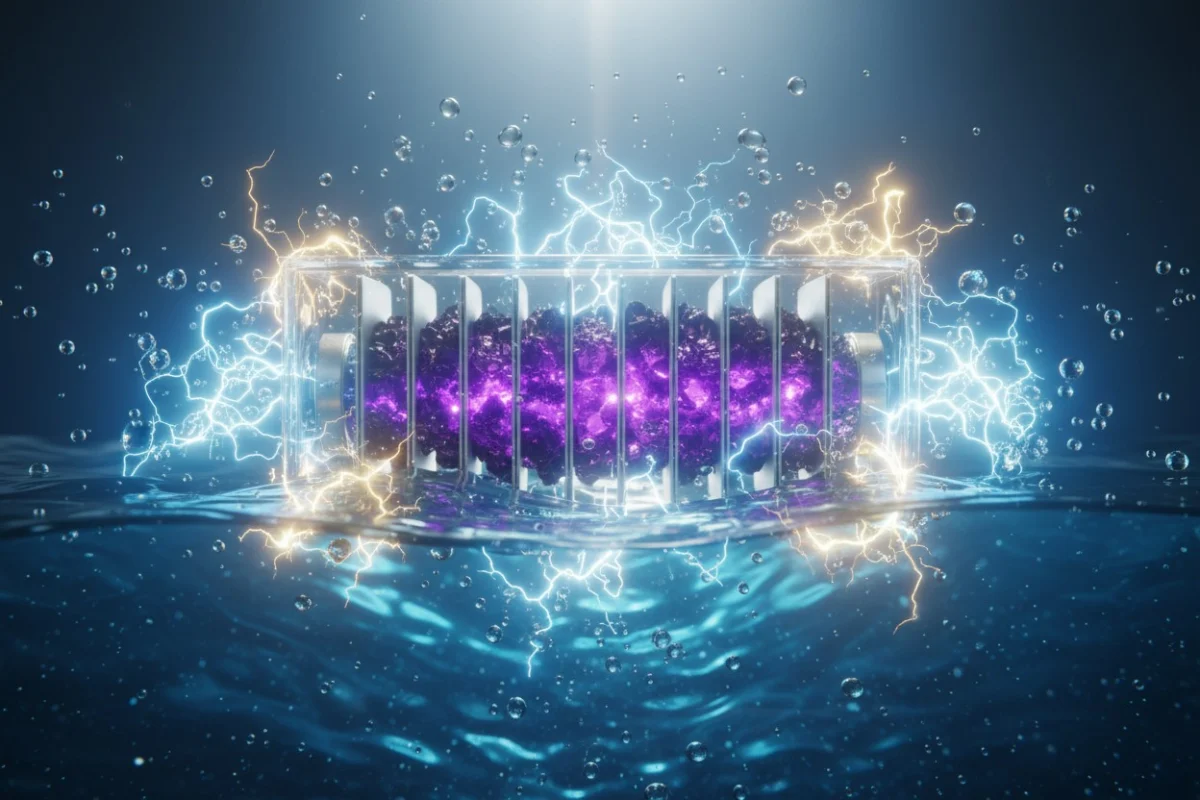
In a significant stride toward sustainable energy storage, researchers from Flinders University in Australia have unveiled a novel aqueous zinc-iodine battery capable of surviving more than 60,000 charge-discharge cycles while achieving a full charge in approximately three minutes. These findings, recently published in the prestigious journal Angewandte Chemie, suggest a viable pathway toward developing low-cost, high-longevity power storage solutions tailored for grid-scale infrastructure.
As the global transition toward renewable energy accelerates, the search for alternatives to lithium-ion technology has intensified. While lithium-ion batteries have revolutionized portable electronics and electric vehicles, their reliance on rare earth minerals and their inherent flammability present hurdles for stationary, long-term grid storage. The Flinders University research team proposes that by leveraging the abundance and safety of zinc and iodine, the energy sector could move toward a more resilient and sustainable future.
The Mechanics of Longevity: Addressing Battery Failure
The core challenge in battery chemistry—particularly in aqueous systems—has historically been the degradation of components over time. The researchers at Flinders University addressed two primary failure mechanisms that have plagued zinc-based batteries: dendrite growth and iodine dissolution.
Combating Dendrite Proliferation
In zinc-based batteries, the anode is susceptible to the formation of "dendrites"—microscopic, tree-like structures of metal that grow during the charging process. If left unchecked, these structures can penetrate the separator membrane, eventually touching the cathode and causing a short circuit, which leads to catastrophic battery failure. By engineering a modified electrode-electrolyte interface, the research team was able to suppress the uncontrolled growth of these zinc crystals, ensuring a uniform deposition of ions during the cycling process.
Mitigating Cathode Dissolution
The second critical issue involves the iodine cathode. In many aqueous designs, iodine tends to dissolve into the electrolyte, leading to a steady loss of active material and a consequent decline in capacity over time. The Flinders team’s innovation involves stabilizing the interface between the electrode and the water-based electrolyte. By effectively "trapping" the iodine within the cathode structure, the battery maintains its chemical potential over tens of thousands of cycles, a longevity metric that dwarfs conventional battery technologies.
A Chronology of Innovation
The development of this battery follows a decade of global research into aqueous energy storage systems. While the fundamental principles of zinc-iodine chemistry have been understood for years, practical implementation remained elusive due to the poor cycling life of early prototypes.
- 2011–2015: Early exploration into polymer hydrogels for aqueous systems began to show that zinc ions could be effectively managed in wet environments, setting the stage for more complex, high-performance aqueous batteries.
- 2018–2022: Increased focus on the "aqueous" aspect of these batteries gained traction globally as a safer, non-flammable alternative to the organic solvents used in lithium-ion cells.
- 2023–2024: Flinders University researchers intensified their focus on interface engineering, specifically targeting the stabilization of the zinc-iodine electrochemical couple.
- 2025: The publication in Angewandte Chemie marked the culmination of this effort, proving that high-speed charging and extreme cycle life could coexist in a single cell design.
Supporting Data and Technical Significance
The performance metrics reported by the Flinders team are striking. A cycle life exceeding 60,000 charge-discharge cycles is exceptional for any battery technology, particularly for one based on aqueous chemistry. For context, typical lithium-ion batteries often experience significant degradation after 1,000 to 3,000 cycles.
While the research team has not yet released a detailed capacity retention percentage—the measure of how much energy the battery can hold after its 60,000th cycle—the fact that the battery remained functional at all after such an intensive testing period is a significant indicator of its structural integrity. Furthermore, the three-minute charge time represents a substantial improvement over standard zinc-iodine systems, which often require much longer periods to reach full capacity due to ion transport limitations.
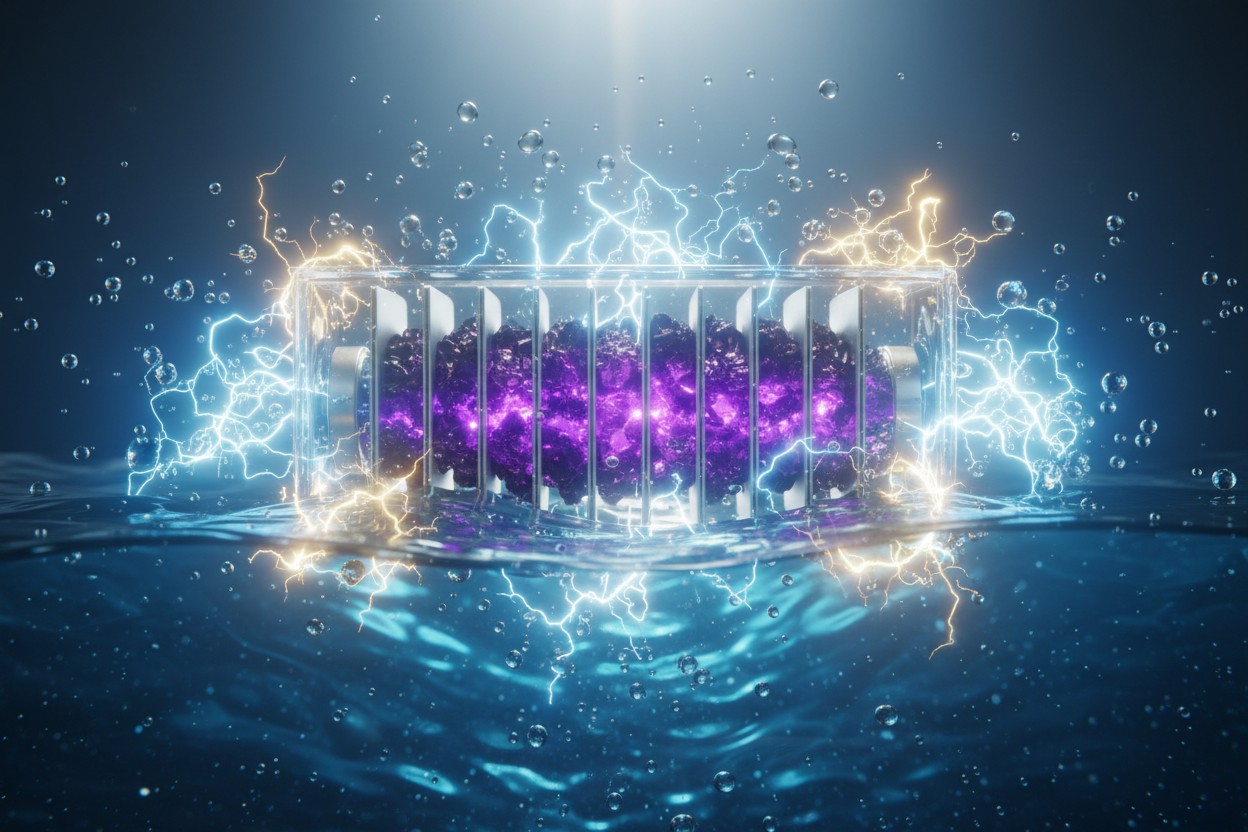
The use of an aqueous electrolyte is the defining feature that differentiates this technology from the volatile organic liquid electrolytes found in consumer electronics. Because the electrolyte is water-based, the battery is inherently non-flammable. This removes the need for complex, heavy, and expensive cooling systems, further reducing the overall balance-of-system cost for large-scale energy storage projects.
Implications for Global Energy Infrastructure
The transition to a decentralized power grid, where solar and wind energy are stored locally, requires technologies that are not only cheap to produce but also extremely durable.
Economic Viability
Zinc and iodine are far more abundant than the lithium, cobalt, and nickel required for current industry standards. Iodine is widely available, particularly from marine sources such as kelp, and zinc is a widely mined, affordable transition metal. By utilizing materials that can be sourced at scale, the Flinders University design avoids the geopolitical and supply-chain volatility currently affecting the lithium market.
Grid Stability and Renewable Integration
One of the primary challenges for grid operators is managing the "duck curve"—the imbalance between the peak production of solar energy during the day and the peak demand during the evening. The ability of this new battery to charge in three minutes suggests it could be used for "fast-frequency response" services. This would allow grid operators to stabilize the power grid against sudden spikes or drops in energy supply, providing a level of resilience that slower-discharging, long-duration batteries cannot offer.
Challenges and Future Outlook
Despite the enthusiasm surrounding the Flinders University findings, the research remains in the laboratory phase. Several hurdles must be cleared before this technology reaches commercial deployment:
- Scale-Up Challenges: Laboratory prototypes are small, often the size of a coin or a small pouch. Scaling this technology to the megawatt-hour (MWh) capacities required for grid storage introduces engineering challenges that have yet to be addressed.
- Lifecycle Cost Analysis: While the materials are inexpensive, the manufacturing process for the modified electrode interface must be cost-competitive at a commercial scale. A full lifecycle assessment is required to ensure that the production of these batteries is as environmentally friendly as the finished product.
- Independent Verification: As with all breakthroughs in material science, the results must be replicated by independent laboratories. The scientific community will be looking for further data regarding the battery’s performance under extreme temperature variations and in real-world grid conditions.
Conclusion: A New Horizon for Aqueous Storage
The work conducted by the Flinders University team represents a promising pivot in the energy storage landscape. By focusing on the fundamental interface between electrodes and electrolytes, they have demonstrated that aqueous zinc-iodine systems—long considered a "niche" technology—can be engineered to outperform traditional storage solutions in terms of longevity and charging speed.
While we are likely years away from seeing these batteries powering our local substations, the trajectory is clear. As the world shifts away from a reliance on fossil fuels, the necessity for robust, safe, and sustainable energy storage becomes paramount. Technologies like the one developed in Australia offer a glimpse into a future where the grid is supported by safe, abundant, and infinitely rechargeable chemical reservoirs, bridging the gap between intermittent renewable energy and the constant demand of a modern society.
Further research will undoubtedly focus on the transition from lab-scale prototypes to pilot-scale systems, where the durability of these 60,000 cycles will face the ultimate test: the unpredictability of the open grid. For now, the scientific community watches with interest as this Flinders University breakthrough enters the next stage of its development.