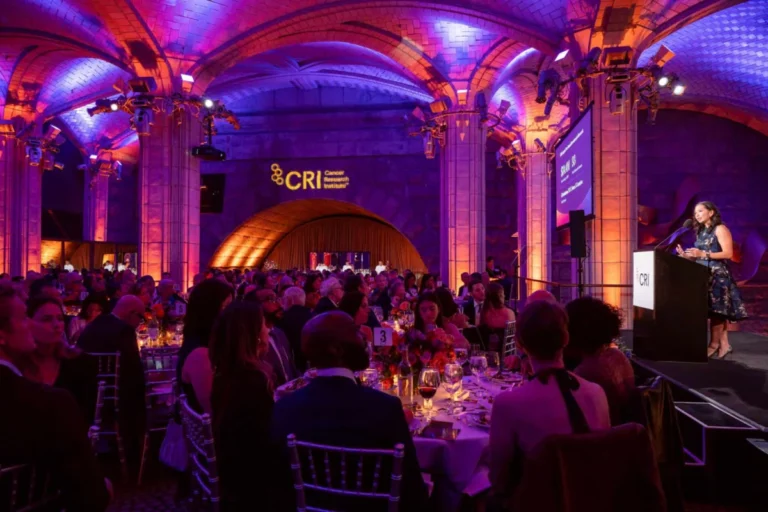
At the 2026 American Association for Cancer Research (AACR) Annual Meeting, the global scientific community turned its attention to a singular, transformative figure in the field of immunology. The Cancer Research Institute (CRI) and the AACR jointly presented the prestigious AACR-CRI Lloyd J. Old Award in Cancer Immunology to Kenneth M. Murphy, MD, PhD.
The award serves as a testament to a career defined by intellectual curiosity and a relentless pursuit of the fundamental mechanisms governing human immunity. Dr. Murphy’s contributions, particularly his seminal work on dendritic cells (DCs), have provided the scaffolding upon which modern cancer immunotherapy is built. By honoring him, the scientific community recognizes not just an individual, but a philosophy of inquiry that prioritizes the mastery of basic biology as the primary engine of clinical innovation.
The Genesis of Discovery: Honoring Dr. Kenneth M. Murphy
The AACR-CRI Lloyd J. Old Award is reserved for those whose research has fundamentally altered the trajectory of cancer immunology. Dr. Murphy’s body of work—spanning decades—has been instrumental in defining the specific subsets of dendritic cells that orchestrate the immune system’s defensive maneuvers.
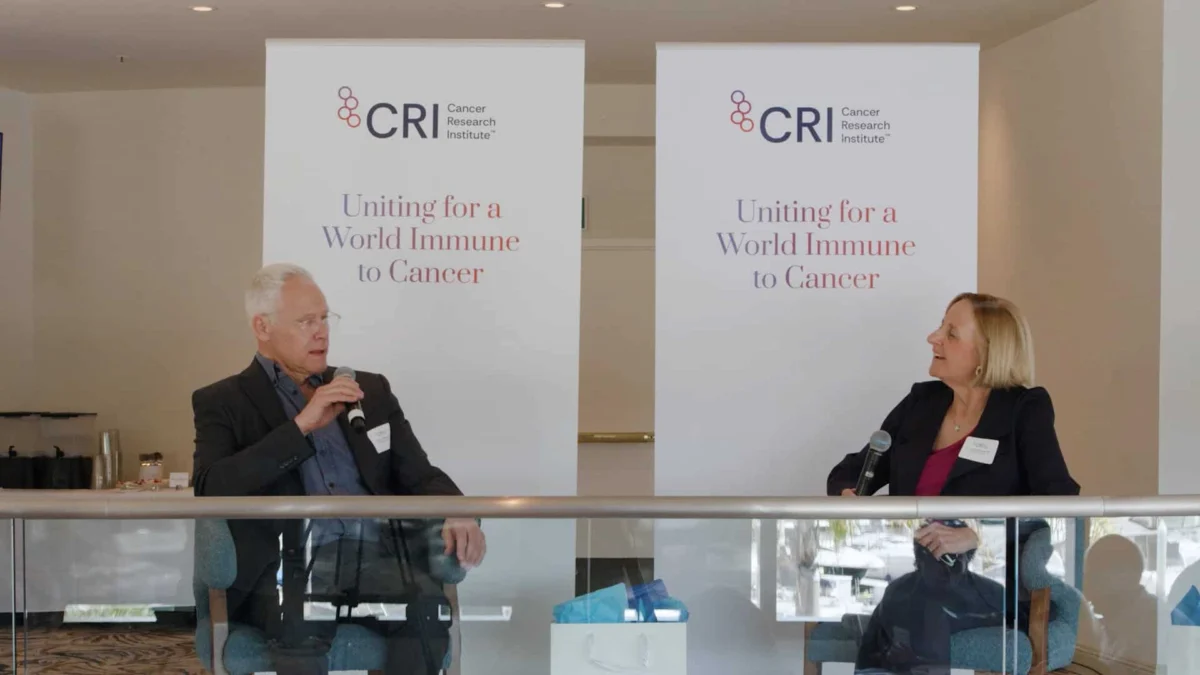
In a departure from traditional award ceremony formats, the CRI introduced a "fireside chat" session this year. Dr. Murphy sat down with his predecessor, the 2025 award recipient and renowned immunotherapy pioneer Dr. Crystal Mackall, to dissect the evolution of the field. The conversation was not merely a retrospective; it was a candid exploration of the "messiness" of scientific discovery and the systemic challenges facing modern researchers.
Chronology of a Scientific Journey
Dr. Murphy’s career is a study in the power of nonlinear progression. In his discussion with Dr. Mackall, he eschewed the narrative of a singular "Eureka!" moment, opting instead to describe his trajectory as a series of incremental, often unpredictable, steps.
The Foundational Years
Early in his career, Dr. Murphy sought to understand the basic mechanics of how the immune system distinguishes between threats. His work moved beyond simple observations, diving deep into the molecular signaling pathways that determine T cell differentiation.
The Dendritic Cell Breakthrough
The central pillar of his research remains his characterization of dendritic cell subsets. Dr. Murphy famously identified the cDC1 subset as a unique class of cells with the exclusive capability to "prime" CD8+ T cells—the "killer" cells of the immune system. This discovery was seismic. It explained why, in many clinical trials, immune checkpoint inhibitors were failing to produce results: the underlying "machinery" (the DCs) was either absent, impaired, or being bypassed.
The Modern Era
Today, as he continues his work, Dr. Murphy is applying these foundational principles to the next generation of cancer vaccines. By understanding that mRNA and cDNA vaccine platforms rely heavily on specific DC interactions, his lab is providing a roadmap for more effective, durable, and targeted therapies.
Supporting Data: The Architecture of the Immune Response
The impact of Dr. Murphy’s research is best understood through the lens of immune efficacy. His data suggests that the "success" of any immunotherapy is inextricably linked to the quality of the priming event.
- The cDC1 Advantage: Dr. Murphy’s research demonstrates that cDC1s are not just passive messengers. They are active controllers of CD8+ T cell recruitment. In tumor microenvironments, the density of these cells often correlates directly with the efficacy of immunotherapy.
- Vaccine Efficacy: In the context of the recent boom in cancer vaccines, Dr. Murphy’s findings serve as a cautionary and optimistic guide. His lab’s data shows that without the specific engagement of cDC1s, even the most technologically advanced mRNA vaccines may fail to trigger a robust, systemic immune memory.
- Stem-like T Cells: A critical area of his current focus is the transition of T cells from a "stem-like" state to an "effector" state. His research indicates that this transition is a key determinant of whether a cancer patient will experience a complete remission or a relapse, highlighting the need for therapies that can stabilize these cells to ensure long-term, durable immunity.
Expert Discourse: Perspectives from the Frontlines
The dialogue between Dr. Murphy and Dr. Mackall provided a rare window into the minds of two leaders who are shaping the future of medicine. Their discussion touched on the inherent friction between laboratory exploration and clinical application.
The "Follow the Biology" Mandate
"We’re still asking the same question that we started off with," Dr. Murphy noted, highlighting the persistence required to peel back the layers of immune complexity. He argued that forcing a hypothesis to fit a predetermined therapeutic outcome often leads to dead ends. Instead, he advocates for a strategy of following the biological signals wherever they lead, even if they contradict prevailing dogmas.
The Role of Artificial Intelligence
Both scientists acknowledged the rapidly changing environment of the laboratory. When asked about the rise of Artificial Intelligence, Dr. Murphy offered a nuanced view. He sees AI as a "supercharged tool" for managing massive genomic datasets and identifying patterns that human eyes might miss. However, he was quick to emphasize that AI cannot replicate the "contextual intuition" required to ask the right questions.
Dr. Mackall reinforced this, adding that for the next generation of scientists, the challenge is not access to information—it is the synthesis of that information into wisdom. "The sheer volume of data can be paralyzing," she noted. "The skill set of the future is the ability to filter noise and find the signal that matters."
Implications for Future Research and Patient Care
The implications of Dr. Murphy’s work are profound, signaling a shift in how the industry approaches drug development and patient stratification.
1. Precision Immunotherapy
Moving forward, oncology clinics may rely on the presence of specific DC subsets to predict which patients will respond to checkpoint inhibitors. This would mark a move away from the "one-size-fits-all" approach to a more personalized, biomarker-driven strategy.
2. Next-Generation Vaccine Platforms
By focusing on the "DC-centric" model of vaccine design, researchers are refining how they deliver antigens. The goal is to create vaccines that don’t just trigger an immune flare, but instead "train" the immune system to recognize and eliminate cancer cells with the precision of a T cell response.
3. Mentorship and the Research Environment
The conversation highlighted a critical need for structural support in academia. As the research landscape becomes more competitive and data-intensive, the role of mentorship in guiding young investigators through the "nonlinear" nature of discovery is becoming as important as the science itself.
Conclusion: The Path Ahead
The honoring of Dr. Kenneth M. Murphy at the 2026 AACR Annual Meeting serves as a powerful reminder of the importance of basic science. While the allure of "quick wins" and rapid clinical breakthroughs is strong, the lasting advances in medicine are almost always rooted in the slow, meticulous work of understanding the fundamental rules of life.
As Dr. Murphy continues his inquiry into the mysteries of the immune system, he leaves the next generation of researchers with a vital piece of advice: do not fear the unknown, and do not be deterred by the lack of a straight line to success. The answers to the most difficult questions in oncology are likely waiting in the biological details we have yet to fully understand.
By continuing to ask those questions—one at a time—the scientific community moves closer to a future where cancer is not just treated, but permanently mastered by the body’s own sophisticated defenses.
To view the full discussion between Dr. Kenneth M. Murphy and Dr. Crystal Mackall, visit the official Cancer Research Institute archives.