








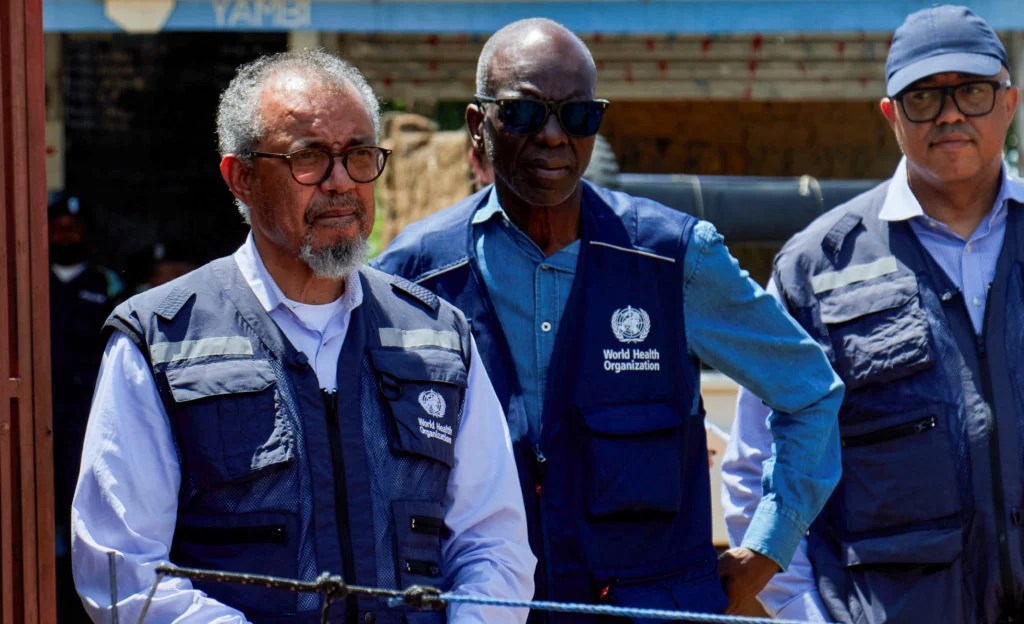
BUNIA, Democratic Republic of the Congo — In the heart of the Ituri province, where the specter of the Ebola virus has long cast a shadow of dread, a profound shift in the narrative is taking hold. Amidst a volatile landscape of conflict and medical uncertainty, five patients have defied the odds, recovering from a rare and particularly elusive strain of the Ebola virus. This development, confirmed by World Health Organization (WHO) Director-General Tedros Adhanom Ghebreyesus during a high-stakes visit to Bunia, offers a fragile but significant beacon of hope for a region currently battling to contain a resurgent health crisis.
Main Facts: A Rare Strain and a Resilient Response
The current outbreak in the Democratic Republic of the Congo (DRC) is centered around the Bundibugyo virus, a species of Ebola that presents unique challenges to international health authorities. Unlike more commonly known strains, the Bundibugyo variant currently lacks a dedicated, WHO-approved vaccine or specific antiviral treatment, forcing clinicians to rely entirely on supportive care.
The recovery of five individuals—four of whom were discharged simultaneously during the opening of a new, state-of-the-art Ebola treatment center in Bunia—serves as a testament to the efficacy of aggressive, albeit symptomatic, medical intervention. As of May 29, health authorities have confirmed 134 cases across the DRC and neighboring Uganda, with 18 confirmed fatalities. While the numbers continue to climb, the successful discharge of these patients highlights a critical truth: early detection and immediate access to professional medical care significantly improve the prognosis for those infected.
Chronology of the Crisis
The trajectory of this outbreak has been defined by rapid acceleration and a constant struggle to keep pace with the virus. The situation escalated throughout late spring, with cases emerging not only in the Ituri province but also spreading to the volatile provinces of North and South Kivu.
- Initial Detection: Health officials identified a spike in hemorrhagic fever symptoms in rural communities near the Ugandan border, eventually linking them to the Bundibugyo virus.
- Expansion: As testing capacities were strained, the virus moved from isolated rural pockets into more densely populated urban centers, complicating contact tracing efforts.
- The WHO Intervention: Dr. Tedros arrived in the region to bolster the response, emphasizing the need for decentralized treatment centers to reach those in the most remote or insecure areas.
- The Turning Point: The recovery of the five patients in Bunia has marked the most significant morale boost for health workers since the start of the current cycle of the outbreak.
- Current State: The focus has shifted toward building community trust and integrating local leaders into the medical response to overcome resistance to burial protocols and clinical testing.
Supporting Data and Medical Challenges
The battle against Bundibugyo is as much about data as it is about biology. The virus’s rapid onset—characterized by vomiting, intense itching, severe diarrhea, and extreme physiological deterioration—makes early diagnosis notoriously difficult.
The Diagnostic Hurdle
One survivor, a nurse named Ezo Étienne, provided a harrowing account of the diagnostic process. His ordeal involved seven separate tests before a definitive confirmation of Ebola was reached. His experience underscores a systemic weakness: the reliance on clinical judgment in environments where laboratory confirmation is often delayed by logistics and insecurity.
The Limitations of Symptomatic Care
Medical practitioners at the front lines, including those from Doctors Without Borders (MSF), acknowledge that while recovery is possible, the medical toolkit remains limited. Treatment is confined to:
- Aggressive Hydration: Managing the severe dehydration caused by diarrhea and vomiting.
- Electrolyte Replacement: Stabilizing the patient’s internal chemistry.
- Palliative Care: Providing pain relief and nutritional support.
Despite these limitations, the recovery of these five patients suggests that the human body can overcome the virus if provided with a sterile, monitored environment and consistent supportive care.
Official Responses and the Quest for Community Trust
The WHO and the Congolese Ministry of Health have faced an uphill battle in convincing the public to engage with official medical services. A significant driver of the outbreak’s persistence is the deep-seated distrust of government and international health protocols.
Breaking the Stigma
Survivors like Baraka Bulambulu have become essential voices in the fight against misinformation. Bulambulu, who survived the ordeal, spoke of the social isolation he faced even from within his own community. "Many people who were in the same situation died," he reflected. By sharing his journey, he is attempting to dismantle the fear that leads many residents to hide their symptoms, a practice that inevitably leads to a higher mortality rate.
The Role of Local Leadership
Dr. Tedros emphasized that the virus is "everybody’s business." The strategy for containment has evolved from a top-down medical approach to one that prioritizes community engagement. The inauguration of the new treatment center in Bunia was not merely a construction milestone; it was a symbolic effort to signal that these facilities are spaces of healing rather than centers of infection.
"If you come to health facilities when you have symptoms, you can get the support and recover," Dr. Tedros stated, urging citizens to move past the rumors—such as the dangerous belief that symptoms of Ebola are merely the result of poisoning—and seek legitimate medical evaluation.
Implications: Conflict, Insecurity, and the Future of Containment
The complexity of the current outbreak cannot be overstated. It is occurring within a region already fractured by decades of armed conflict. The presence of the Allied Democratic Forces (ADF), a rebel group with ties to the Islamic State, and the influence of the M23 militia in the Kivu provinces have created "no-go zones" that humanitarian workers cannot safely access.
The Security-Health Nexus
The intersection of military conflict and public health is the greatest threat to controlling the virus. The attack in Beni, which resulted in seven deaths, is a grim reminder that health workers are often operating in active war zones. When medical teams are forced to retreat due to insecurity, the virus is left to spread unchecked.
The Cultural Divide
One of the most significant barriers to success remains the tension between standard Ebola burial protocols—which require safe, sterile, and restricted handling of bodies—and traditional burial rites that are central to the culture of the region. This clash has led to multiple attacks on health centers, including the burning of facilities by angry residents who feel their cultural identity is being stripped away in the name of medical safety.
Looking Ahead
The path forward for the DRC involves a delicate balancing act. On one hand, there is an urgent need for the international community to provide faster, more robust supplies of medical equipment and to expand testing capabilities. On the other, there is a desperate need for a diplomatic and social strategy that respects the dignity of the local population.
As Pierre Akilimali, the incident manager at the National Institute of Public Health, noted, there is legitimate reason for optimism. The Bundibugyo strain, while dangerous, has shown itself to be susceptible to the basic, time-tested methods of medical support. With sustained international backing, increased security for health corridors, and the continued courage of survivors like Baraka Bulambulu and Ezo Étienne to speak out, the authorities believe they can suppress the outbreak before it spirals further into the heart of the Congo.
Ultimately, the survival of these five patients is more than a medical milestone; it is a proof-of-concept that demonstrates that even in the most difficult, conflict-ridden environments, the union of science, community cooperation, and resilience can prevail. The task ahead remains daunting, but the presence of hope, as articulated by the local doctors in Bunia, is the first step toward reclaiming the region from the threat of Ebola.