











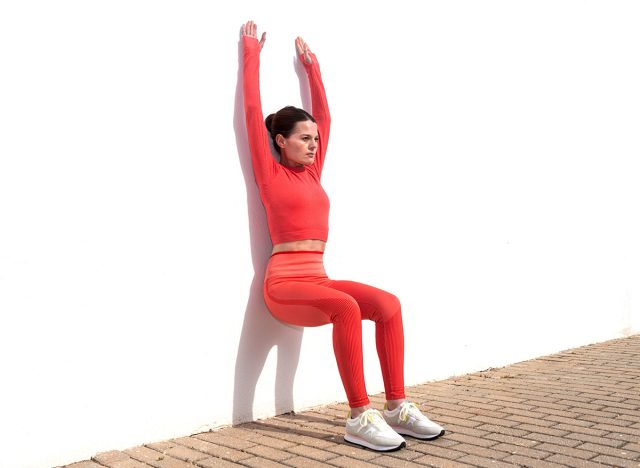
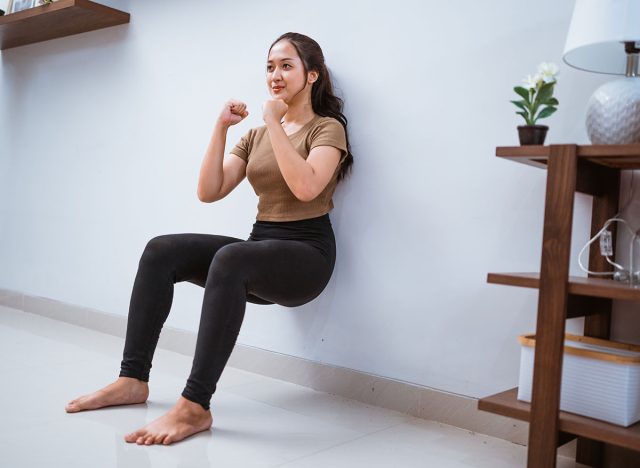
For many, the first 10 seconds of a wall sit feel deceptive. The position seems straightforward, even rudimentary. You lean your back against a flat surface, slide down until your knees are bent, and hold. But as the clock ticks toward the 20-second mark, the landscape of the exercise shifts. Your quadriceps begin to signal fatigue, your glutes engage to provide stability, and your core muscles fire in a desperate attempt to keep your posture upright and your body from shifting.
While it is a static movement—an "isometric hold"—it is anything but passive. For adults over 60, this exercise serves as one of the most effective, low-impact tools for building foundational lower-body strength. By removing the need for complex coordination or heavy external weights, the wall sit allows you to focus on what matters most: muscle tension, joint alignment, and structural integrity.
Main Facts: The Science of Isometric Training
The wall sit is a cornerstone of functional fitness, particularly for the aging population. As we age, maintaining lower-body strength is not just about aesthetics; it is a critical health intervention. Strong legs are the primary defense against falls, the secret to navigating stairs with ease, and the engine behind the "sit-to-stand" motion required to get out of a chair or a car.
Why the Wall?
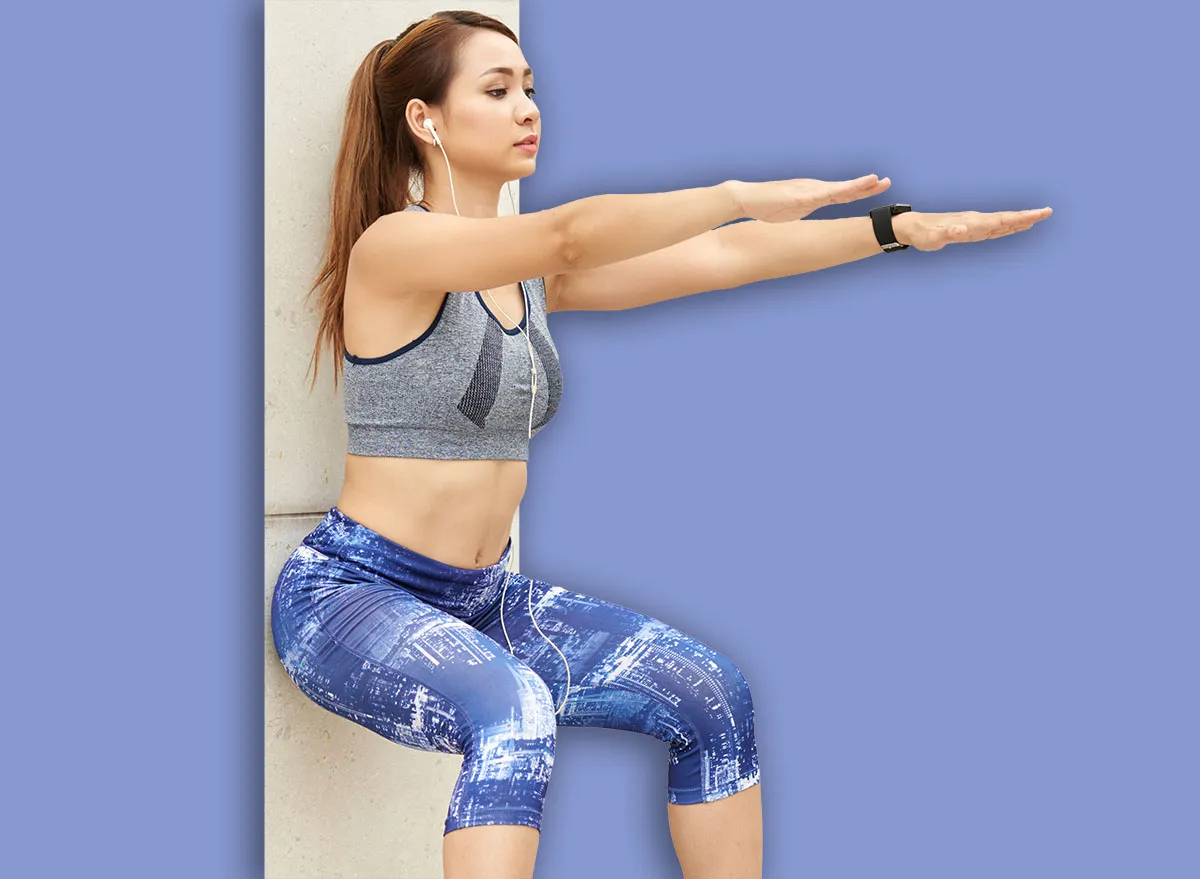
The wall acts as a supportive partner. It provides a stable guide for your torso, allowing you to isolate the lower body without the risk of losing your balance—a common concern for seniors. By pressing your back against the wall, you ensure that your spine remains in a neutral position, shifting the load directly onto the quadriceps, hamstrings, and calves.
Isometric training, or holding a muscle in a state of tension without movement, is particularly beneficial for those with joint sensitivities. Unlike deep squats, which involve significant movement through the knee joint, a wall sit can be adjusted to a shallower angle, allowing you to build strength while managing potential discomfort.
Chronology: Your 7-Day Progressive Plan
This week-long program is designed as an "on-ramp." The goal is not to exhaust your muscles to the point of failure, but to create a consistent, repeatable stimulus that builds endurance over time.
Day 1: Establishing the Foundation
Goal: Finding your working position.
- Protocol: 3 sets of 15 seconds. Rest for 45 to 60 seconds between holds.
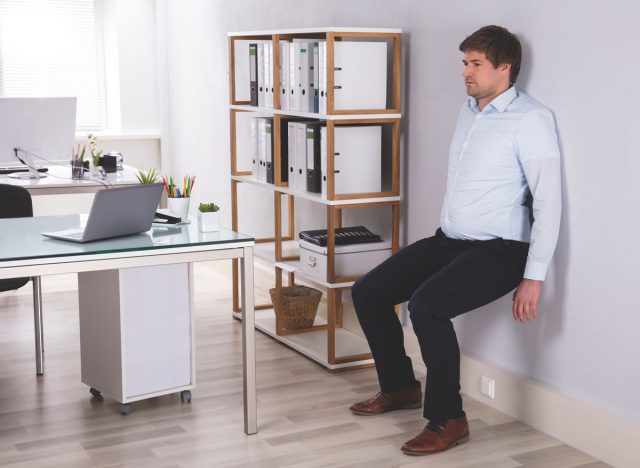
- Focus: Your priority today is not depth, but organization. Find a height where you feel your thighs working, but you can maintain a "clean" position. Keep your feet planted firmly, breathe steadily, and ensure your knees are tracking in the same direction as your toes.
Day 2: Adding Incremental Time
Goal: Introducing sustained tension.
- Protocol: 3 sets of 20 seconds. Rest for 45 to 60 seconds between holds.
- Focus: A five-second increase seems negligible, but it is the difference between a "warm-up" and "training." Keep your shoulders relaxed against the wall; don’t let the tension in your legs travel up into your neck or jaw.
Day 3: Building Endurance
Goal: Increasing capacity.
- Protocol: 3 sets of 25 seconds. Rest for 60 seconds between holds.
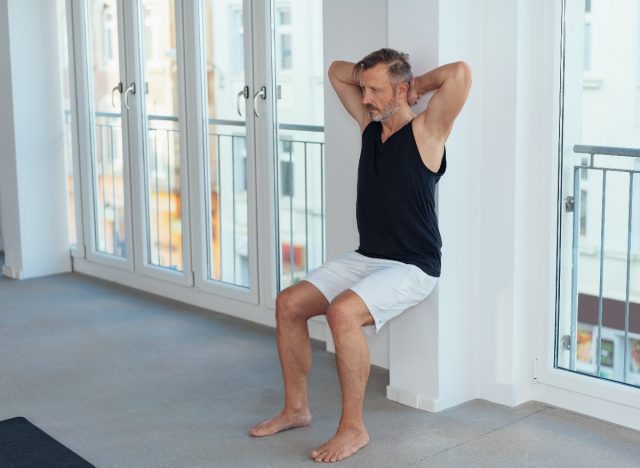
- Focus: By now, your muscles understand the assignment. Keep your wall sit at a consistent depth across all three sets. Let the final five seconds of each hold serve as the primary challenge for your thigh endurance.
Day 4: The Refinement Phase
Goal: Focusing on control.
- Protocol: 3 sets of 25 seconds. Rest for 45 to 60 seconds between holds.
- Focus: Repeating the previous day’s duration allows you to "clean up" the movement. Set your feet with intention. Slide into position with deliberate, controlled movements. Avoid the urge to rush.
Day 5: Increasing Total Volume
Goal: Total time under tension.
- Protocol: 4 sets of 25 seconds. Rest for 60 seconds between holds.
- Focus: We are increasing the number of sets rather than the duration of the hold. The goal is to make the fourth set feel just as stable and controlled as the first. This builds the aerobic and muscular endurance needed for daily activities.
Day 6: Extending the Threshold
Goal: Stretching your limits.

- Protocol: 3 sets of 35 seconds. Rest for 60 to 75 seconds between holds.
- Focus: This is the longest individual hold of the week. As the "burn" sets in, practice controlled breathing. The wall is your reminder to stay tall. Even if your legs shake, keep your torso pressed firmly against the surface.
Day 7: The Benchmark Test
Goal: Establishing your new baseline.
- Protocol: 3 sets of 40 seconds. Rest for 60 to 75 seconds between holds.
- Focus: Use this as your measuring stick for future training. You have spent a week familiarizing your nervous system with the movement. This final day should feel manageable, setting the stage for more advanced variations or longer holds in the weeks to come.
Supporting Data: Muscles and Mechanics
The efficacy of the wall sit lies in its recruitment of multiple muscle groups. While the quadriceps are the primary movers, the synergy of the supporting muscles is what makes the exercise "functional."
- Quadriceps: The primary muscle group responsible for knee extension. These muscles are essential for walking, climbing stairs, and standing up.
- Glutes: These act as stabilizers. Activating your glutes during a wall sit protects the lower back and ensures that the pelvis remains in a neutral, safe position.
- Hamstrings and Calves: These muscles act as secondary stabilizers, ensuring the lower leg remains locked in place.
- The Core: Even though you are sitting against a wall, your core must engage to keep your torso from slumping. A strong core translates to better balance and posture throughout the day.
Expert Perspectives and Safety
According to exercise science principles, the beauty of the wall sit is its "progression-friendly" nature. Once the standard hold becomes easy, you can increase the intensity without needing a gym membership.
Variations for Progress:
- Wall-Sit Heel Raises: While holding the sit, lift your heels off the floor. This adds a calf-strengthening component and forces your balance to shift, further engaging the stabilizer muscles.
- Wall-Sit Marches: While in the sit, slowly lift one foot an inch off the floor, then the other. This requires significant core recruitment and improves hip stability.
- Lowering the Depth: Once 40 seconds becomes easy, slide down an extra two inches. Lowering your hips increases the leverage required, making the same duration significantly more challenging.
Safety Tips:
- Foot Placement: Ensure your feet are hip-width apart. If your feet are too close together, you may experience unnecessary strain on the knees.
- Knee Alignment: Your knees should never cave inward. Keep them tracking directly over your toes.
- Breathing: Never hold your breath. Breath-holding can cause spikes in blood pressure. Practice rhythmic, deep, and steady breathing throughout the duration of the hold.
Implications for Long-Term Health
The implications of completing this seven-day challenge go beyond just having stronger legs. By dedicating time to this exercise, you are actively participating in "pre-habilitation"—training your body to prevent future injuries.
As we age, the loss of muscle mass (sarcopenia) becomes a primary concern for mobility. Regular isometric training has been shown to improve bone density and joint health by applying controlled, safe stress to the skeletal system. When you finish this seven-day challenge, the goal should not be to stop, but to integrate the wall sit into your daily routine.
Pairing this with a consistent walking program and other functional movements—such as chair squats and calf raises—creates a comprehensive lower-body strategy. Whether your goal is to travel, play with grandchildren, or simply maintain your independence at home, the wall sit is a humble but potent tool. In just 40 seconds of focused effort, you are building the strength required to stand tall for years to come.