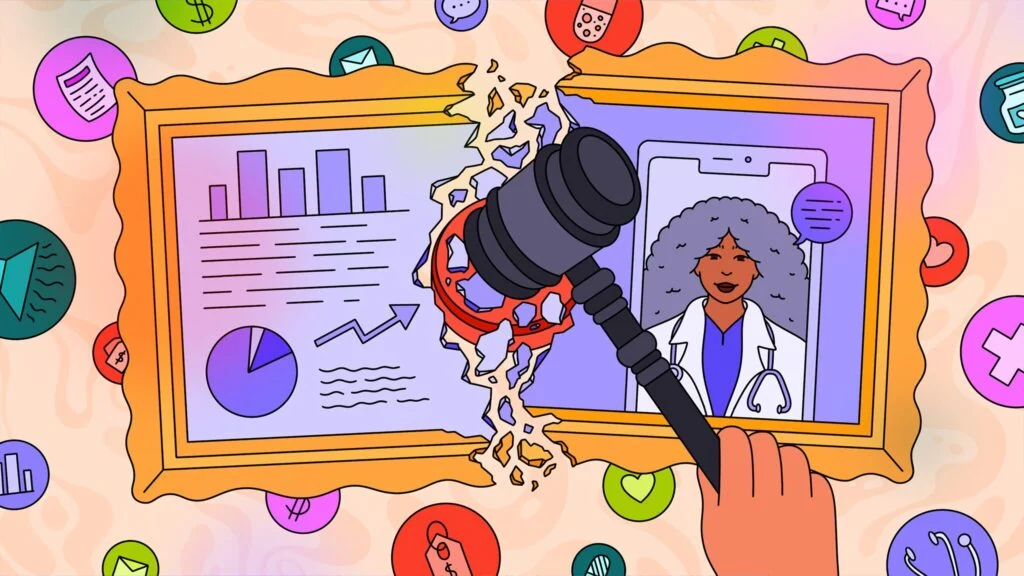
In less than a decade, the landscape of American medicine has undergone a seismic shift. What was once a niche, experimental service—telehealth—has ballooned into a multi-billion-dollar juggernaut. From the aggressive marketing campaigns of Hims & Hers to the ubiquitous presence of Teladoc, digital platforms have successfully rebranded healthcare as a retail-style convenience, promising diagnosis and prescriptions with a few clicks. Yet, beneath the slick user interfaces and the omnipresent advertisements on streaming services and social media, a complex and often opaque legal structure operates to navigate the stringent regulations of the U.S. healthcare system.
The Illusion of Unity
When a patient logs into a national telehealth platform, they are presented with a seamless, unified brand identity. Whether it is a subscription service for dermatology, hair loss, or mental health, the experience is designed to feel like a direct interaction with a single, massive corporate entity. However, this facade hides a bifurcated reality.
In more than 30 U.S. states, the "Corporate Practice of Medicine" (CPOM) doctrine makes it illegal for non-physician-owned corporations to practice medicine. These laws were designed decades ago to protect the sanctity of the doctor-patient relationship, preventing profit-driven entities from exerting undue influence over clinical judgment.
To bypass these hurdles, telehealth giants have adopted a "Management Services Organization" (MSO) model. Under this structure, the brand you see—the company whose stock you might track on Wall Street—is technically a management firm. They provide marketing, technology, billing, and administrative support. The actual medical care is delivered by a distinct, independent medical group owned by licensed physicians. This legal "firewall" is intended to ensure that clinical decisions are shielded from corporate pressure. But in practice, the boundary between the administrative master and the clinical provider is increasingly blurred.
A Chronology of Virtual Expansion
The evolution of the telehealth sector is a testament to the rapid acceleration of digital health following the COVID-19 pandemic.
- 2010–2015: The Niche Era. Telehealth was largely restricted to rural access programs and limited primary care pilots. The technology was cumbersome, and regulatory hurdles made broad adoption difficult.
- 2016–2019: The D2C Pivot. Brands like Hims & Hers entered the market, focusing on "lifestyle" medicine. They utilized social media to destigmatize issues like hair loss and erectile dysfunction, proving that consumers were willing to pay out-of-pocket for convenient, remote care.
- 2020: The Pandemic Catalyst. With the global lockdown, regulatory barriers—including requirements for in-person visits and geographic licensing restrictions—were temporarily waived by the federal government. Telehealth adoption spiked by over 6,000% in some sectors.
- 2021–2023: The Scale-Up. As pandemic waivers began to fluctuate, telehealth companies matured into massive corporations. They began hiring "super-doctors"—physicians who hold licenses in all 50 states—to ensure they could serve patients anywhere in the country without needing a local practitioner for every market.
- 2024–Present: The Regulatory Scrutiny. State medical boards and the Department of Justice have begun to take a closer look at these MSO structures. The question remains: is the firewall between the management company and the medical group truly impermeable, or is it a legal fiction designed to maximize shareholder value?
Supporting Data: The Scale of the "Super-Doctor"
The rise of the national telehealth brand has created a new class of medical professional: the multi-state licensee. According to recent industry analysis, the number of physicians holding active medical licenses in 50 states has grown exponentially.
These physicians are the lynchpins of the telehealth economy. By acting as the "owners" of the professional corporations (PCs) that contract with the telehealth platforms, they allow these companies to operate nationally.
| Metric | Estimated Industry Value |
|---|---|
| Telehealth Market (2023) | $150+ Billion |
| Projected CAGR (2024-2030) | 20.4% |
| Average Patient Acquisition Cost | $150–$300 |
| Percentage of "Lifestyle" Prescriptions | ~65% |
The concentration of power within these medical groups is significant. A single physician-owner may oversee hundreds of other practitioners who provide the actual care, creating a hierarchical structure that is far removed from the traditional, local family practice.
Official Responses and Industry Defense
Telehealth companies argue that their structure is not only legal but necessary for the modern patient. In recent statements, industry representatives have emphasized that the MSO model allows for superior operational efficiency.

"Our goal is to provide accessible, high-quality care to patients who otherwise might not see a doctor at all," said a spokesperson for a leading telehealth platform. "The separation between the management company and the professional medical group ensures that clinical decisions are made by doctors, for patients, while we provide the infrastructure to make that care seamless."
However, legal experts and state medical boards are less convinced. Critics point out that when the management company controls the "electronic health record" (EHR) software, sets the compensation for doctors, and dictates the pace of patient flow, the "firewall" is effectively porous. If a doctor is under pressure to move through a high volume of patients to meet the management company’s performance metrics, patient safety may eventually take a backseat to efficiency.
The Implications for the Future of Healthcare
The current trajectory of telehealth suggests several profound implications for the American healthcare system.
1. The Erosion of Continuity of Care
The traditional model of healthcare relies on a long-term relationship between a patient and a primary care physician who knows their history. Telehealth, by design, favors the "one-off" interaction. While this is convenient for an acute, minor issue, it creates a fragmented health history, as the virtual visit is rarely integrated into the patient’s broader medical record.
2. The Commercialization of Prescribing
There is a growing concern that the "convenience" model of telehealth encourages the over-prescription of medications. When a patient clicks on an ad for weight-loss or mental health medication, the process is streamlined to lead to a prescription. This "diagnosis-on-demand" model risks turning essential medicines into consumer commodities, potentially leading to long-term health risks if oversight is bypassed for the sake of a smoother user experience.
3. The Legal "Shell Game"
As states begin to tighten their enforcement of the Corporate Practice of Medicine, we may see a wave of litigation. If courts decide that the management companies are effectively "practicing medicine" through their control of the physician groups, the entire business model of the major telehealth players could be forced to restructure. This would likely lead to higher costs, slower service, and the potential exit of smaller, less-capitalized firms from the market.
Conclusion: A System at a Crossroads
The telehealth revolution has undeniably democratized access to medical consultation, breaking down the geographic and social barriers that once prevented millions from seeking care. Yet, as the industry matures, the cracks in its foundation are beginning to show.
Patients are increasingly finding themselves in a system where the "doctor" they see is an anonymous entity, filtered through a corporate management layer that prioritizes speed and volume. The challenge for regulators in the coming years will be to ensure that the promise of "convenient care" does not come at the expense of "safe care."
For the average consumer, the lesson is clear: while the interface may look like the future, the legal architecture is a complex, often opaque maze. As the telehealth sector continues to influence the national discourse on health, the need for transparency—regarding who is providing care, who is profiting from it, and where the legal boundaries truly lie—has never been more urgent. The convenience of a smartphone visit is undeniable, but the patient must remain aware that behind every click lies a carefully constructed corporate machine.