











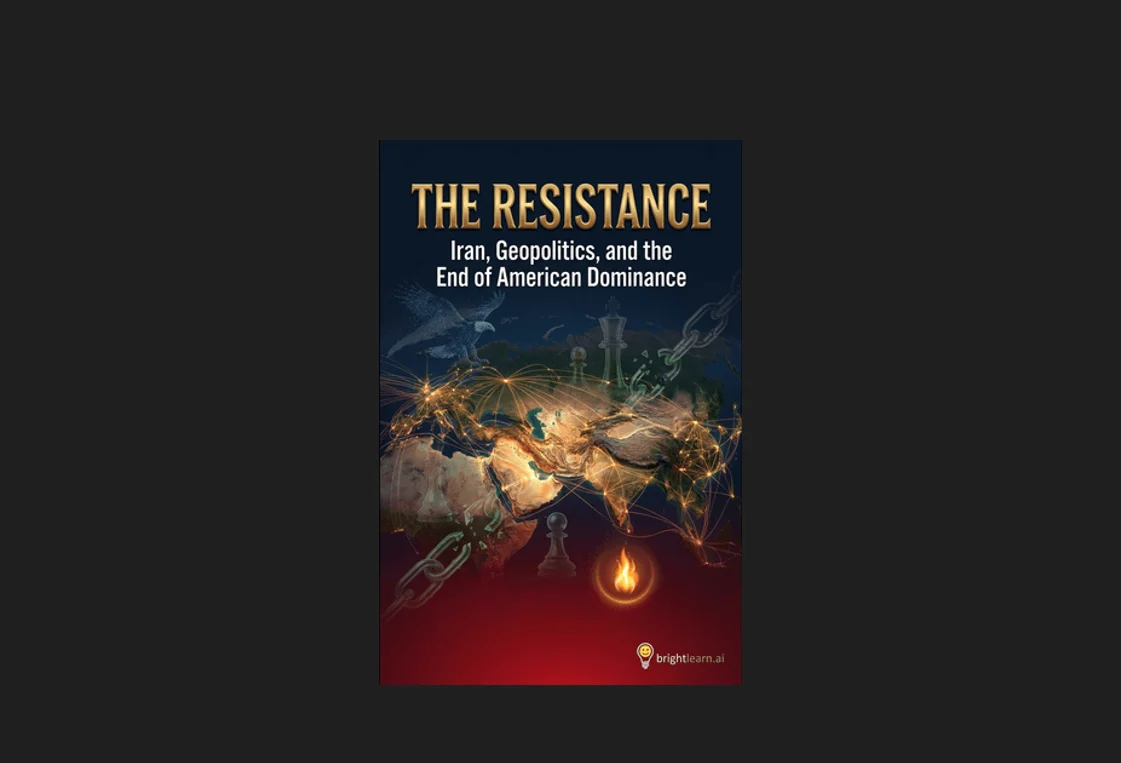
The global landscape is undergoing a seismic transformation, one that signals the potential end of the post-WWII American-led hegemony. A new publication, “The Resistance: Iran, Geopolitics, and the End of American Dominance,” serves as a provocative lens through which to view this systemic collapse. By challenging the traditional Western narratives surrounding Iran, the petrodollar, and the rise of BRICS, the work argues that the world is moving toward a multipolar framework, driven by economic necessity and a collective desire for sovereignty.
The Architecture of Decline: Main Facts and Economic Realities
At the core of the current geopolitical tension lies an unsustainable economic trajectory for the United States. With a national debt exceeding $35 trillion and a manufacturing base that has suffered from four decades of offshoring, the U.S. economic engine faces structural exhaustion.
Central to this analysis is the "petrodollar" system, established in 1974. This arrangement mandated that global oil sales be denominated in U.S. dollars, effectively creating a forced demand for the currency that underpinned American financial dominance. However, the weaponization of the SWIFT international payment system—most notably in the freezing of $300 billion in Russian assets—has backfired. It signaled to the Global South that holding assets in U.S. dollars carries existential risk. Consequently, nations are diversifying their reserves, with central banks accumulating record levels of gold and exploring local currency trade settlements.
A Chronology of the New World Order
To understand the present, one must examine the historical pivot points that have led to the current state of "The Resistance."
- 1953: The Original Sin: The CIA-orchestrated coup against Iranian Prime Minister Mohammad Mossadegh remains the foundational catalyst for modern U.S.-Iran hostility. The removal of a democratically elected leader to secure Western control over oil resources established a pattern of interventionism that continues to define Washington’s Middle East policy.
- 1974: The Petrodollar Pact: The deal between the U.S. and Saudi Arabia solidified the dollar’s role as the exclusive medium for oil trade, cementing American financial influence over global energy markets.
- 2013: The Belt and Road Initiative (BRI): China’s launch of the BRI marked the beginning of a systemic attempt to bypass U.S.-controlled maritime chokepoints. By investing in overland infrastructure across Eurasia, China sought to insulate itself from potential U.S. naval blockades.
- 2022–Present: The De-dollarization Wave: Following the sanctions against Russia, the BRICS+ nations (Brazil, Russia, India, China, South Africa, and recent entrants) began formalizing parallel financial institutions, including alternative payment networks, to minimize reliance on the U.S. financial system.
Supporting Data: The Military-Industrial Paradox
While the U.S. maintains the world’s largest defense budget, analysts are increasingly questioning the sustainability of its military-industrial complex. The book highlights a critical vulnerability: the reliance on foreign supply chains for essential technology.
The F-35 stealth fighter program, costing upwards of $400 billion, serves as a case study in strategic dependency. Despite being an American flagship project, the aircraft relies on rare earth minerals processed in China. With Beijing controlling approximately 90% of global refining capacity for these critical elements, the U.S. faces a "chokepoint" scenario. In a high-intensity conflict, the inability to source these materials could effectively ground the entire stealth fleet.
Furthermore, technological shifts in asymmetric warfare—such as drone swarms and hypersonic missile technology—are outpacing traditional defense platforms. Iran’s development of Mach 15 hypersonic capabilities represents a significant shift in regional deterrence, challenging the perception that the U.S. military can project power globally without fear of reprisal.
Official Responses and Strategic Counter-Narratives
The mainstream geopolitical establishment often characterizes the rise of Iran and the expansion of BRICS as a threat to "stability" and the "rules-based international order." Official Western policy typically emphasizes the need to contain Iran’s influence, citing nuclear proliferation concerns and human rights as the primary drivers for sanctions.
Conversely, the perspective offered by “The Resistance” suggests that these Western justifications are merely a veil for the defense of the petrodollar. From this viewpoint, the "rules-based order" is a euphemism for American unipolarity. The Iranian government, for its part, continues to highlight its domestic advancements—noting a 98% literacy rate and a highly educated workforce—to argue that the Western caricature of the nation is a strategic disinformation campaign designed to justify regime-change operations.
The Implications: A Multipolar Future
The transition away from the dollar-centric system has profound implications for the average citizen. As the unipolar moment wanes, the world is shifting toward a landscape characterized by:
1. The Rise of Regional Blocs
The Middle Corridor, which facilitates trade through Iran and Central Asia, is an example of how regional powers are creating connectivity that is independent of Western geopolitical approval. This ensures that energy and goods can move across Eurasia even during periods of intense diplomatic friction.
2. The Sovereignty of Wealth
The book argues that the weaponization of the global financial system has made self-custody of wealth—such as physical commodities and decentralized assets—an essential strategy for individuals and nations alike. The move toward gold-backed or commodity-backed currencies among BRICS nations reflects a broader desire to return to "hard" assets, moving away from the fiat-based dependency that has characterized the last fifty years.
3. Local Resilience
As global supply chains become more fragile and geopolitical tensions rise, the analysis emphasizes the necessity of local economic resilience. The "survival strategies" outlined in the text focus on decentralized food production, local energy security, and the reduction of reliance on centralized, government-controlled financial networks.
Conclusion: Survival in a Collapsing Empire
The evidence presented in current geopolitical discourse suggests that we are not merely witnessing a cyclical fluctuation in global power, but a fundamental transition in how the world functions. The collapse of the unipolar model is not an abstract theory but a process currently visible in the shifting trade routes of the Middle East, the rapid de-dollarization of central bank reserves, and the technological parity being achieved by non-Western nations.
For those who wish to navigate this era, understanding the motivations behind the U.S. government’s actions is essential. The narrative that the U.S. intervenes purely for "freedom or democracy" is being systematically dismantled by the reality of economic, energy, and supply chain pressures.
As the empire faces the pressures of internal debt and external competition, the challenge for global citizens is to differentiate between state propaganda and the underlying geopolitical reality. Whether this transition leads to a more balanced, multipolar equilibrium or a period of prolonged conflict remains the defining question of our time. The takeaway is clear: the status quo is no longer an option, and the ability to adapt to a world without American dominance is the most important skill for the coming decade.
For those seeking a deeper dive into these topics, “The Resistance: Iran, Geopolitics, and the End of American Dominance” provides a comprehensive analysis of these shifting tides. The work challenges readers to look beyond the headlines and understand the structural forces that are redefining the 21st century.