










The transition to college is a milestone defined by newfound independence, intellectual exploration, and the forging of lifelong friendships. For the average student, the shift involves adjusting to new schedules and social dynamics. However, for students living with Ehlers-Danlos Syndrome (EDS) and its associated comorbidities, this transition requires a meticulous, proactive approach to health and academic management. While university life offers the flexibility to manage one’s own health, the unpredictable nature of chronic illness makes formal preparation an essential prerequisite for success.
The Complexity of EDS in an Academic Setting
Ehlers-Danlos Syndrome is not a monolith; it is a complex, multi-systemic connective tissue disorder that manifests differently in every individual. Because EDS is frequently accompanied by "comorbid" conditions—such as Postural Orthostatic Tachycardia Syndrome (POTS), Mast Cell Activation Syndrome (MCAS), gastrointestinal dysfunction, chronic migraine, and neurodivergence like Autism Spectrum Disorder—the "one-size-fits-all" model of university life is rarely sufficient.
For many, the physical demands of navigating a large campus—walking between distant lecture halls, carrying heavy textbooks, and sitting in ergonomic-unfriendly chairs—can trigger debilitating flares. Understanding how to balance these physical limitations with academic rigors is the core challenge for the "spoonie" student (a term coined by Christine Miserandino to describe the limited daily energy reserves of those with chronic illness).
Chronology of Preparation: A Proactive Timeline
Successful navigation of college accommodations is not a one-time event but a continuous process. Students are encouraged to follow this developmental timeline:
Phase 1: Pre-Enrollment (6–9 Months Prior)
Begin by researching the Disability Services (DS) office at your prospective institutions. Do not wait until orientation week to start this conversation. Schedule a virtual meeting with a disability counselor to discuss the school’s infrastructure, such as elevator proximity, dormitory accessibility, and the flexibility of their attendance policies.
Phase 2: Documentation Gathering (3–6 Months Prior)
Collect comprehensive medical records. This should include letters from your primary care physician, specialists, and physical therapists. A complete picture of your condition—not just a diagnosis label—allows administrators to tailor accommodations to your specific functional limitations.
Phase 3: The Transition Period (1–2 Months Prior)
Once registered, participate in a trial run of your campus schedule. Map out the most accessible routes between buildings. If possible, secure a meeting with your professors before the semester begins to introduce yourself and establish a proactive rapport.
Practical Supports: Independent Management Strategies
Before turning to formal university requests, students can implement "low-stakes" interventions that improve daily quality of life without requiring administrative approval.
Ergonomics and Symptom Management
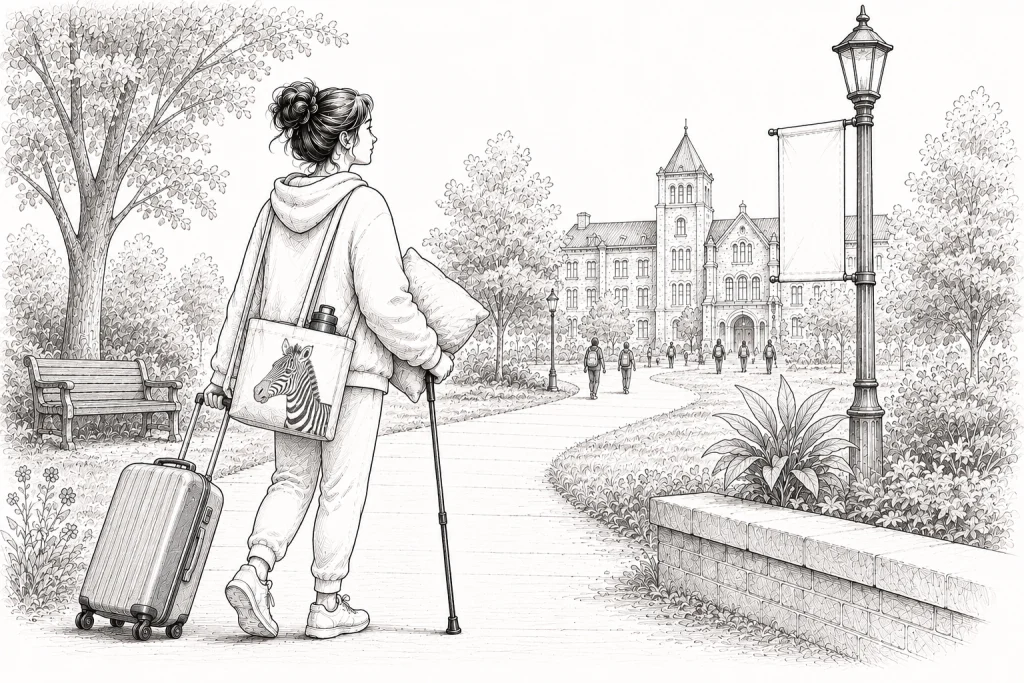
- The Mobile Setup: Utilize a lightweight, ergonomic backpack or a rolling cart to minimize joint strain.
- Supportive Seating: Invest in a portable seat cushion or a back-support brace to use in lecture halls with rigid, unsupportive chairs.
- Sensory Tools: For those with sensory sensitivities, noise-canceling headphones and blue-light-filtering glasses can significantly reduce the fatigue associated with crowded, fluorescent-lit lecture halls.
Movement and Pacing
- Strategic Breaks: Practice the "pomodoro" method or similar pacing techniques during study sessions to prevent joint subluxations and autonomic flares.
- Hydration and Nutrition: Carry a high-capacity insulated water bottle and electrolyte packets (essential for POTS management). Keeping shelf-stable, low-FODMAP, or allergen-friendly snacks ensures that a sudden MCAS flare or GI issue does not force you to miss a lecture.
Formal Accommodation: When and How to Engage
While independent management is empowering, formal accommodations are a legal right under the Americans with Disabilities Act (ADA) and Section 504 of the Rehabilitation Act.
The "Need-Based" Litmus Test
If you are uncertain whether an issue requires a formal request, ask yourself two questions:
- Does my health condition create a barrier that prevents me from accessing the curriculum on equal footing with my peers?
- Does the requested accommodation fundamentally alter the core academic requirements of the course?
If the answer to the first is "yes" and the second is "no," you are likely entitled to a formal accommodation.
Essential Formal Accommodations
- Attendance Flexibility: Negotiating a "flexible attendance" agreement is critical for students with unpredictable health fluctuations. This ensures that a sudden flare-up does not result in an automatic failure.
- Note-Taking Assistance: Services such as peer note-takers, digital recording software, or access to professor slides can alleviate the physical pain associated with long-duration writing.
- Testing Adjustments: Common requests include extended time (often 1.5x or 2x), a distraction-reduced environment, the use of a computer for essay exams, and the ability to take breaks to manage symptoms or medication.
- Housing and Dining: Requesting a room with an en-suite bathroom or proximity to a dining hall can save vital energy. For those with MCAS or GI issues, requesting a private mini-fridge or a meal plan exemption to accommodate a specific diet is vital.
Official Perspectives and Advocacy
The role of the Disability Services office is to serve as an intermediary between the student’s medical needs and the university’s academic standards. However, advocacy is a collaborative process. Administrators often appreciate students who come prepared with a "needs list" backed by medical evidence.
"Advocacy is not about seeking an advantage; it is about leveling the playing field," notes the Disability Services handbook of most major universities. When a request is denied or deemed "not feasible," the student should not view this as a dead end. Instead, engage in an "interactive process"—a back-and-forth dialogue where the student and the university work together to find an alternative that provides the same functional result.
Implications for the Future
The implications of securing appropriate accommodations extend far beyond the classroom. By learning to navigate the disability support system, students with EDS gain the self-advocacy skills necessary for the professional world. They learn to identify their limitations, communicate them clearly to authority figures, and leverage technology and policy to maintain their health.
Living with a chronic condition like EDS while pursuing higher education is undeniably difficult. It requires resilience, organization, and a willingness to accept help. However, as many successful graduates with EDS have demonstrated, these challenges do not have to be an impediment to academic excellence.
College should be a period where your intellectual curiosity is the primary source of exhaustion, not your disability. By utilizing the framework of formal accommodations and personal symptom management strategies, students can ensure that their university years are defined by the degrees they earn and the lives they build, rather than the obstacles they overcame.
Author’s Note: This guide was prepared by Clare Tyler, a law student and advocate for the rare disease community. It serves as an introductory roadmap for students entering the higher education landscape. Always consult with your university’s specific office for the most current, institution-specific protocols.