








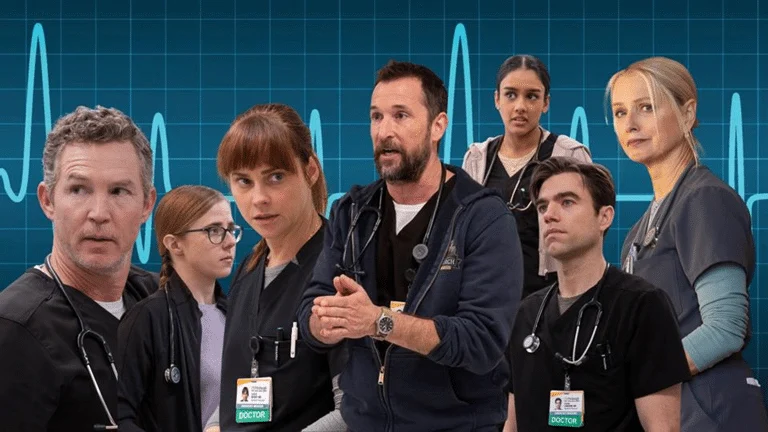
If you have not yet immersed yourself in the gritty, pulse-pounding corridors of HBO Max’s medical drama The Pitt, you are missing one of the most vital cultural touchstones of the current television landscape. While the show—a visceral, high-stakes exploration of an emergency department in Pittsburgh—is often categorized by its technical brilliance and "clamshell" thoracic surgeries, its true value lies elsewhere. Beneath the adrenaline of the ER, The Pitt serves as a sobering mirror to the systemic failures facing America’s aging population.
For those of us entrenched in the fields of geriatric advocacy and health policy, the show is not merely entertainment; it is an alarm bell. By juxtaposing the daily traumas of a fictional emergency room with the stark statistical realities of the U.S. healthcare system, The Pitt forces viewers to confront the invisible crises of caregiving, professional shortages, and the socioeconomic barriers that define modern aging.
The Main Facts: Why ‘The Pitt’ Matters
The Pitt distinguishes itself from its predecessors—shows that often lean into romanticized notions of medicine—by prioritizing the mundane, brutal, and often heartbreaking realities of clinical practice. The show’s narrative arcs, particularly across its first two seasons, focus on the strain of a system pushed to its absolute breaking point.
The central thesis of the show’s portrayal of older adults is simple: our current infrastructure is not built for the demographic "Silver Tsunami" currently hitting our shores. Whether through the lens of a daughter paralyzed by caregiver burnout or an elderly patient trapped by the logistical impossibility of leaving the hospital, the show highlights how medical care is inextricably linked to social determinants of health.
Chronology: A Season of Systemic Failure
To understand the gravity of the show’s message, one must look at the specific narrative threads woven through its two seasons:
- The Caregiver Crisis (Season 1): The series introduces a mother-daughter duo whose struggle encapsulates the silent epidemic of family caregiving. The daughter, visibly fraying at the edges, eventually reaches a breaking point—falling asleep in her car, exhausted from the demands of her mother’s chronic needs. This wasn’t just a plot device; it was a character study of the millions of Americans who are forced to balance professional lives with the all-consuming responsibility of elder care.
- The Devaluation of Geriatrics (Season 2): In a biting, contentious exchange between the show’s protagonist, Dr. Robby, and a colleague, Dr. Mohan is discouraged from pursuing a geriatrics fellowship. The implication—that geriatrics is a "slow" or "lesser" field—is a sentiment that remains dangerously pervasive in medical education today.
- The Revolving Door of the ER (Season 2): The show depicts a frantic morning for Dr. Langdon, who, after seeing 16 patients, fails to recognize a woman he treated just four hours prior. This "churn-and-burn" model of emergency care is a direct reflection of a system where doctors are overworked and patient continuity is a luxury rather than a standard.
- The Finality of Financial Burden: The series culminates in the heart-wrenching trajectory of a patient who leaves the hospital against advice, fearing the mounting debt will ruin his family. His subsequent return in critical condition, followed by his daughter’s desperate attempt to crowdfund his care via a GoFundMe page, brings the harsh economic reality of American healthcare into sharp focus.
Supporting Data: The Reality Beneath the Fiction
The brilliance of The Pitt is that its most "dramatic" moments are, in fact, the most statistically accurate.
1. The Caregiver Burden
According to the Caregiver Action Network, approximately 63 million U.S. adults are currently providing care for a spouse, parent, or relative. Roughly 20% of these caregivers are simultaneously holding down full-time jobs. The physical and psychological toll is quantifiable: these individuals face significantly higher rates of clinical depression, anxiety, and their own chronic health conditions, often stemming from the neglect of their personal wellness while acting as primary caretakers for others.
2. The Geriatrician Shortage
The disparity between the aging population and the medical workforce is reaching a breaking point. By 2030, the entire Baby Boomer generation—representing one in five Americans—will have reached the age of 65. Yet, the United States currently employs only about 7,000 board-certified geriatricians. To put this in perspective, there are over 60,000 pediatricians in the country. The U.S. Department of Health and Human Services has projected a staggering shortage of nearly 27,000 geriatric providers, a deadline that is effectively already upon us. Despite this, only one in ten U.S. medical schools requires a clinical rotation in geriatrics.
3. The Emergency Department Burnout
The American Medical Association identifies emergency medicine as the specialty with the highest rates of physician burnout. When an ER is overwhelmed, older adults are the most vulnerable cohort. They face longer stays, higher rates of "boomerang" readmissions, and poorer health outcomes post-discharge. The show’s depiction of Dr. Langdon is not just a character trait; it is a clinical symptom of a broken emergency infrastructure.
4. The Transportation Gap
The scene in which patient Vera cannot leave the hospital due to a lack of transportation is a reality for millions. Research indicates that 3.6 million Americans report missing or delaying medical care due to transportation barriers. Furthermore, 50% of older adults express concern that they will be forced to forgo future care because they simply cannot get to the facility.
Official Responses and Industry Context
The medical community has responded to the pressures highlighted in the show with a mixture of defensive pragmatism and calls for policy reform. The American Geriatrics Society (AGS) has long advocated for increased funding for the Geriatrics Workforce Enhancement Program (GWEP).
However, systemic change remains slow. Many hospital administrators argue that the "productivity-first" model of emergency medicine is mandated by current reimbursement structures, specifically those dictated by Medicare and private insurance. When asked about the "financial dread" portrayed in the show, health economists point to the rising out-of-pocket costs that force families to choose between life-saving treatment and long-term financial solvency. The "GoFundMe" phenomenon—often referred to as the "American safety net"—is increasingly being recognized by policymakers as a symptom of a broader failure in the social contract.
Implications: The Path Forward
The implications of The Pitt are not limited to the screen; they are a direct indictment of how we value—or fail to value—our older citizens. If we continue to treat geriatric care as an afterthought and allow the caregiver support system to rely on the "exhausted daughter in a car" model, the societal cost will be insurmountable.
A Call for Structural Reform
To address the issues raised in the series, we must move toward:
- Mandatory Geriatric Training: Medical schools must integrate geriatric education into core requirements, ensuring that every physician, regardless of specialty, is equipped to treat the aging patient.
- Support for Caregivers: We need federal policy that provides more than just platitudes for family caregivers, including tax credits, subsidized respite care, and better integration of community-based services.
- Emergency Reform: Hospitals must redesign intake and discharge protocols to account for the unique needs of older adults, specifically focusing on post-discharge transportation and follow-up stability.
- Financial Protection: The reliance on crowdfunding for medical debt is a policy failure. Strengthening Medicaid and expanding affordable access to long-term care are no longer optional—they are imperative for the economic stability of the next generation.
The Pitt may be a work of fiction, but the crises it chronicles are the defining challenges of our time. As we witness the largest generation of older adults in history navigating this landscape, we must ask ourselves: are we building a system that cares for our aging, or are we simply waiting for the shift to end?
The decisions made in Congress, in medical boardrooms, and in academic medical centers today will determine the quality of life for millions. Let us ensure that those decisions reflect the empathy, foresight, and structural commitment that our aging population deserves.
Katrin Werner-Perez serves as the Director of Health Programs at the Alliance for Aging Research, where she advocates for policy changes aimed at improving the health and well-being of older Americans.